 English
 русский
 Español
 中文简体
中文简体
Article Directory
- 1 Defining Density: GSM specifications for knitted jacquard mattress fabric
- 2 The Tactile Metric: Hand feel and thickness of jacquard mattress ticking
- 3 Form and Function: Optimizing drape in knitted mattress covers
- 4 Design Integration: Technical design of knitted jacquard for comfort
- 5 Hangzhou Xiaoshan RongLi Clothing Co., Ltd.: Pioneers in Modern Mattress Fabric
- 6 Frequently Asked Questions (FAQ)
- 6.1 1. What is the main conflict when designing the GSM for knitted jacquard fabric for mattress?
- 6.2 2. How does the knitting structure affect the Hand feel and thickness of jacquard mattress ticking?
- 6.3 3. Why is Optimizing drape in knitted mattress covers crucial for high-end mattresses?
- 6.4 4. What is the typical target range for GSM specifications for knitted jacquard mattress fabric in mid-to-high-end products?
- 6.5 5. What technical aspect of the Technical design of knitted jacquard for comfort can impact breathability?
In the premium bedding market, the surface material of the mattress—the ticking—is the first point of contact and a major determinant of perceived quality. For manufacturers, engineering the **knitted jacquard fabric for mattress** requires a delicate balance between luxury aesthetics, tactile comfort (Hand Feel), and functional conformity (Drape). This balance is governed by precise technical specifications, particularly Grams per Square Meter (GSM) and thickness.
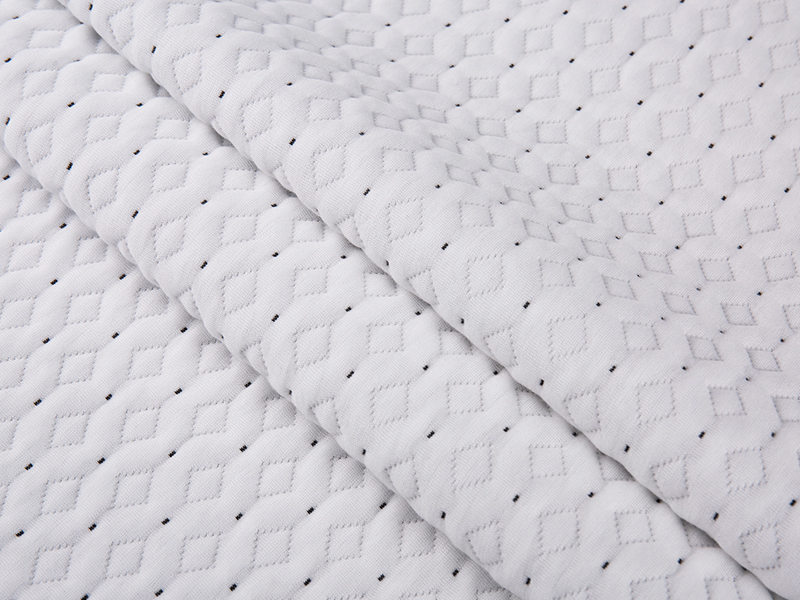
Defining Density: GSM specifications for knitted jacquard mattress fabric
GSM is the weight metric that correlates directly with the material input and perceived robustness of the fabric. Choosing the right GSM specifications for knitted jacquard mattress fabric is a critical technical and commercial decision.
Impact of GSM on Perceived Quality and Cost
- **High GSM:** Higher GSM generally translates to a thicker, denser fabric, often perceived by consumers as higher quality, resilience, and luxury. However, it also increases material cost and may compromise flexibility.
- **Low GSM:** Lower GSM reduces material cost and may improve breathability, but risks compromising the surface durability and hand feel.
Balancing Weight and Breathability Requirements
A heavier fabric does not inherently mean better performance. While high GSM can enhance durability, the knitting structure must compensate for the density to maintain adequate airflow. Failure to balance weight with structure can result in poor heat dissipation, negating the advanced properties of the underlying mattress core.
GSM and Application Comparison Table
| GSM Range (Approximate) | Typical Application/End Use | Impact on Drape |
|---|---|---|
| 150 – 250 GSM | Basic/Promotional mattresses, lightweight top panels. | High (Excellent drape, but lower **Mattress fabric weight vs durability analysis** score). |
| 280 – 350 GSM | Mid-to-High-end mattresses, optimal for foam conformity. | Medium (Ideal for balancing luxury feel and drape/conformity). |
| 380 GSM and Above | Luxury/Ultra-Premium mattresses, heavy padding. | Low (Stiffer hand feel, risks hindering full conformity to core). |
The Tactile Metric: Hand feel and thickness of jacquard mattress ticking
The sensory experience is controlled by the yarn and finishing process, which define the Hand feel and thickness of jacquard mattress ticking.
Yarn Selection (Microfiber vs. Standard Poly) for Softness
- **Microfiber:** Yarns with a denier (D) of less than 1.0 are categorized as microfibers. These fibers introduce significantly higher surface area per unit mass, resulting in a silkier, softer touch compared to standard polyester yarns, directly improving the **knitted jacquard fabric for mattress** hand feel.
- **Finishing:** Chemical finishing processes (e.g., silicone softeners) are also employed to enhance the final tactile smoothness and luxury appeal.
The Role of Knitting Structure in Padded Comfort
The knitting structure (e.g., single-knit vs. double-knit) directly influences thickness and resilience. Double-knit structures, though heavier, offer more loft and a padded feel. This increased thickness, when paired with the right finishing, achieves the coveted luxurious hand feel while contributing to the overall mattress cushioning.
Form and Function: Optimizing drape in knitted mattress covers
Drape, or conformability, is the fabric's ability to lie smoothly and conform to the underlying mattress structure without resistance. This is especially crucial for memory foam or individually pocketed coil systems.
Relationship Between Fabric Stiffness and Internal Conformity
- **Stiffness:** High GSM and excessive finishing can lead to a stiff fabric. A stiff knitted jacquard fabric for mattress acts as a restrictive layer, hindering the full pressure-relieving benefits of the internal foam or pocketed springs.
- **Optimization:** Optimizing drape in knitted mattress covers requires minimizing the intrinsic stiffness of the yarn and knitting structure, allowing the cover to move freely and conform to the sleeper's body contours.
Achieving the Ideal Balance: Mattress fabric weight vs durability analysis
The technical challenge is finding the 'sweet spot' in the Mattress fabric weight vs durability analysis. A fabric that drapes perfectly but wears out quickly is functionally deficient. Therefore, the GSM and thickness must be sufficient to meet abrasion and pilling resistance standards (durability) while remaining low enough to allow for optimal flexibility and drape (conformity).
Design Integration: Technical design of knitted jacquard for comfort
The jacquard mechanism allows for complex patterning, which must be leveraged for both aesthetics and function. The Technical design of knitted jacquard for comfort involves integrating zones of different densities.
The Role of Pattern Complexity in Fabric Behavior
Complex jacquard patterns often require more intricate yarn paths, which can inadvertently increase localized stiffness. However, strategic use of open knitting structures within the pattern can enhance breathability without compromising the aesthetic appeal, thus contributing to the overall comfort profile of the knitted jacquard fabric for mattress.
Hangzhou Xiaoshan RongLi Clothing Co., Ltd.: Pioneers in Modern Mattress Fabric
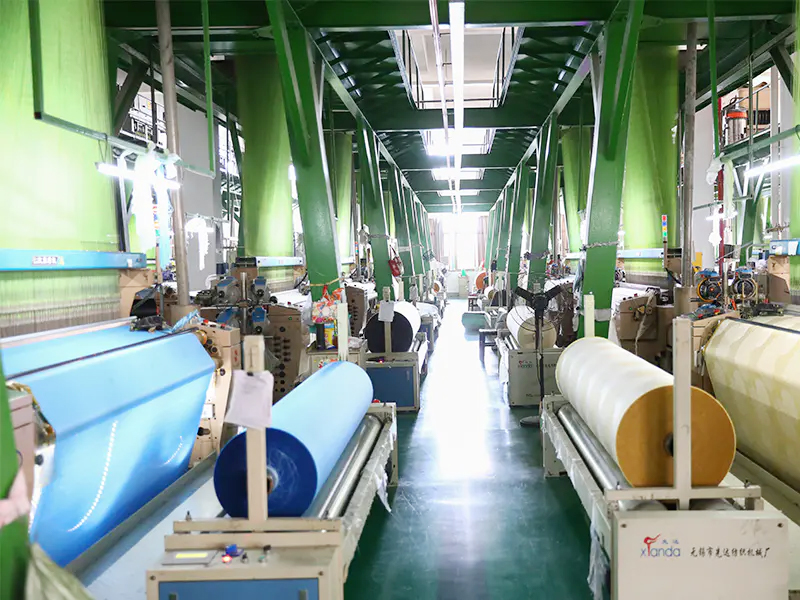
Established in 1989, Hangzhou Xiaoshan RongLi Clothing Co., Ltd. has a long-standing commitment to modern mattress fabric. Our company, honored with "AAA enterprise" credit rating and "Hangzhou famous brand," integrates design, production, R&D, and sales of home textiles. We utilize advanced weaving machinery imported from West Germany and Italy to produce high-quality jacquard, knitted, and printed fabrics. Our dedication to quality is underscored by our ISO9001:2000 accreditation and compliance with EU REACH and German Hein Stan Oeko-TexStand100 standards. Our expertise allows us to engineer materials that achieve the perfect balance in Mattress fabric weight vs durability analysis and optimize the Hand feel and thickness of jacquard mattress ticking. Rongli adheres to the managing conception of "Technology, innovation, honesty and development" to provide superior service and products, ensuring that our fabrics, whether featuring simple or complex GSM specifications for knitted jacquard mattress fabric, are popular worldwide.
Frequently Asked Questions (FAQ)
1. What is the main conflict when designing the GSM for knitted jacquard fabric for mattress?
The main conflict is between durability (which favors high GSM) and flexibility/conformity (Drape), which favors lower GSM. The ideal design finds the necessary GSM minimum to meet abrasion standards while still maximizing drape.
2. How does the knitting structure affect the Hand feel and thickness of jacquard mattress ticking?
A double-knit structure, compared to a single-knit, inherently creates more thickness and loft (a padded feel). This structure, combined with specific yarn selection (e.g., microfiber), significantly enhances the luxurious hand feel.
3. Why is Optimizing drape in knitted mattress covers crucial for high-end mattresses?
Drape is crucial because it ensures the mattress cover conforms seamlessly to the underlying contouring materials (like memory foam or zoned coils), allowing the sleeper to fully benefit from the pressure-relieving design of the core components.
4. What is the typical target range for GSM specifications for knitted jacquard mattress fabric in mid-to-high-end products?
Mid-to-high-end products often target a GSM range of 280 to 350. This range provides a good balance of perceived quality (weight/thickness) and functional conformity (drape).
5. What technical aspect of the Technical design of knitted jacquard for comfort can impact breathability?
The complexity and density of the jacquard pattern. Highly dense or tight pattern repeats can reduce airflow. Strategic open-knit areas within the design are often used to enhance breathability.