Custom Soft Knit Mattress Fabric

Home / Products / Sustainable Mattress Fabrics / Soft knit mattress fabric

Soft Knit Mattress Fabric Manufacturers

Circular Knit · Interlock · Single Jersey

Soft Knit Mattress Fabric

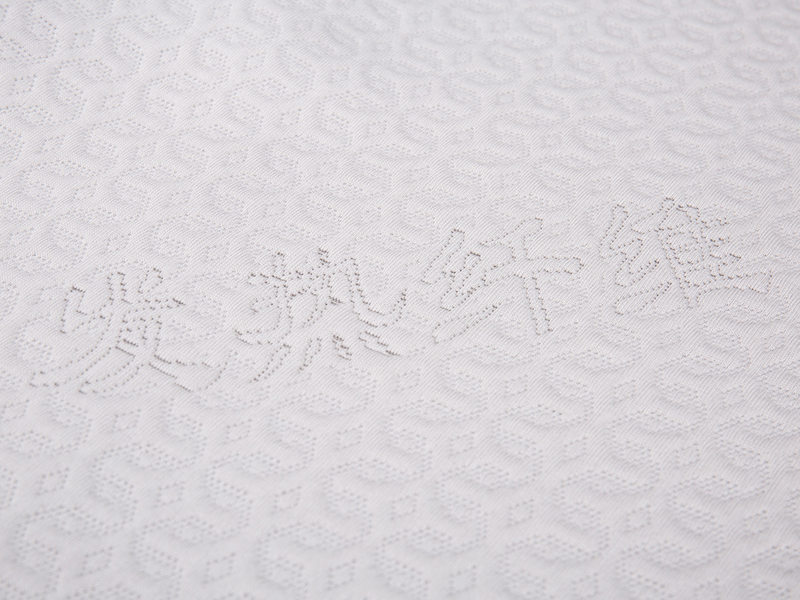
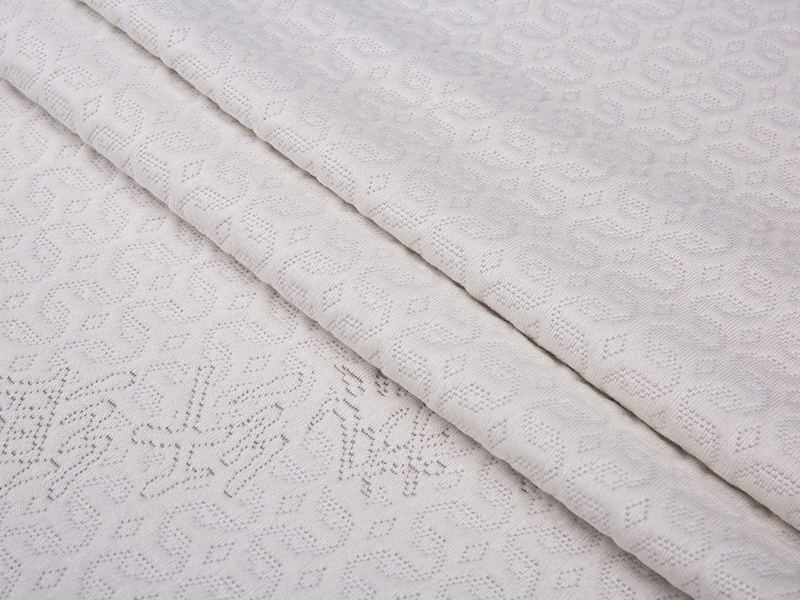
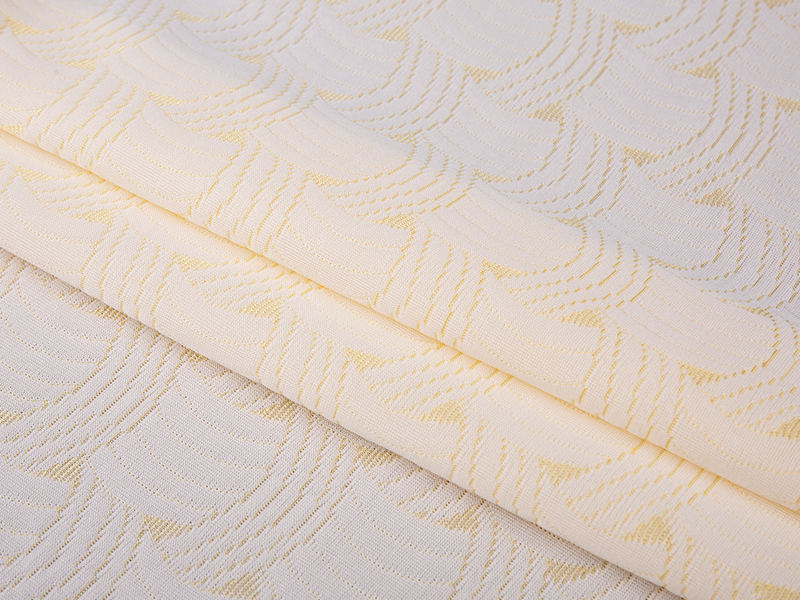
Loop-formed knit structures give bidirectional stretch that follows foam and spring core geometry, so removable covers are sewn without gathering tapes or corner elastic.

ISO 9001:2000 Quality management system
REACH EU regulation compliance
OEKO-TEX 100 Hohenstein certification
60,000 m Daily production capacity
OEM Drawing and sample production
01 / Overview

Soft knit mattress fabric is produced on circular knitting machines in single jersey, rib, or interlock construction. Unlike woven fabric built from perpendicular warp and weft yarns, knit fabric forms by interlocking loops in continuous courses, which gives the material inherent stretch in both length and width. Elongation at break typically falls between 30 and 80 percent depending on yarn type and stitch density. Yarn inputs include combed cotton, polyester-cotton blends, modal, and TENCEL Lyocell, knitted at gauges from 18GG to 28GG. Finished weights run 140 to 320 gsm.

In-house R&D converts buyer drawings or physical swatches into knitting specifications before sampling, and every production line runs under the ISO 9001:2000 system with REACH and OEKO-TEX documentation issued per batch.

Construction Data
Machine type Circular knit, 30–34 in
Gauge range 18GG – 28GG
Stitch types Jersey / Rib / Interlock
Fabric weight 140 – 320 gsm
Course density 40 – 60 per cm
Wale density 28 – 42 per cm
Performance Characteristics
A Bidirectional Stretch

35–70 percent elongation in both machine and cross directions accommodates foam compression without seam stress.

B Open Loop Airflow

Inter-yarn voids hold air permeability at 200–450 mm/s, limiting moisture buildup at the sleep surface.

C Seamless Tube Widths

Circular tubes are knitted at widths matching mattress dimensions from 90 to 200 cm, removing side seams.

D Compression Recovery

After 50,000 compression cycles per ASTM D3574, thickness recovery holds at 92–96 percent of original value.

≥350 kPa Mullen burst strength
180–420 Air permeability, cm³/cm²/s
≤3.5% Dimensional change, 3 washes
3.5–4 Pilling grade, Martindale 2000

Where Soft Knit Is Used

Specified where fabric must follow core geometry rather than hold a flat plane.

Foam Mattress Covers Stretch-fit encasements over memory foam and polyurethane cores requiring conformal contact.
Topper Casings Removable covers for gel-infused and ventilated topper layers.
Pillow Shells Four-way stretch covers for down alternative and shredded foam fills.
Articulated Bed Bases Flexible covers for adjustable frames where woven fabric would restrict hinge travel.
Supply Capability
Sample-Based Development

Buyer drawings or physical swatches are converted into knitting specifications, with pilot yardage issued for approval before bulk scheduling.

Certified Production

All lines operate under the ISO 9001:2000 quality system. Fabrics pass EU REACH testing and carry Hohenstein OEKO-TEX Standard 100 certification.

Volume and Lead Time

Daily output of 60,000 meters supports repeat container programs. Standard constructions run 25–35 working days from sample approval.

Processing and Care Questions

How is edge curling controlled when cutting single jersey?

Single jersey curls at cut edges because face and back loops differ in structure. Two routes are used: applying a fusible knit tape of 10–15 mm width along the cut line, or specifying interlock construction where balanced loop geometry on both faces removes the tendency entirely.

What causes stitch distortion after the first wash?

Relaxed knit goods shrink unevenly if loop geometry is not stabilized before cutting. Open-width relaxing at 120°C with a feed rate of 8 m/min sets the loop structure and brings shrinkage down from roughly 8 percent to 3 percent or below.

How is snagging prevented during mattress assembly?

Compact-spun yarns with a twist multiplier of 4.2 or higher produce denser, tighter surface loops that resist mechanical snagging during handling and quilting. Ball-point needles in 70/10 to 80/12 also avoid cutting through loop legs.

What wash parameters preserve knit structure?

Machine wash at 40°C or below on a gentle cycle with drum loading under 75 percent of capacity. Use liquid neutral detergent in the pH 5.5 to 7.0 range and skip fabric softeners, which deposit films between loops. Low-heat tumble drying at 60°C or below is acceptable; hanging wet fabric causes lengthwise stretch.

How should rolls be stored before production?

Store rolls flat on core tubes in a cool, dry area away from direct sunlight. Folding or stacking under weight creates permanent crease marks in knit goods that steaming will not fully remove.

About Us
image front
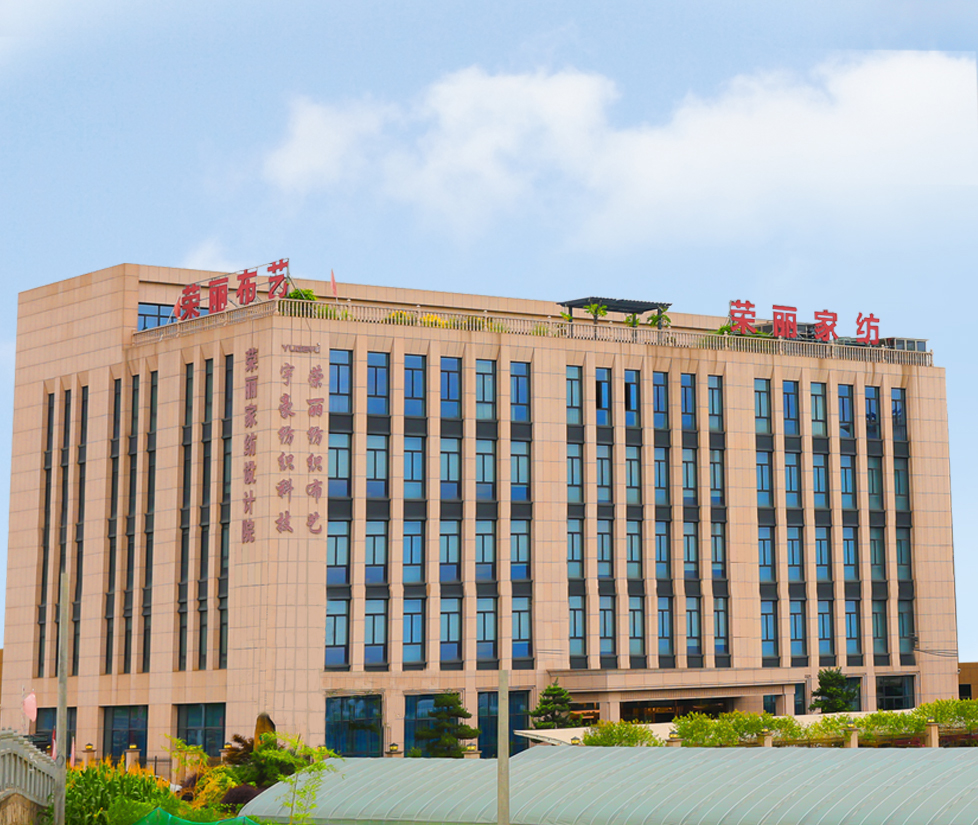
Hangzhou Xiaoshan RongLi Clothing Co.,Ltd.

Hangzhou Xiaoshan RongLi Clothing Co.,Ltd. was established in 1989 and has been a professional company dedicated to modern mattress fabric. Our company covers 100000 ㎡, and has been honored with "AAA enterprise" of Hangzhou enterprise credit rating, "Xiaoshan brand products", and "Hangzhou famous brand" of our "Rongli trademark". Meanwhile, our company has passed ISO9001:2000 quality system accreditation and all our fabrics have passed the inspection of EU REACH and accreditation of German Hein Stan Oeko-TexStand100.xStand100 certificate.

We are China Soft Knit Mattress Fabric Manufacturers and Custom ODM/OEM Soft Knit Mattress Fabric Factory. Our company integrates mattresses, design, production, R&D, and sales of home textiles, and imports advanced waving machinery from West Germany and Italy, among others. Produced jacquard, printed, dyed, and color-dyed fabric, knitting mattress, tatting materials, and thermal transfer printed material are of fashionable style and have wide varieties. Knitted and printed tatting cloths are widely applied to cushions, mattresses, pillow covers, sofas, and the manufacturing of thermally transferred printed fabrics. At present, our products are not only sold to all major cities but also sold to countries and regions such as Europe, America, South-East Asia, the Middle East, Japan, and Korea, enjoying a good reputation at home and abroad and are very popular among customers.

News
Soft knit mattress fabric Industry knowledge
Product Range & Application Engineering

Soft knit mattress fabric

Hangzhou Xiaoshan RongLi Clothing Co., Ltd. is a Soft knit mattress fabric manufacturer serving industrial projects that require a defined process window, reliable integration and a documented technical scope.

Our approach connects the product configuration with the workpiece, production target, quality requirement and automation plan. The resulting scope covers the main equipment, line interfaces, acceptance basis and lifecycle support needed for a coordinated installation.

Configured Around the Application

We define the configuration around the required operation, material grade, workpiece dimensions, processing sequence, tolerance and output per shift. Product variety and changeover frequency are also incorporated because they affect capacity margin, tooling, controls, access and automation level.

Our technical proposal states the sizing assumptions and normal operating range instead of relying only on a theoretical maximum. Drawings, representative samples and process-trial data allow the product and tooling arrangement to be aligned before configuration approval.

Technical Scope and Configuration

The technical scope can cover rated capacity, working range, stroke or travel, speed, usable work area, clearance, accuracy, repeatability, rigidity, drive and control architecture, power requirements and compatible tooling. We distinguish rated values, adjustable ranges and configuration-dependent performance in the proposal.

  • Performance is matched to the intended working point, not only to a headline maximum.
  • Our scope identifies included equipment, optional equipment and site-supplied interfaces.
  • Drawings, layout data and utility requirements support project planning.
  • Control language, data interfaces, recipes, traceability and line communication are defined for the application.

Automation, Safety and Site Integration

The base machine or product is one part of the complete installation. Our integration scope can account for feeding, transfer, tooling, guarding, sensors, conveyors, lubrication, scrap handling, inspection and connected equipment, with physical interfaces, signals and commissioning responsibilities defined in an interface document.

Safety provisions are aligned with the destination market and plant requirements. The documented scope identifies guards, interlocks, emergency-stop circuits, risk-reduction features and conformity documents applicable to the delivered configuration.

Quality Control and Acceptance

Our project scope connects critical-component selection, fabrication, assembly, inspection and pre-shipment testing with the agreed specifications. Factory acceptance conditions can define the test material, operating duration, measurement method and records supplied with the equipment.

Relevant factory resources, quality records, technical drawings and change-control documents provide a practical basis for technical review. Certification references are applied only when their issuer, scope and validity match the delivered configuration.

Application and Project Matrix

Project Area Application Information Our Technical Output
Application fit Material, part drawing, process and output target Sizing calculation and recommended configuration
Acceptance Measured tolerances, test duration and sample Inspection plan and FAT record
Lifecycle support Shift pattern, maintenance resources and destination Service scope, manuals and spare-parts plan

Total Cost, Delivery and Lifecycle Support

Our proposal can separate the base product, tooling, options, auxiliary equipment, packaging, delivery documents, installation, commissioning, training and initial spare parts. It also defines delivery terms, production milestones, approval points and the effect of approved changes on price or lead time.

Lifecycle support considers energy use, consumables, lubrication, wear parts, maintenance access, diagnostics, software and spare-parts availability. Maintenance intervals, recommended spares, warranty boundaries and available remote or on-site support can be documented for the destination country.

Information We Use to Configure Your Solution

  • Part drawing, material specification, dimensions and tolerance requirements
  • Process sequence, tooling information and representative samples
  • Target cycle rate, shifts per day, annual volume and planned capacity margin
  • Required configuration, automation level and line interfaces
  • Destination voltage, frequency, utilities, floor space and environmental conditions
  • Safety, documentation, certification and language requirements
  • Inspection method and factory/site acceptance criteria
  • Packaging, delivery terms, installation, training and service expectations
  • Requested spare-parts package, warranty terms and quotation validity

Related Equipment Categories

Compare Jacquard mattress fabric when the application requires a different frame, working area, drive arrangement or automation level.

A Configuration Built Around Your Project

Share the application details above with Hangzhou Xiaoshan RongLi Clothing Co., Ltd.. We will connect each major configuration choice to the production requirement and prepare a proposal that separates standard scope, options, site responsibilities and items requiring technical confirmation.