 English
 русский
 Español
 中文简体
中文简体
Article Directory
- 1 I. The Global Mandate for Mattress Fire Safety
- 2 II. International Flammability Standards: Defining Compliance
- 3 III. Non-Chemical Strategies for Enhanced Fire Safety
- 4 IV. Safety and Quality Assurance for B2B Supply
- 5 V. Safety, Innovation, and Global Reach
- 6 VI. Frequently Asked Questions (FAQ)
- 6.1 1. Is it the knitted jacquard fabric for mattress or the whole mattress that must comply with CFR 1633?
- 6.2 2. What is the benefit of Achieving non-chemical flame resistance in mattress fabric?
- 6.3 3. What is the difference between the EN 597-1 and EN 597-2 tests?
- 6.4 4. How does OEKO-TEX Standard 100 relate to the BS 7177 testing requirements for knitted mattress fabric?
- 6.5 5. How can the knitted jacquard fabric for mattress structure help meet International fire safety standards for mattress fabric?
I. The Global Mandate for Mattress Fire Safety
In the highly regulated bedding industry, the flammability performance of knitted jacquard fabric for mattress is not merely a feature, but a critical legal requirement. Consumer safety regulations globally mandate that mattresses resist ignition from open flames and smoldering sources. For B2B suppliers, understanding and meeting standards like CFR 1633 in the US or BS 7177 in the UK is essential for market entry. Furthermore, there is a growing ethical imperative to achieve these fire safety levels while avoiding the use of potentially harmful, non-halogenated chemical treatments.
Hangzhou Xiaoshan RongLi Clothing Co., Ltd. recognizes that "customers come first" means prioritizing safety. Our integration of design, R&D, and production adheres to rigorous quality systems, including ISO 9001:2000, and our fabrics are certified under OEKO-TEX Standard 100, assuring B2B partners of fabrics that meet strict quality and safety criteria, thereby achieving International fire safety standards for mattress fabric.
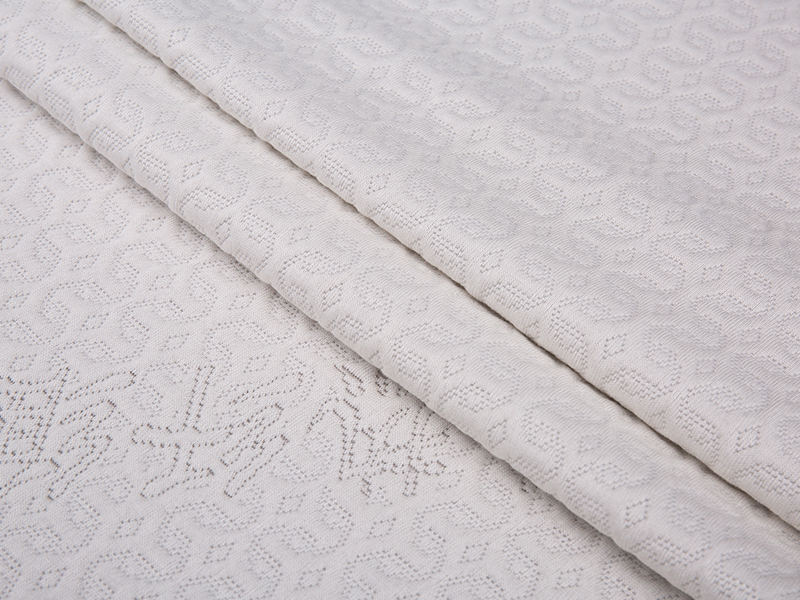
II. International Flammability Standards: Defining Compliance
Compliance is complex, as different regions test the entire mattress composite, while still requiring the ticking component to demonstrate specific characteristics.
A. North American Compliance: CFR 1633 compliance for mattress ticking
In the United States, mattresses must comply with 16 CFR Part 1633 (Open Flame Standard) and 16 CFR Part 1632 (Smoldering Cigarette Standard). The CFR 1633 test is performed on the full mattress composite, measuring heat release rate and mass loss. While the ticking itself (the knitted jacquard fabric for mattress) is a component, its role is vital. Fabric suppliers must ensure their ticking performs optimally within the mattress's fire barrier system, often providing ticking engineered to pass the component test or designed specifically to integrate with high-performance FR barriers for final CFR 1633 compliance for mattress ticking.
B. European Compliance: EN 597 cigarette and match test for mattress ticking and BS 7177 testing requirements for knitted mattress fabric
In Europe and the UK, the primary compliance tests for mattress ticking are outlined in EN 597 Parts 1 & 2 (smoldering cigarette and match equivalent). The UK standard, BS 7177 testing requirements for knitted mattress fabric, often requires a higher performance level, linking the EN standards to specific hazard categories (Low, Medium, High). The knitted jacquard fabric for mattress must demonstrate that it will not sustain combustion when exposed to these minor ignition sources.
| Standard | Geographic Focus | Test Ignition Source Type |
|---|---|---|
| 16 CFR 1633 | United States | Open Flame (Gas Burner) – Tests full composite |
| EN 597-1 | European Union/UK | Smoldering Cigarette – Tests ticking component |
| EN 597-2 | European Union/UK | Match Equivalent (Propane Flame) – Tests ticking component |
III. Non-Chemical Strategies for Enhanced Fire Safety
The safest path to achieving International fire safety standards for mattress fabric involves moving away from topical, fugitive chemical treatments toward inherent fiber solutions and structural engineering.
A. Inherently Fire-Resistant Fiber Integration
The most effective non-chemical approach is the integration of inherently fire-resistant (FR) fibers directly into the yarn or structure of the knitted jacquard fabric for mattress. Fibers with a high Limiting Oxygen Index (LOI) (e.g., mineral-based fibers, or specialty FR-viscose) do not burn easily because they require a high concentration of oxygen to sustain combustion. By strategically knitting these fibers into the backing layer of the ticking, a permanent, effective thermal barrier is created, successfully Achieving non-chemical flame resistance in mattress fabric without requiring topical, leachable chemicals.
B. Knit Structure and Density Optimization
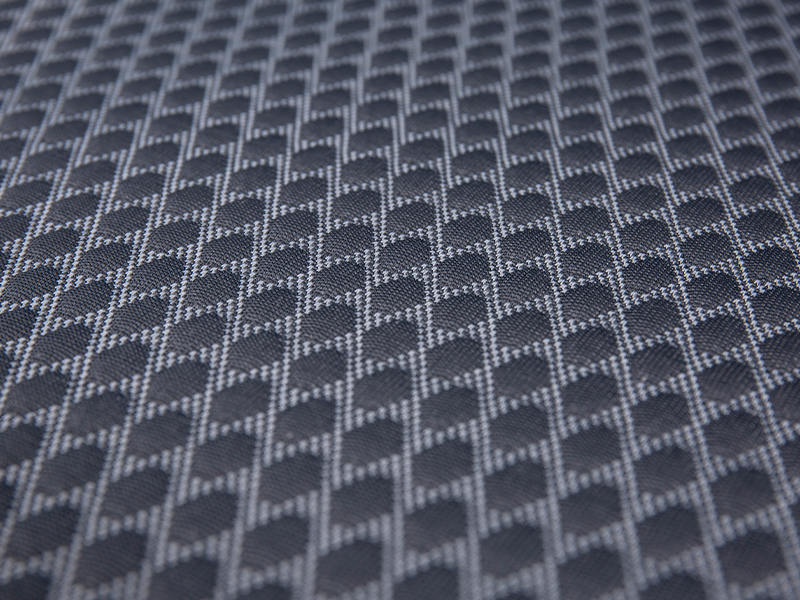
Fabric construction itself can enhance safety. A tight, high-density knit structure minimizes the volume of air trapped within the fabric, effectively starving a small flame of oxygen. While highly decorative, the technical weave of the knitted jacquard fabric for mattress must be optimized (e.g., tight double-knit jacquard) to contribute mechanically to fire resistance, reinforcing the performance of the inherent FR fibers used to meet BS 7177 testing requirements for knitted mattress fabric.
IV. Safety and Quality Assurance for B2B Supply
RongLi's comprehensive approach ensures that safety and quality are integrated from the initial design phase.
A. OEKO-TEX and REACH Compliance
All fabrics produced by RongLi pass the inspection of EU REACH and the accreditation of German Hein Stan OEKO-TEX Standard 100. This certification is crucial for B2B partners, as it provides independent verification that the ticking, including any inherent FR fibers or non-toxic finishes used for Achieving non-chemical flame resistance in mattress fabric, is free from regulated harmful substances.
B. Technical Consultation and Certification
We leverage advanced imported weaving machinery and strict QC to ensure the stability of FR performance. We provide the necessary technical data and support to mattress manufacturers to help them achieve final certifications, whether they require materials for CFR 1633 compliance for mattress ticking or materials designed for the EN 597 cigarette and match test for mattress ticking.
V. Safety, Innovation, and Global Reach
The future of the mattress industry requires knitted jacquard fabric for mattress that delivers both aesthetic appeal and uncompromising safety. By focusing on non-chemical, inherent FR fiber integration and structural excellence, manufacturers can achieve compliance with stringent regulations like BS 7177 testing requirements for knitted mattress fabric and CFR 1633 compliance for mattress ticking. This commitment to safety and quality is the foundation of global B2B partnerships.
VI. Frequently Asked Questions (FAQ)
1. Is it the knitted jacquard fabric for mattress or the whole mattress that must comply with CFR 1633?
- A: CFR 1633 is an open-flame test required for the entire mattress composite. While the fabric itself is a component, it must be engineered to function effectively within the overall FR barrier system to ensure the final product achieves CFR 1633 compliance for mattress ticking.
2. What is the benefit of Achieving non-chemical flame resistance in mattress fabric?
- A: Non-chemical flame resistance, achieved through inherent FR fibers, provides permanent fire safety that will not wash out. Crucially, it avoids the use of topical, potentially leachable, halogenated chemicals, which is preferred by consumers and meets stricter environmental standards like OEKO-TEX.
3. What is the difference between the EN 597-1 and EN 597-2 tests?
- A: EN 597-1 tests the fabric's resistance to a smoldering cigarette (simulating low-heat, long-duration ignition). EN 597-2 tests resistance to a small flame equivalent to a match (simulating higher-heat, short-duration ignition). Both are key International fire safety standards for mattress fabric.
4. How does OEKO-TEX Standard 100 relate to the BS 7177 testing requirements for knitted mattress fabric?
- A: BS 7177 is a flammability standard. OEKO-TEX Standard 100 is a safety standard certifying the fabric is free from harmful levels of toxic substances. They address different concerns, but both are essential for B2B global sales, ensuring the fabric is both fire-safe and chemical-safe.
5. How can the knitted jacquard fabric for mattress structure help meet International fire safety standards for mattress fabric?
- A: Using a dense, tight knit structure (like a double-knit jacquard) reduces the fabric's porosity, which limits the oxygen supply to a potential flame. This structural optimization, combined with inherent FR fibers, improves overall fire safety performance.