 English
 русский
 Español
 中文简体
中文简体
Article Directory
- 1 I. Introduction: Longevity as the Core Quality Metric
- 2 II. Pilling Resistance: Aesthetic Integrity and Standards
- 3 III. Abrasion Resistance: Structural Longevity and Cycle Count
- 4 IV. Manufacturing Processes and Quality Assurance
- 5 V. Conclusion: Technology and Innovation for Quality
- 6 VI. Frequently Asked Questions (FAQ)
- 6.1 1. Why is the ISO 12945-2 test commonly used for Pilling resistance testing standards for mattress fabric?
- 6.2 2. What is the typical minimum cycle count for Abrasion resistance requirements for bed coverings using the Martindale test?
- 6.3 3. How does the jacquard knitting structure aid in Ensuring aesthetic durability of jacquard mattress fabric?
- 6.4 4. Does the fabric weight (GSM) impact durability standards like the ISO 12945-2 pilling grade for knitted mattress ticking?
- 6.5 5. What is the significance of the OEKO-TEX Standard 100 certificate for B2B procurement of knitted jacquard fabric for mattress?
I. Introduction: Longevity as the Core Quality Metric
The selection of the ticking, particularly a sophisticated knitted jacquard fabric for mattress, is a defining factor in a mattress's perceived value and its actual service life. A luxurious hand feel is essential, but for B2B procurement, the focus must be on quantifiable durability metrics: Pilling Resistance (maintaining aesthetic integrity) and Abrasion Resistance (ensuring structural longevity). Failure in either area leads to rapid appearance degradation, directly undermining the manufacturer's warranty and brand reputation.
Hangzhou Xiaoshan RongLi Clothing Co., Ltd. has dedicated decades to specializing in modern mattress fabric, integrating design, production, and R&D. Our commitment, upheld by ISO 9001 and OEKO-TEX Standard 100 certifications, is to provide technologically advanced fabrics that exceed the stringent durability standards expected in Europe, America, and other global markets. We ensure that our knitted jacquard fabric for mattress is robustly engineered to meet the demands of the mattress's entire life cycle.
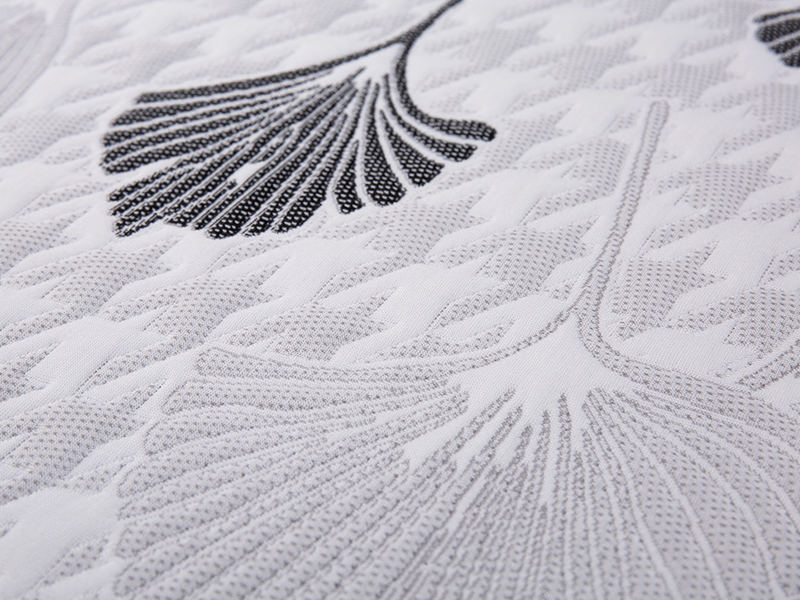
II. Pilling Resistance: Aesthetic Integrity and Standards
Pilling—the formation of fiber entanglement balls—is primarily a cosmetic failure but signals poor yarn quality or loose knit construction. It is typically quantified using the Martindale or ICI Pilling Box methods.
A. Pilling resistance testing standards for mattress fabric (ISO 12945-2)
The ISO 12945-2 standard is widely used to assess pilling resistance, employing a five-point grading scale where Grade 5 signifies no pilling and Grade 1 signifies heavy pilling. Given the expected long lifespan of a mattress and the constant friction from bedding and body movement, knitted jacquard fabric for mattress must aim high. To ensure Ensuring aesthetic durability of jacquard mattress fabric, B2B buyers should require a minimum performance target of Grade 3.5 to 4.0 after 2,000 cycles for the ISO 12945-2 pilling grade for knitted mattress ticking. Fabrics scoring below Grade 3 will show noticeable pilling early in the product's life.
B. Fiber Chemistry and Structure Influence
Pilling tendency is a function of yarn type and composition. Short, staple fibers (like certain cotton blends) with low twist have more free ends to migrate and pill. Conversely, continuous filament yarns (like high-quality polyester or nylon) resist pilling significantly better. The challenge in a knitted jacquard fabric for mattress is often managing blends, where two different fiber types are used for design or function (e.g., softness vs. durability).
| Yarn Type Used in Ticking | Pilling Tendency | Minimum Acceptable ISO 12945-2 pilling grade for knitted mattress ticking |
|---|---|---|
| High-Quality Continuous Filament Polyester/Microfiber | Low | Grade 4.0 (Excellent Appearance Retention) |
| Low-Twist Staple Fiber Blends (e.g., Viscose) | Moderate to High | Grade 3.5 (Required Minimum for Commercial Use) |
III. Abrasion Resistance: Structural Longevity and Cycle Count
Abrasion resistance measures the fabric's ability to withstand physical rubbing until structural failure (thread breakage or visible wear-through) occurs. This is the ultimate test of the fabric's longevity and fitness for purpose.
A. Martindale abrasion cycles for mattress ticking durability (ASTM D4966 / ISO 12947-2)
While often associated with upholstery, the Martindale test provides the most relevant data for Abrasion resistance requirements for bed coverings. The required cycle count for knitted jacquard fabric for mattress is lower than for upholstery but must still be robust. B2B specifications for high-quality mattress ticking typically demand a minimum of 5,000 to 7,500 Martindale abrasion cycles before structural failure. Exceeding 10,000 cycles for Martindale abrasion cycles for mattress ticking durability ensures the fabric will significantly outlast the typical 5-to-10-year lifespan of the mattress without wearing thin, thus fulfilling Ensuring aesthetic durability of jacquard mattress fabric.
B. Knit Structure and Ensuring aesthetic durability of jacquard mattress fabric
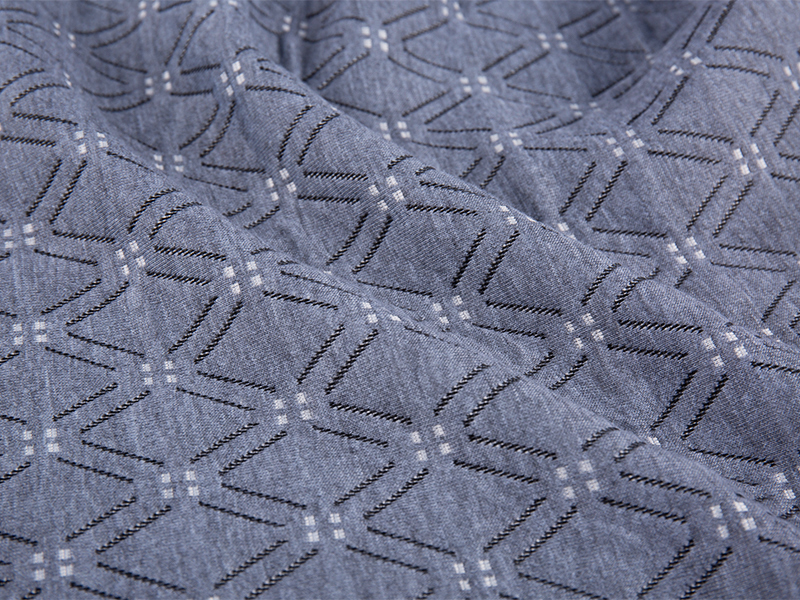
The inherent construction of the knit is crucial. A double-knit jacquard structure, characterized by two fabric layers interconnected by stitches, is vastly superior in abrasion resistance compared to a simple single-jersey knit. This dense, multi-layered structure offers enhanced resilience against frictional wear and prevents the fabric from snagging or running, a primary concern for knitted jacquard fabric for mattress.
IV. Manufacturing Processes and Quality Assurance
RongLi's process control ensures that these standards are met consistently across high-volume production.
A. Heat Setting and Dimensional Stability
Precise heat setting after weaving and dyeing is a non-negotiable step. This thermal treatment stabilizes the synthetic fibers, permanently setting the stitch loops of the knitted jacquard fabric for mattress. This process not only controls shrinkage but also significantly improves dimensional stability, which is intrinsically linked to enhancing the fabric's resistance to both pilling and abrasion.
B. Quality Compliance and Technical Consultation
We integrate advanced weaving machinery from West Germany and Italy with a strict quality control system, ensuring our fabrics comply not only with durability metrics (like Abrasion resistance requirements for bed coverings) but also with critical international safety standards, including EU REACH and OEKO-TEX Standard 100. We proactively communicate with B2B partners, offering technical consultation on design choices to ensure the optimal balance between aesthetic jacquard complexity and required functional durability.
V. Conclusion: Technology and Innovation for Quality
The long-term success of a mattress hinges on the durability of its textile surface. Achieving high performance in knitted jacquard fabric for mattress is the result of integrating technology, innovation, and strict adherence to global standards. By meeting or exceeding the minimum ISO 12945-2 pilling grade for knitted mattress ticking and the demanding Martindale abrasion cycles for mattress ticking durability, manufacturers like RongLi provide the confidence necessary for enduring product quality in the competitive global market.
VI. Frequently Asked Questions (FAQ)
1. Why is the ISO 12945-2 test commonly used for Pilling resistance testing standards for mattress fabric?
- A: ISO 12945-2 (Martindale Method) provides a controlled, measurable friction test that rates the severity of pilling on a five-point scale. It is widely accepted internationally as a reliable method for determining the aesthetic durability of a surface fabric, which is critical for knitted jacquard fabric for mattress.
2. What is the typical minimum cycle count for Abrasion resistance requirements for bed coverings using the Martindale test?
- A: For high-quality knitted jacquard fabric for mattress, the minimum required Martindale cycle count (ISO 12947-2) is typically 5,000 to 7,500 cycles. Achieving this level ensures the fabric will not structurally fail under normal use over the warranted life of the mattress.
3. How does the jacquard knitting structure aid in Ensuring aesthetic durability of jacquard mattress fabric?
- A: Jacquard fabrics, especially when engineered as double knits, have a denser, more complex, and often multi-layered structure compared to simpler knits. This increased structural mass provides superior resistance to abrasion and prevents stitch distortion, which contributes significantly to Ensuring aesthetic durability of jacquard mattress fabric.
4. Does the fabric weight (GSM) impact durability standards like the ISO 12945-2 pilling grade for knitted mattress ticking?
- A: Yes, generally. While pilling is primarily a function of fiber quality, a higher Grams per Square Meter (GSM) often correlates with a denser, more compact knit structure. This tighter construction physically restricts fiber movement, generally leading to better resistance against pilling and improved structural integrity to meet Pilling resistance testing standards for mattress fabric.
5. What is the significance of the OEKO-TEX Standard 100 certificate for B2B procurement of knitted jacquard fabric for mattress?
- A: The OEKO-TEX Standard 100 certification assures B2B buyers that the knitted jacquard fabric for mattress has been tested for harmful substances and is safe for human contact. While not directly a durability standard, it is a critical health and safety requirement, demonstrating a commitment to responsible and high-quality manufacturing.