 English
 русский
 Español
 中文简体
中文简体
Article Directory
- 1 Fiber Selection and Spinning Parameters for Surface Stability
- 2 Dimensional Stability and Shrinkage Control Mechanisms
- 3 Technical Comparison of Fabric Stability Treatments
- 4 Chemical Finishing and Cross-Linking Agents
- 5 Quality Assurance and Regulatory Alignment
- 6 Engineering FAQ
- 7 Technical References
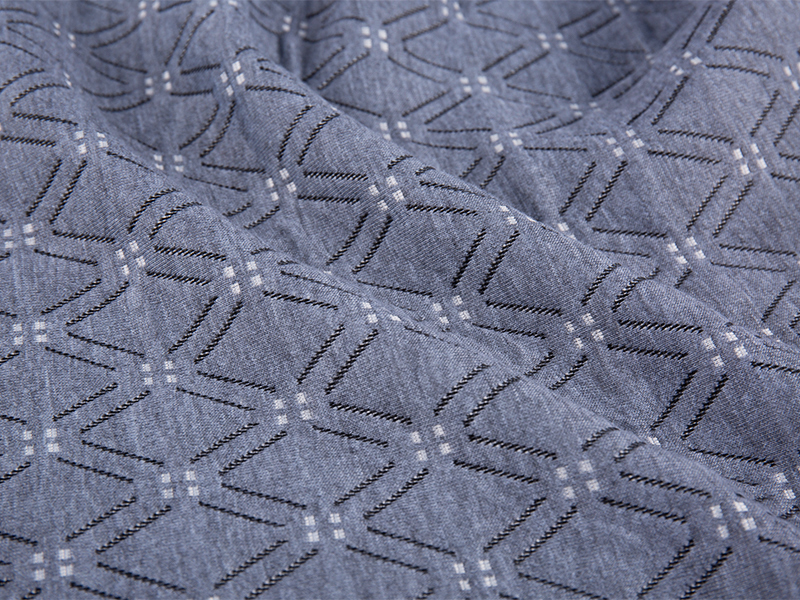
Hangzhou Xiaoshan RongLi Clothing Co., Ltd., established in 1989, operates a 100,000 square meter facility dedicated to the research, development, and manufacture of modern textile solutions. As a recognized AAA-rated enterprise in Hangzhou, our production infrastructure integrates advanced weaving machinery from West Germany and Italy. Our Cotton mattress fabric satisfies rigorous international benchmarks, including ISO 9001:200 quality system accreditation, EU REACH inspections, and the German Oeko-Tex Standard 100 certificate. By combining decades of expertise with precision jacquard and knitting technologies, we address the complex mechanical and thermal challenges inherent in large-scale textile manufacturing.
Fiber Selection and Spinning Parameters for Surface Stability
- 1. Staple Length and Uniformity: The primary cause of pilling in cotton mattress fabrics is the migration of short fibers to the yarn surface. We utilize long-staple cotton with a minimum length of 28mm to ensure more twists per inch, which mechanically anchors the fibers within the yarn core.
- 2. Yarn Twist Optimization: Increasing the twist factor (Alpha) reduces fiber protrusion. When evaluating how to improve pilling resistance in 100% cotton knits, a higher twist multiplier is employed during the ring-spinning or compact-spinning process to minimize the hairy surface that initiates pill formation.
- 3. Singeing and Bio-Polishing: To achieve a smooth Ra surface finish, the fabric undergoes gas singeing to burn off protruding micro-fibers. This is often followed by cellulase enzyme treatment, a critical step in industrial bio-polishing for mattress fabric durability, which chemically removes weakened surface fibers.
Dimensional Stability and Shrinkage Control Mechanisms
- 1. Internal Stress Relaxation: During weaving or knitting, yarns are under high tension. Why does cotton mattress fabric shrink after washing? It is the result of the elastic recovery of these strained fibers. We implement a tensionless drying process to allow the loops to return to their natural, relaxed state.
- 2. Mechanical Compacting: Our West German and Italian machinery utilize felt-belt compacting. This sanforization process for cotton mattress materials mechanically pre-shrinks the fabric by compressing the warp yarns, typically reducing residual shrinkage to less than 3% under ISO 6330 testing standards.
- 3. Mercerization Effects: Treating the fabric with concentrated sodium hydroxide (NaOH) swells the cotton fibers, changing their cross-section from bean-shaped to circular. This mercerized cotton vs unmercerized for mattress covers comparison shows that mercerization significantly enhances dimensional stability and increases luster.
Technical Comparison of Fabric Stability Treatments
In large-scale production, selecting the correct finishing method is vital for balancing hand-feel with technical performance. The following data compares standard finishing against advanced stability treatments.
| Testing Metric | Standard Cotton Fabric | RongLi Stabilized Cotton |
| Shrinkage (Wash 60°C) | 8% - 12% | <3% |
| Pilling Resistance (Martindale) | Grade 2-3 | Grade 4-5 |
| Tensile Strength (N) | 450N | >600N |
| Air Permeability (mm/s) | 150 | 180 |
Chemical Finishing and Cross-Linking Agents
- 1. Resin Finishing for Crease Recovery: Low-formaldehyde cross-linking agents are applied to create molecular bridges between cellulose chains. This is a proven method for reducing cotton fabric shrinkage in heavy-duty mattress applications where frequent cleaning is anticipated.
- 2. Hydrophobic Surface Modifiers: Applying eco-friendly softeners reduces the coefficient of friction. This anti-pilling chemical treatment for mattress textiles prevents fibers from entangling and knotting when subjected to the abrasive forces of sleep movement.
- 3. Thermosetting Protocols: For blended Cotton mattress fabric, precise temperature control in the stenter (usually 160°C to 180°C) is required. This heat setting temperature for cotton blends ensures that synthetic fibers within the matrix lock the cotton yarns in place, further preventing dimensional distortion.
- 4. Moisture Management: Proper moisture regain control (typically 8.5% for cotton) during the final winding process prevents the fabric from becoming brittle, which would otherwise increase fiber breakage and pilling in mattress protectors.
Quality Assurance and Regulatory Alignment
- 1. Martindale Abrasion Testing: We subject all batches to ISO 12945-2 testing. Our best cotton fabric construction for pilling resistance must achieve a minimum of 30,000 rubs without significant surface degradation.
- 2. REACH and Oeko-Tex Compliance: Every Cotton mattress fabric roll is tested for pH value, formaldehyde content, and prohibited azo dyes, ensuring the finished product is safe for prolonged skin contact.
Engineering FAQ
- Does thread count affect the pilling of cotton mattress fabric? Yes. Higher thread counts with finer, tightly twisted yarns generally exhibit better pilling resistance because there are fewer exposed fiber ends per square inch.
- Can pilling be completely eliminated in 100% cotton? While it cannot be 100% eliminated due to the nature of natural cellulose, industrial bio-polishing and singeing can reduce it to a negligible level (Grade 4.5+).
- How does GSM affect fabric shrinkage? Higher GSM (grams per square meter) fabrics often have more complex loop structures in knitting, which can trap more internal stress and may require more intensive mechanical compacting.
- Is mercerized cotton safe for Oeko-Tex Standard 100? Yes. Mercerization is a mechanical/chemical process that, when followed by proper neutralization and rinsing, leaves no harmful residues on the fabric.
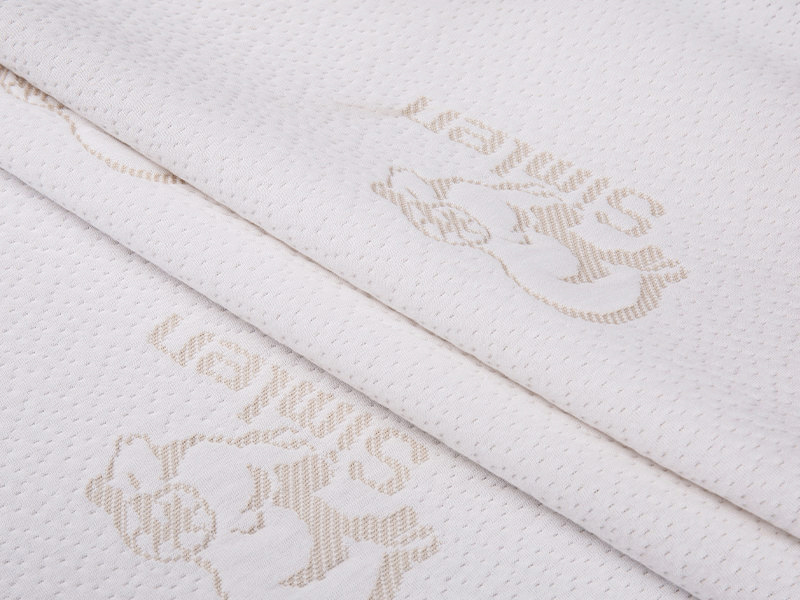
- What is the impact of jacquard weaving on shrinkage? The intricate float yarns in jacquard designs can create uneven tension. We use imported Italian looms to maintain constant electronic let-off tension to mitigate this.
Technical References
- ISO 6330: Textiles — Domestic washing and drying procedures for textile testing.
- ISO 12947-2: Textiles — Determination of the abrasion resistance of fabrics by the Martindale method.
- AATCC Test Method 124: Appearance of Fabrics after Repeated Home Laundering.
TKD Metadata: Title: Description: Technical analysis on reducing pilling and shrinkage in premium Cotton mattress fabric. Engineering insights on sanforization, bio-polishing, and ISO standards. Keywords: Cotton mattress fabric, pilling resistance, fabric shrinkage control URL Slug: reduce-pilling-shrinkage-cotton-mattress-fabric-production