 English
 русский
 Español
 中文简体
中文简体
Article Directory
- 1 Woven Jacquard Fabric Quality: What Separates Premium from Standard
- 2 Colorfastness in Woven Jacquard Fabric: Built-In, Not Applied
- 3 Abrasion Resistance: Why Jacquard Outperforms in High-Traffic Applications
- 4 Woven Jacquard Fabric Texture: The Physical Dimension No Print Can Replicate
- 5 Woven Jacquard vs Printed Fabric: A Direct Comparison
- 6 Woven Jacquard Fabric for Upholstery: Specification Guide
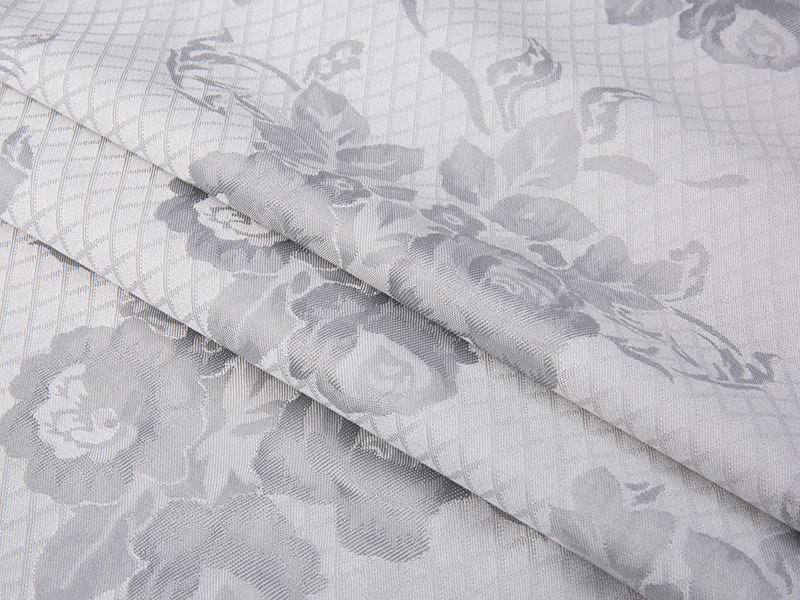
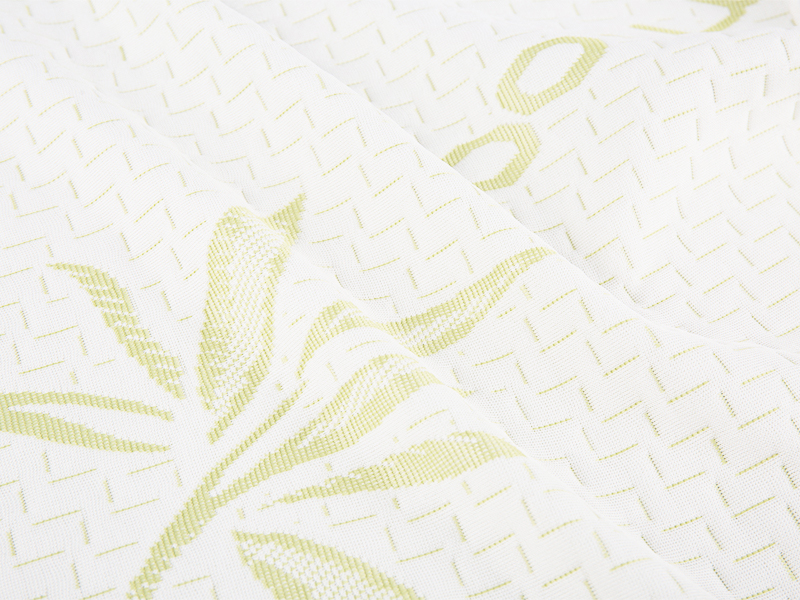
Fabric construction determines everything downstream — durability, surface character, color permanence, and end-use suitability. Woven jacquard fabric occupies a distinct position in the textile hierarchy: its patterns are not applied to the surface but built into the weave structure itself, using a Jacquard loom mechanism that controls individual warp threads to create complex, multi-layer designs with physical texture and dimensional depth that no printing process can replicate.
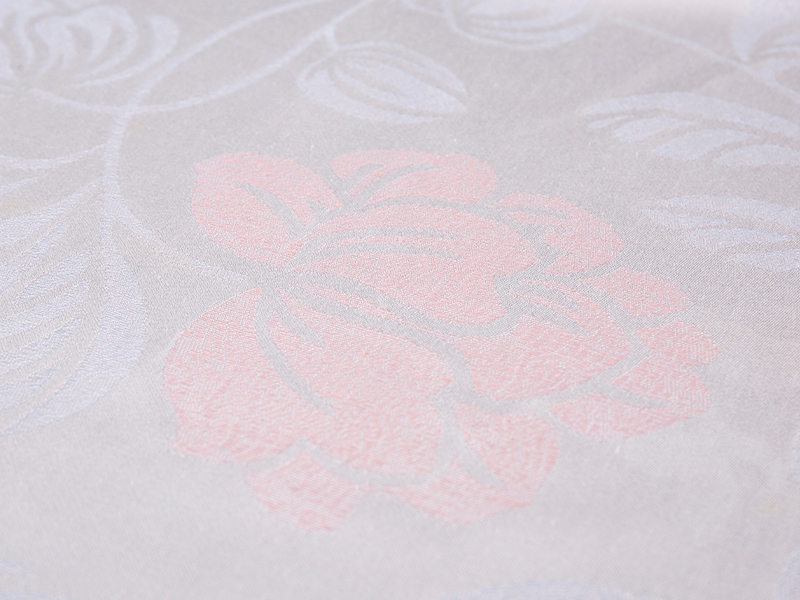
Woven jacquard fabric is a textile produced on an electronically controlled Jacquard loom in which each warp thread is independently actuated, allowing the creation of intricate patterns — florals, damasks, geometrics, brocades — as an integral part of the woven structure rather than as a surface print or coating. The resulting fabric has raised texture, dimensional motifs, and colorfastness that is inherent to the yarn, not dependent on dye adhesion to a surface.
Woven Jacquard Fabric Quality: What Separates Premium from Standard
Quality in woven jacquard fabric is determined at three levels: yarn quality, weave density, and pattern registration precision. Each variable compounds — a fabric woven with high-tenacity yarns at 280 threads per inch with zero pattern misalignment performs fundamentally differently from a commodity jacquard produced at 160 threads per inch with lower-grade yarns.
01
Yarn Count and Twist
Premium jacquard uses combed or ring-spun yarns with consistent twist per inch, producing a smoother weave surface and sharper motif edges. Open-end spun yarns introduce surface hairiness that softens pattern definition.
02
Thread Density (EPI x PPI)
Higher thread counts per inch produce denser, more stable fabric with superior abrasion resistance. Upholstery-grade jacquard typically reaches 240–320 total threads per inch versus 160–200 for decorative applications.
03
Pattern Registration
Electronic Jacquard heads with 10,000+ hooks allow pattern repeats of up to 40 cm with sub-millimeter warp alignment, ensuring motif integrity across the full fabric width without distortion at selvedge edges.
04
Finishing Standards
Heat-setting, calendering, or resin finishing stabilizes dimensional properties after weaving. Properly finished jacquard shrinks less than 2% after washing and retains its embossed surface character throughout the product lifecycle.
Colorfastness in Woven Jacquard Fabric: Built-In, Not Applied
Colorfastness is where woven jacquard fabric holds a structural advantage over every printed alternative. Color in jacquard resides inside the yarn — applied during yarn dyeing or piece dyeing before weaving — not in a dye layer sitting on top of the fiber. This means no print layer to crack, no surface dye to lift, and no color boundary that degrades under abrasion or UV exposure.
Solution-dyed yarns used in high-performance jacquard upholstery fabrics embed pigment directly into the fiber during extrusion, achieving light fastness ratings of ISO Grade 6 or above — suitable for direct sunlight exposure in contract and hospitality environments without measurable fading over a 5-year service period.
Abrasion Resistance: Why Jacquard Outperforms in High-Traffic Applications
Abrasion resistance is the defining performance criterion for upholstery fabric, and woven jacquard fabric consistently outperforms comparable-weight printed or plain wovens due to its multi-layer weave structure. When surface yarns wear, the interlocked weave beneath provides continued structural support — the fabric does not thin, pill, or expose backing material in the same way that surface-coated or single-layer alternatives do.
Performance Standard
Contract-grade woven jacquard fabric achieves Martindale abrasion resistance of 30,000 to 100,000 cycles depending on fiber content and weave density — meeting EN ISO 12947 requirements for heavy commercial use, where the minimum specification is 30,000 cycles for seating and 15,000 cycles for light domestic upholstery.
Polyester-blend and nylon-warp jacquard fabrics reach the upper end of this range, making them the specification of choice for hospitality seating, office chairs, and transportation upholstery where surfaces face continuous friction from daily use.
Woven Jacquard Fabric Texture: The Physical Dimension No Print Can Replicate
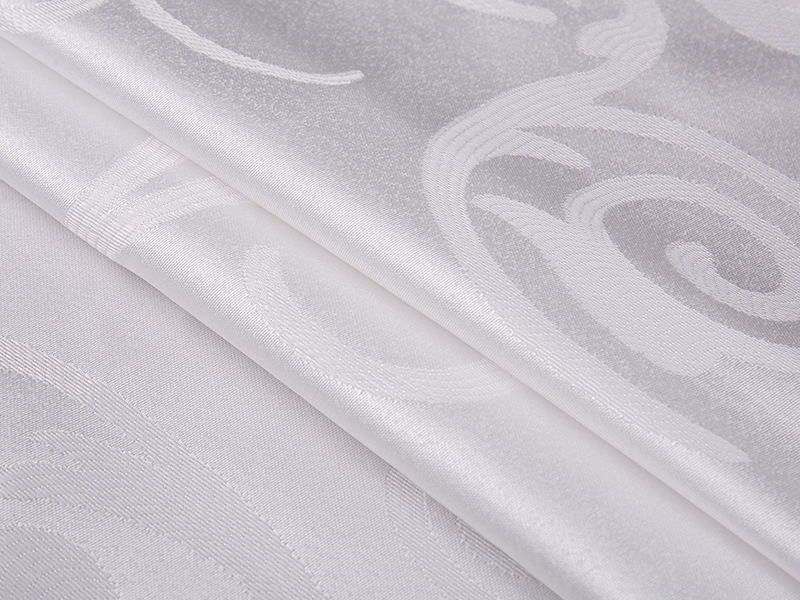
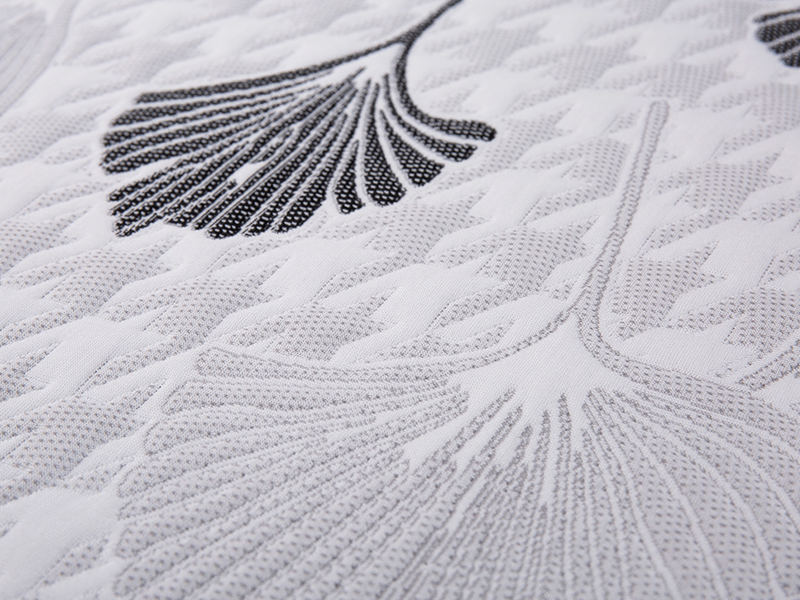
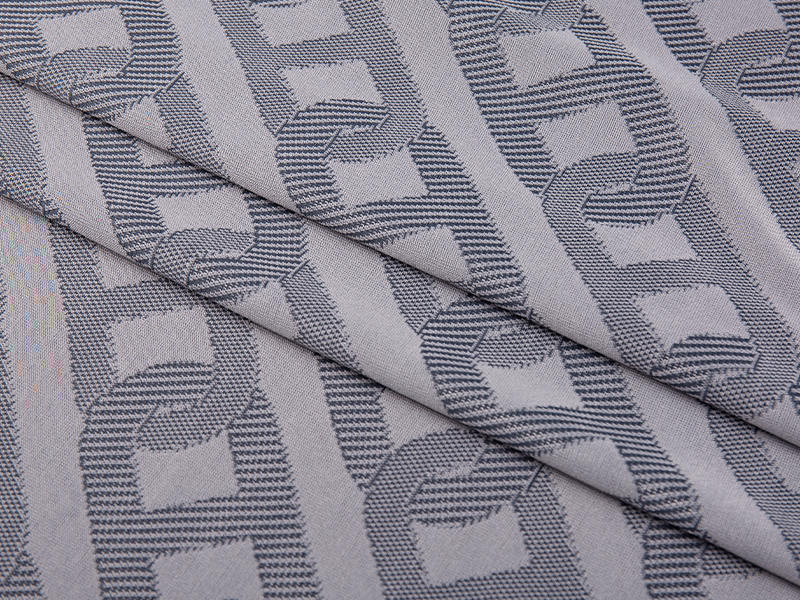
Texture is the characteristic that visually and tactilely distinguishes woven jacquard fabric from every surface-printed alternative. The Jacquard mechanism creates genuine three-dimensional structure — raised motifs, recessed ground weaves, float patterns — that casts subtle shadow, reflects light directionally, and responds to touch in ways that flat inkjet or screen-printed textiles fundamentally cannot achieve.
- Damask: Reversible single-colour jacquard with satin-face motifs on a twill or plain ground, producing lustrous contrast through light reflection rather than color difference.
- Brocade: Multi-color jacquard with supplementary weft floats creating raised motifs, typically in metallic or high-sheen yarns for decorative furniture and drapery applications.
- Matelasse: Double-cloth jacquard with a quilted or puckered surface appearance created by differential shrinkage between face and backing layers during finishing.
- Tapestry jacquard: High thread-count, pictorial weave with 8 or more colors per repeat, used for decorative panels, headboards, and statement upholstery pieces.
Woven Jacquard vs Printed Fabric: A Direct Comparison
The choice between woven jacquard fabric and printed fabric is not a price-vs-quality trade-off in every application — it is a functional specification decision based on end-use requirements, aesthetic objectives, and expected service life.
| Criterion | Woven Jacquard | Printed Fabric |
| Pattern Origin | Integral to weave structure | Surface applied dye or ink |
| Surface Texture | 3D raised and recessed motifs | Flat — no dimensional variation |
| Colorfastness (Rubbing) | ISO Grade 4–5 | ISO Grade 3–4 (pigment print) |
| Abrasion Resistance | 30,000–100,000 Martindale cycles | 10,000–25,000 Martindale cycles |
| Pattern Reversibility | Reversible (same pattern both sides) | Single face only |
| Design Complexity | Unlimited via electronic Jacquard head | Limited by screen count or print head |
| Best Application | Upholstery, drapery, mattress ticking, contract seating | Bedding, cushion covers, curtain panels |
Woven Jacquard Fabric for Upholstery: Specification Guide
Specifying woven jacquard fabric for upholstery applications requires matching fabric weight, fiber content, and abrasion rating to the intensity of use the finished piece will face. The following specifications cover the primary upholstery use cases.
- Residential seating (sofas, armchairs): 300–400 gsm jacquard with 25,000–40,000 Martindale cycles. Cotton-polyester blends provide softness combined with adequate durability for normal domestic use.
- Contract and hospitality seating: 380–500 gsm with 50,000+ Martindale cycles. Solution-dyed polyester or nylon warp construction recommended for maximum colorfastness under cleaning chemicals and continuous friction.
- Headboards and bed panels: 280–350 gsm decorative jacquard with 15,000+ Martindale cycles. Matelasse and brocade constructions provide the visual depth suited to bedroom furniture focal points.
- Mattress ticking: 200–280 gsm tight-woven jacquard with fire-retardant finishing, providing both surface aesthetics and the dimensional stability required for panel lamination and border construction.
- Drapery and curtain panels: 200–320 gsm damask or tapestry jacquard with blackout or thermal lining lamination for functional window treatment applications in hospitality and residential projects.
FAQ: Woven Jacquard Fabric
What fiber contents are available in woven jacquard fabric?
Woven jacquard fabric is produced in a wide range of fiber compositions including 100% polyester, polyester-cotton blends (typically 65/35 or 80/20), 100% cotton, viscose-polyester blends, and nylon-warp constructions. Fiber content determines the final balance of softness, durability, colorfastness, and cost. Polyester and polyester-blend jacquards dominate upholstery applications due to their abrasion resistance and colorfastness, while cotton and viscose blends are preferred for decorative and apparel uses where natural hand feel is a priority.
Can woven jacquard fabric be used for outdoor upholstery?
Solution-dyed acrylic or polyester jacquard fabrics with UV-stabilized yarns and water-repellent finishing are suitable for covered outdoor environments such as pergolas, sunrooms, and covered terraces. For fully exposed outdoor use, acrylic-warp jacquard with Teflon or fluorocarbon finishing provides the best combination of UV resistance, water repellency, and mold resistance. Standard cotton or viscose-blend jacquard is not recommended for outdoor applications.
How is woven jacquard fabric different from dobby fabric?
Both Jacquard and dobby looms produce patterned woven fabrics, but the Jacquard mechanism controls each individual warp thread independently, enabling complex large-scale repeats with photographic design detail. Dobby looms use a shaft-based system that limits patterns to geometric repeats of 32 shafts or fewer. Jacquard fabric is therefore capable of far greater design complexity, larger repeat sizes, and more intricate motifs than any dobby-woven textile.
What is the standard width for woven jacquard upholstery fabric?
Woven jacquard upholstery fabric is most commonly produced in 140 cm (55 inch) width for standard furniture cutting, with 150 cm and 280 cm widths available for wide-panel applications such as bed headboards, wall panels, and large-format drapery. Pattern repeats range from 5 cm for small geometric designs to 64 cm or more for large tapestry and brocade motifs, and repeat size must be accounted for when calculating fabric quantities for upholstery cutting.