 English
 русский
 Español
 中文简体

Article Directory
- 1 What Moisture Management Means for a Mattress
- 2 Key Performance Metrics That Define Moisture Management
- 3 Fiber-Level Behavior: Where Moisture Is Stored
- 4 Construction and Finishing: How Ticking Moves Sweat
- 5 Application-Specific Moisture Requirements
- 6 Specifying and Verifying Moisture Performance
- 7 Frequently Asked Questions
Moisture management in mattress fabric is the engineered transport of liquid perspiration and water vapor away from the sleeping surface through absorption, wicking, and vapor transmission. It is the first line of defense against clammy bedding, odor-forming bacteria, and the degradation of foam cores caused by trapped humidity. Hangzhou Xiaoshan RongLi Clothing Co., Ltd., a mattress fabric mill founded in 1989, applies these principles across its baby, cooling, mattress-ticking, and sustainable product families, so the performance language in this guide is written from a supplier's perspective, not a retailer's.
What Moisture Management Means for a Mattress
Moisture management for mattress fabric is the controlled movement of sweat and vapor away from the skin, and it is one of the most frequently cited comfort complaints in warm-climate and hot-sleeper segments. Unlike clothing, a mattress is a layered composite: ticking, comfort layer, and core. Once moisture penetrates the face fabric, it has little room to escape, so the fabric's ability to transport and release moisture determines whether the bed feels dry by morning.
Moisture management in mattress fabric is the engineered transport of liquid perspiration and water vapor away from the skin through absorption, wicking, evaporation, and vapor transmission, measured by defined physical test metrics.
Three physical paths move moisture through a mattress fabric:
- Vapor diffusion: water vapor passes directly through the yarn structure and inter-fiber spaces.
- Fiber absorption: hydrophilic fibers such as cotton and lyocell take moisture into the polymer itself.
- Capillary wicking: liquid sweat is pulled along the surface and through channels between yarns and filaments.
A fabric that relies on only one path will fail in real use. An absorbent cotton face without capillary transport becomes saturated and holds moisture against the skin; a hydrophobic polyester face without a wicking finish simply repels and traps the sweat at the interface.
Key Performance Metrics That Define Moisture Management
Five metrics determine whether a mattress fabric manages moisture or simply feels dry for the first hour: moisture regain, vertical wicking, one-way transport index, moisture vapor transmission rate, and drying time. These are standard textile measurements, and a responsible supplier can report them from lab tests rather than from subjective hand-feel.
| Metric | What it measures | Typical target for mattress ticking | Common test method |
| Moisture regain | Equilibrium water content of the fiber at 65% relative humidity, 21 C | Up to 11.5% depending on fiber family | ASTM D1909 |
| Vertical wicking | Height that liquid climbs along the fabric in a set time | At least 50 mm in 30 minutes | AATCC 197 |
| One-way transport index | Ability to move liquid sweat from the skin side to the outer side | At least 100 under AATCC 195 | AATCC 195 |
| MVTR | Mass of water vapor passing through the fabric in 24 hours | At least 3000 g/m2/24h | ASTM E96, ISO 15496 |
| Drying time | Time for a saturated fabric sample to return to dry state | No more than 4 hours in a controlled lab | Mill-level protocol |
These metrics are not interchangeable. A fabric can record a high MVTR yet fail to move liquid sweat because it has no wicking gradient, and a fabric with excellent wicking can still trap vapor at the skin side if its vapor transmission is low. Specify at least two metrics from different paths when you write a technical datasheet.
Fiber-Level Behavior: Where Moisture Is Stored
Fiber chemistry sets the upper limit of a mattress fabric's moisture performance. Polyester retains less than 0.5 percent of its weight as absorbed water, while lyocell retains more than 11 percent, and that difference determines how a fabric feels against damp skin during the night.
The practical consequence for mattress construction is direct. Cotton yarns absorb sweat and hold it inside the fiber, which feels comfortable at first but slows drying. Polyester filaments do not absorb, so they move moisture along the surface by capillary action and release it quickly, but only when the fabric structure is engineered with fine denier yarns or channeled cross-sections. Lyocell and bamboo-viscose fibers sit between the two, offering high absorption with a smoother surface structure and a shorter drying curve than cotton.
The moisture-regain gap between polyester and lyocell. A fiber that cannot store water can only wick and evaporate, so the entire moisture story of a fabric starts at the polymer level.
Blending is the standard commercial answer. A mattress ticking that combines a hydrophilic fiber for absorption with a fine synthetic yarn for wicking gives the mattress core a dry microclimate while keeping hand-feel soft. The durable hydrophilic finish applied to the yarn is often the deciding factor, which is why evaluation should never stop at fabric weight or construction.
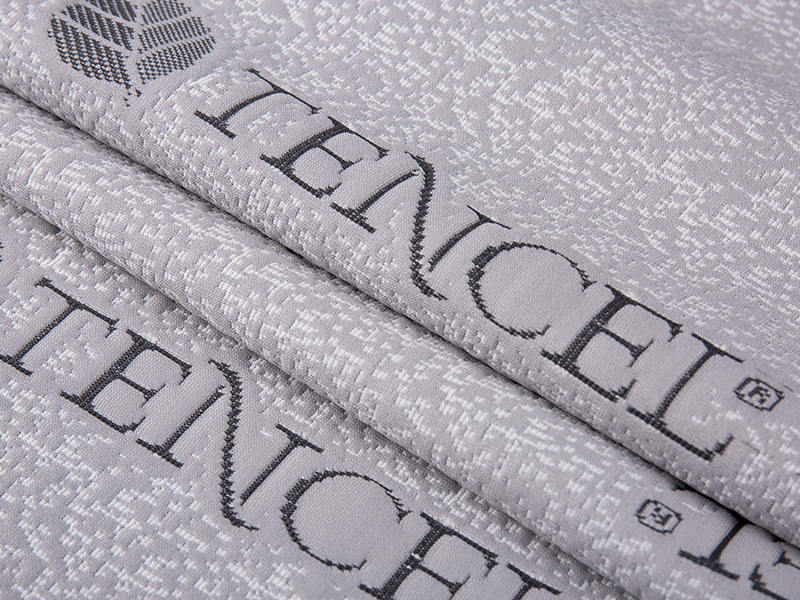 Tencel Lyocell Mattress Fabric with Durable Hydrophilic FinishThis wood-pulp-based cellulose fabric offers a closed-loop process and hydrophilic fibrils for efficient moisture absorption, making it a practical choice for mattress ticking where dry microclimate and durable construction matter.View Product →
Construction and Finishing: How Ticking Moves Sweat
Yarn count, knitting structure, and the finishing layer decide how fast sweat reaches the fabric surface, and the same fiber family can feel clammy in a flat woven construction or dry overnight in an open knit. For most mattress lines, the difference between a failed moisture story and a durable one is in the construction and finish stack, not in the raw polymer.
Knit mattress ticking
Open loops create capillary channels that move sweat laterally and away from the skin. Higher stretch lets the fabric sit closer to the foam without wrinkling, which improves contact and perceived dryness. The trade-off is lower dimensional stability unless the knit is engineered with a stable yarn balance.
Woven mattress ticking
Tight construction delivers a crisper surface and stronger abrasion resistance, but the denser yarn packing reduces inter-yarn channels for moisture vapor. If a woven face is selected for aesthetics, the moisture performance depends on fiber hydrophilicity and a well-chosen wicking finish.
Finishing is the fastest lever. A hydrophilic finish converts a polyester surface from moisture-repelling to wicking, while an anti-microbial finish prevents the odor that develops when sweat remains in the fabric overnight. The critical constraint is durability: a finish that washes out after ten cycles does not meet contract standards.
- Hydrophilic silicone softener improves surface wetting without a heavy, coated hand-feel.
- Channeled and micro-denier yarns increase capillary pressure for faster liquid transport.
- Anti-microbial treatments control odor and bacterial growth in the humid surface layer.
- Breathable moisture barriers block liquid water while allowing vapor transmission for baby and medical lines.
Cooling product lines combine moisture-wicking constructions with temperature-regulating fibers that absorb excess skin heat, which is why a cooling fabric must be evaluated for both heat response and moisture transport.
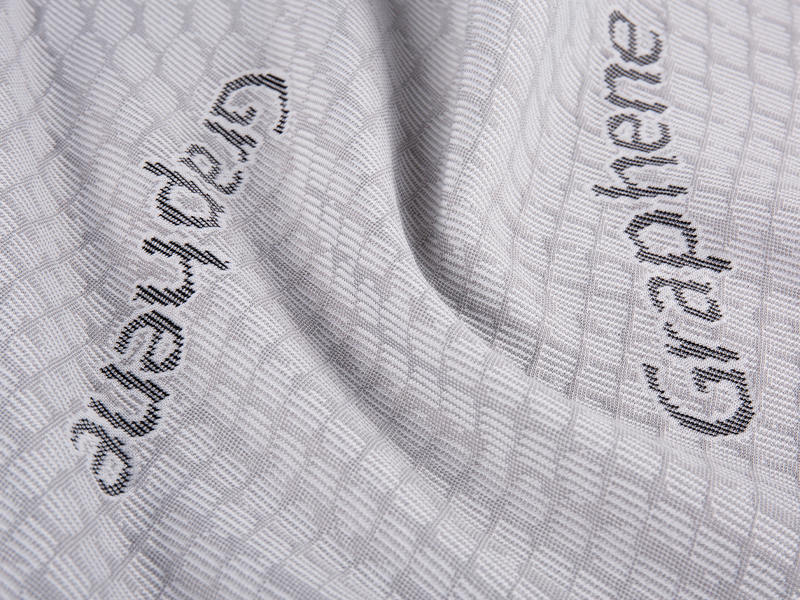 PCM-Integrated Temperature Regulating Mattress FabricWith phase change microcapsules that buffer skin temperature fluctuations and withstand industrial laundering, this fabric suits dynamic thermal management across cooling, baby-care, and hospitality mattress segments.View Product →
Application-Specific Moisture Requirements
Cooling, baby-care, and hospitality mattresses demand different moisture profiles, and one spec sheet rarely serves all three segments. The primary moisture risk differs: adult hot sleepers struggle with sweat accumulation and heat, babies are sensitive to skin maceration from trapped moisture, and rental beds need performance that survives frequent laundering.
| Application | Primary moisture risk | Priority behavior | Fabric families to evaluate |
| Hot sleeper and cooling lines | Night sweat accumulation at the contact surface | Fast wicking, high MVTR, quick drying | Cooling knits, temperature-regulating fabrics |
| Baby mattress | Trapped humidity against sensitive skin, spills, and washability | Liquid barrier with high vapor transmission | Waterproof and mesh mattress fabrics |
| Hospitality and rental | Rapid turnover, repeated industrial washing | Wash-durable wicking and dimensional stability | Polyester-rich knitted ticking, heavy-duty covers |
For baby mattresses the balance is strict. A fully impermeable cover stops liquid from reaching the foam, but if it also stops vapor, the sleeping surface becomes a humid pocket. The practical solution is a breathable moisture barrier or a mesh construction that keeps the skin dry while protecting the core.
Baby mattress fabrics need both directions: keep liquid out, keep vapor moving. The test that matters is the MVTR reading on the complete laminated cover, not the base fabric alone.
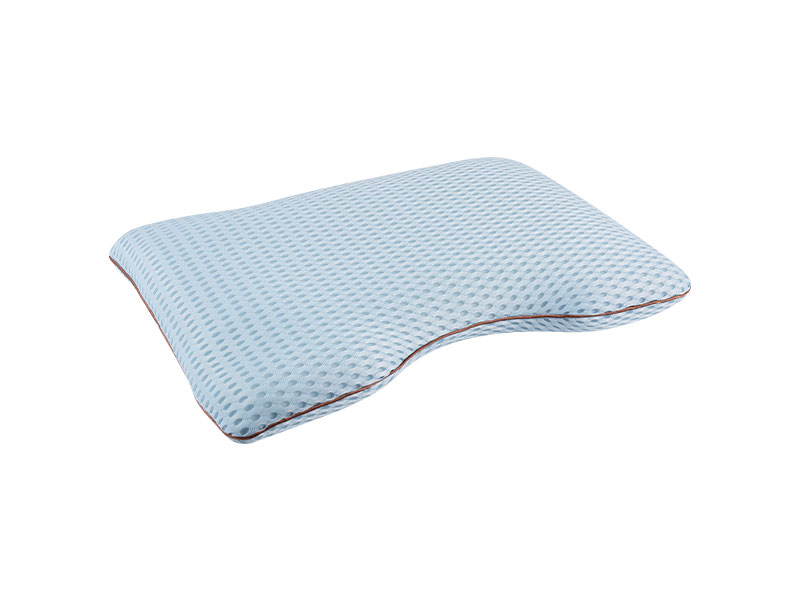 3D Spacer Mesh Mattress Fabric for Airflow and Moisture Vapor TransferConstructed with vertical resilient fibers and an open-cell structure, this polyester mesh promotes multidirectional airflow and high MVTR, addressing vapor movement on laminated covers for breathable mattress applications.View Product →
Specifying and Verifying Moisture Performance
Specify a measurable threshold and a named test method in every purchase order, because a wicking claim without a method cannot be audited. The fastest way to remove ambiguity from a supply chain conversation is to put a target value next to a standard protocol in the technical datasheet.
- Define the target metric and value, for example a one-way transport index of at least 100 under AATCC 195.
- Request the mill's test reports and raw data for MVTR, wicking, and drying time, not just a marketing summary.
- Wash the candidate fabric for 20 to 30 cycles and retest the same properties to confirm finish durability.
- Assemble a mock-up with your foam core and measure the microclimate humidity over a simulated eight-hour sweat profile.
Oeko-Tex Standard 100 and EU REACH certification confirm chemical safety, not moisture performance. Treat certifications as the baseline for material compliance, then verify physical moisture behavior with AATCC and ISO test methods.
Hangzhou Xiaoshan RongLi Clothing Co., Ltd. certifies its mattress fabric lines under Oeko-Tex Standard 100 and REACH, and its development offer includes cooling, baby-safe, and breathable fabric families that can be evaluated against the metrics in this guide. For a deeper look at how knit constructions release heat and humidity, read our earlier technical article on breathability and heat dissipation of knit mattress fabric.
Frequently Asked Questions
What is the most important moisture management metric for mattress fabric?
Moisture vapor transmission rate and the one-way transport index are the two decision-critical values. MVTR explains how much vapor escapes through the ticking, and the one-way transport index explains how quickly liquid sweat is removed from the skin side. A combined target of at least 3000 g/m2/24h and an index of at least 100 is a defensible starting point for adult bedding.
Does Oeko-Tex certification prove that a mattress fabric manages moisture?
No. Oeko-Tex Standard 100 verifies that a fabric is chemically safe and free from prohibited substances; it does not measure wicking, drying, or vapor transmission. Use certified materials as the compliance base, and request AATCC 195 and ASTM E96 reports for moisture performance.
Can a polyester mattress fabric offer good moisture management?
Yes, when the polyester is engineered with micro-denier or channeled yarns and a durable hydrophilic finish. Because polyester stores almost no water, it moves moisture along the surface and releases it quickly, but the finish quality and yarn geometry decide whether the fabric actually wicks in real use.
How many wash cycles should moisture performance survive?
For contract and hospitality programs, require at least 25 industrial wash cycles with no more than a 20 percent drop in wicking. For consumer bedding, 10 to 20 cycles is a common commercial threshold, and the only way to confirm it is to wash a lab sample and retest the same property.
A moisture-managed mattress fabric is a measurable assembly of fiber, construction, and finish. Define the metric, test the sample, wash the sample, and retest, and the claim will survive both the lab and the customer.