 English
 русский
 Español
 中文简体
中文简体
Article Directory
A mattress fabric contract can look excellent on paper and still fail at the port of entry. In 2025, a European bedding brand lost an entire container of ticking because the mill changed yarn suppliers after the Oeko-Tex certificate had already been issued; the shipment contained a restricted phthalate, and the brand only discovered it after laboratory testing in Rotterdam. That sequence is not rare, and it is exactly why B2B mattress fabric procurement has moved from price negotiation to structured supplier qualification.
This guide is built for procurement teams, product developers, and quality managers who need a repeatable method for selecting a mattress fabric mill. It covers five verification areas: compliance certifications, material and production capability, traceability, commercial terms, and a step-by-step evaluation process.
Certification Compliance Comes Before Price
The first requirement in mattress fabric supplier selection is certification compliance, but the only valid proof is a certificate whose scope covers the exact product category, production site, and validity period you are buying under.
Many mills present a folder of PDF certificates. The critical documents, in order of importance for a sleep products brand, are ISO 9001 for process consistency, Oeko-Tex Standard 100 for finished fabric safety, and EU REACH documentation for chemical substances. Oeko-Tex Standard 100 certifies that a specific textile article has been tested against a defined list of regulated and health relevant substances. REACH places legal responsibility on every actor that places an article on the EU market. ISO 9001 demonstrates that the mill's manufacturing processes are documented, monitored, and audited.
Core definition
Mattress fabric supplier selection is the structured evaluation of a mill's certifications, production capability, and quality system against the buyer's target market regulations and product specifications.
Call the issuing institute, confirm the certificate number, and check the scope clause. A valid Oeko-Tex certificate for upholstery fabrics is not automatically valid for mattress ticking. For a detailed walkthrough of the submission and testing process, see this Oeko-Tex mattress fabric guide.
| Certification | What it verifies | Procurement action |
| ISO 9001 | Quality management system and process consistency | Request the latest audit certificate and scope of certification |
| Oeko-Tex Standard 100 | Finished fabric screened against regulated and health relevant substances | Validate the certificate number and product scope on the institute database |
| EU REACH | Legal compliance of substances in articles placed on the EU market | Request batch level declarations and restricted substance test reports |
Supplier scorecard weightings in mattress fabric sourcing
lead timeWeightings are planning assumptions based on common importer scorecards; each buyer should calibrate them to its own market and product mix.
Material Capability Defines Your Product Range
The second criterion in supplier selection is the range of fabric constructions a mill can reproduce in-house, because that range determines how many of your mattress models one supplier can cover.
Knitted and woven fabrics behave differently in stability, pattern precision, and comfort. Jacquard weaving produces stable, dimensionally precise ticking for premium mattresses; knitting creates softer, more breathable surfaces that follow the mattress contour. A supplier that can deliver both, plus dyeing, printing, and finishing, reduces the need to split orders across multiple mills. Hangzhou Xiaoshan RongLi Clothing Co., Ltd. is a mattress fabric specialist with a 100,000 sqm manufacturing complex in Hangzhou and imported weaving machinery from Western Europe and Italy; its product lines span cooling, baby, mattress ticking, and sustainable categories.
Knitted jacquard
- Soft hand and high drape
- Breathable surface for microclimate comfort
- Pattern definition is slightly softer
- Typical for comfort top and mid range mattresses
Woven jacquard
- Stable construction and precise pattern
- Higher abrasion resistance for heavy duty ticking
- Low stretch; requires careful cutting
- Typical for luxury and contract grade mattresses
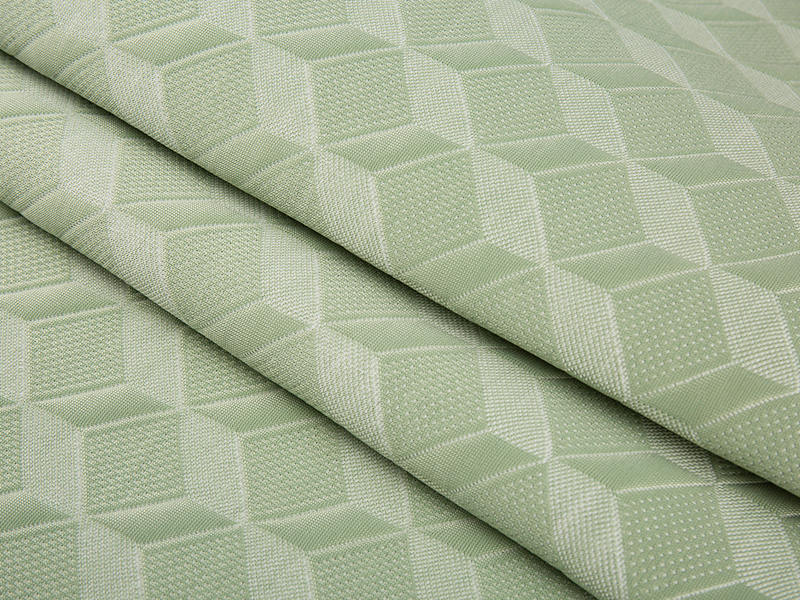 Cool Touch Fabric for Mattress ManufacturersThis engineered fabric uses HDPE or mica-infused yarns to achieve a Q-max of 0.25–0.45, offering documented contact cooling. It suits mattress lines requiring dedicated cooling performance, with options like 3D effect and bean-like textures.View Product →
Functional segments demand dedicated fabrics. Cooling mattress lines are often specified with Qmax, thermal conductivity, and wash resistance targets; baby lines require washability, waterproofness, and low chemical finishes. If your portfolio includes such segments, ask the mill which standard lines are already tested, the GSM range, and whether Oeko-Tex status covers the whole product family. The cool-touch fabric from RongLi is an example of a dedicated cooling construction with documented contact cooling characteristics.
A practical probe: ask the mill to reproduce your key specifications, including weight, breathability, pilling grade, and seam strength, in a 500 meter pilot run within 21 days. The response speed and defect rate reveal more than any brochure.
Quality Systems and Traceability Protect the Order
The third criterion is traceability, because sample approval means nothing unless the mill can link every weaving lot, dye batch, and finishing run to a documented inspection record.
Two mills can hold the same ISO 9001 certificate; the difference is visible in the depth of their process records. Ask whether the quality system covers incoming yarn tests, in process GSM and shade monitoring, final inspection, and retained samples per batch. Batch level Oeko-Tex declarations should match every shipment, and REACH statements should name the specific substances covered.
- Incoming yarn test records showing count, strength, and shade
- In process GSM, width, and shade logs for each batch
- Final inspection reports with AQL level or 100 percent visual inspection
- Batch level Oeko-Tex declarations and retained samples
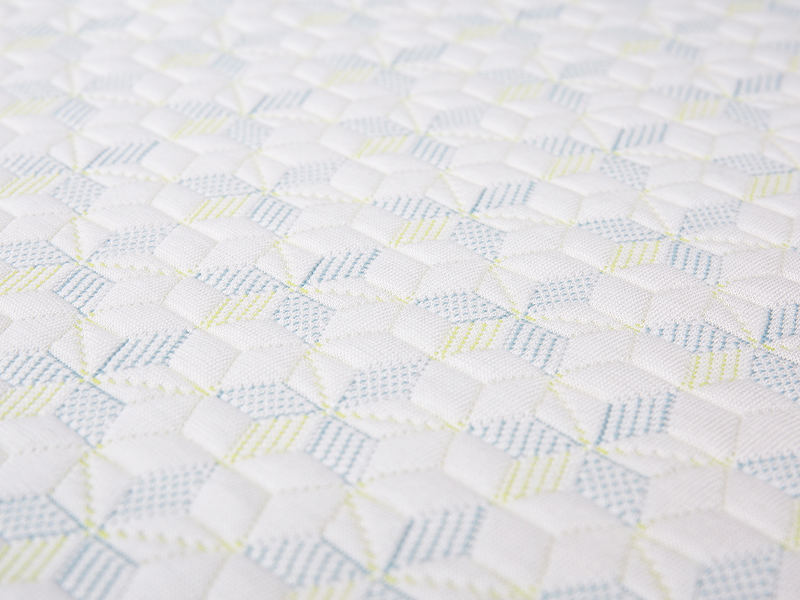 Sustainable Mattress Fabric Supplier OptionsRongLi groups recycled polyester, organic cotton, and jacquard weaves under a dedicated sustainable category. This simplifies comparing certifications like GRS, Oeko-Tex, and Cradle to Cradle for buyers prioritizing traceable, lower-impact materials.View Product →
Sustainability claims also become part of traceability. A sustainable category on a mill's website is not evidence; ask what makes it sustainable, whether organic cotton origin, recycled polyester, Oeko-Tex certification of the specific style, or a combination. RongLi groups its organic cotton, polyester, soft knit, jacquard, and woven jacquard options under a dedicated sustainable mattress fabric category, which makes compliance comparison easier for buyers.
A certificate covers a product type; a batch record covers a specific production run. Buyers that request both remove most of the risk from the approval to production gap.
Commercial Terms and Lead Time Drive Real Margins
The fourth criterion is total landed cost, and unit price is only one part of it. The real margin drivers are sampling speed, production lead time, minimum order quantity (MOQ) flexibility, and how the mill handles non conforming batches.
Typical contract terms for mattress ticking start at MOQs of 500 to 3,000 meters per color, with 20 to 45 days of production lead time depending on the finishing route. A mill that keeps stock or holds standard blank greige fabric can shorten lead times substantially. Buyers should also negotiate an agreed sampling cycle, a penalty for late delivery, and a clear replacement policy for defective rolls.
Total landed cost check: fabric price, freight, customs, testing, defect handling, and margin risk from line stoppage.
A Five-Step Supplier Evaluation Process
The fastest route to a dependable mattress fabric supply base is a standard evaluation sequence, because without it procurement teams repeat the same surprises in every negotiation.
-
Lock the specification and target market rules
Define construction, GSM, finish, flame retardant requirements, and the certifications your market requires.
-
Pre-screen mills on compliance and fabric range
Validate certification scope, product categories, and minimum order terms before sending a single specification.
-
Request samples with a full test report
Ask for pilling, abrasion, seam strength, breathability, and color fastness data on the exact construction proposed.
-
Run a pilot production order
A 500 to 1,000 meter pilot surfaces shade, shrinkage, and finishing issues that lab samples hide.
-
Audit the mill and set KPI based contracts
Inspect the weaving hall, dye house, and inspection line; agree on lead time, defect rate, and response time targets.
At the audit stage, confirm that finishing and inspection happen under the same roof. Integrated production reduces the risk of subcontractor variation and gives you a single quality owner to hold accountable.
 Waterproof Fabric for Baby MattressesThis TPU-laminated textile blocks liquids while remaining breathable, and it meets Oeko-Tex Standard 100 without phthalates, lead, or PVC. It is designed for crib mattresses, protectors, and changing stations that require washable, sanitary surfaces.View Product →
Application specific requirements should enter the evaluation in step one. For baby mattress lines, define washability, waterproofness, and low chemical finishes in the specification itself. A mill with a dedicated waterproof baby mattress fabric line will already have standard constructions and test data to share.
Frequently Asked Questions
What certifications should a mattress fabric supplier hold for European exports?
At minimum, EU REACH compliance and Oeko-Tex Standard 100 certification for the specific fabric type, supported by an ISO 9001 quality management system at the mill. Confirm the certificate scope and validity date with the issuing body.
What is a typical MOQ for B2B mattress ticking orders?
Most woven and knitted ticking suppliers quote 500 to 3,000 meters per color for stocking ranges, and 1,000 to 5,000 meters for custom jacquard designs. MOQ is often reduced for repeat colors or when the buyer commits to scheduled releases.
How do I verify an Oeko-Tex certificate is still valid?
Check the certificate number in the issuing institute's online database, confirm the certificate holder's name matches the mill, and verify that the product scope includes mattress ticking. Ask for batch level Oeko-Tex declarations with each shipment.
What is the difference between REACH and Oeko-Tex Standard 100?
REACH is an EU regulation that requires every actor in the supply chain to manage chemical risk. Oeko-Tex Standard 100 is a third party certified test result for one specific textile product. A REACH compliant article is not automatically Oeko-Tex certified, and the two documents serve different procurement purposes.