 English
 русский
 Español
 中文简体
中文简体
Article Directory
Hangzhou Xiaoshan RongLi Clothing Co., Ltd., established in 1989, operates a 100,000 square meter manufacturing base equipped with advanced weaving machinery from West Germany and Italy. As an ISO9001:2000 accredited enterprise, our "Rongli" brand specializes in the R&D and large-scale production of modern jacquard, knitted, and thermal transfer printed materials. All fabrics produced in our facility comply with EU REACH standards and German Oeko-Tex Standard 100 certifications. In the context of global circular economy initiatives, polyester mattress fabric derived from 100% recycled post-consumer PET (rPET) is undergoing rigorous engineering scrutiny to determine its viability as a direct replacement for virgin synthetics. The core technical challenge lies in maintaining consistent polymer viscosity and fiber denier to ensure the final product meets high-end hospitality and residential comfort standards.
Polymer Chain Integrity and Tensile Strength in rPET Fibers
The tensile strength of recycled polyester mattress fabric is a critical parameter for ensuring the durability of the mattress ticking under constant mechanical stress. During the recycling process, thermal degradation can lead to shorter molecular chains; however, by utilizing solid-state polymerization (SSP), the intrinsic viscosity of rPET for bedding can be restored to levels equivalent to virgin resin. When evaluating recycled vs virgin polyester mattress fabric, engineers utilize ASTM D5034 grab tests to measure breaking force. Modern polyester mattress fabric produced from high-tenacity rPET yarns consistently achieves a breaking strength exceeding 350 Newtons, providing the structural stability required for heavy-duty quilted covers without compromising the elongation properties of sustainable knits.
Surface Friction and Tactile Texture Calibration
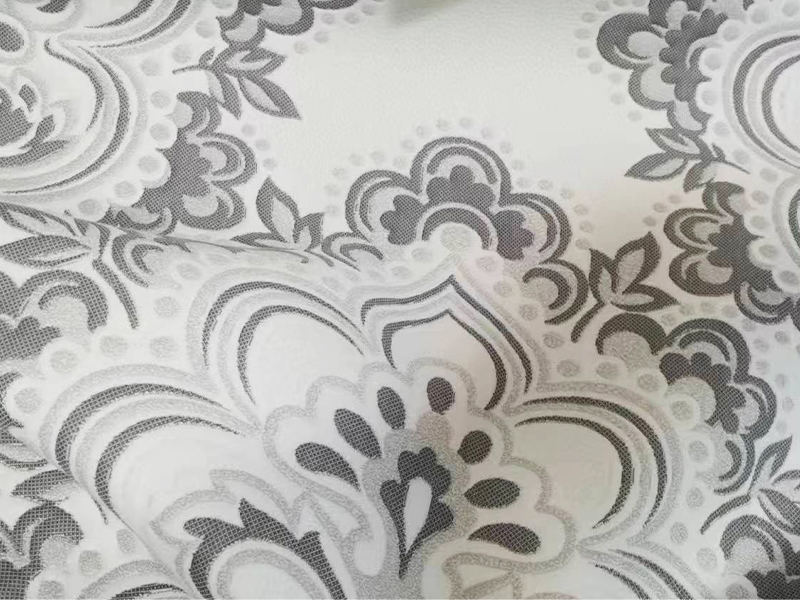
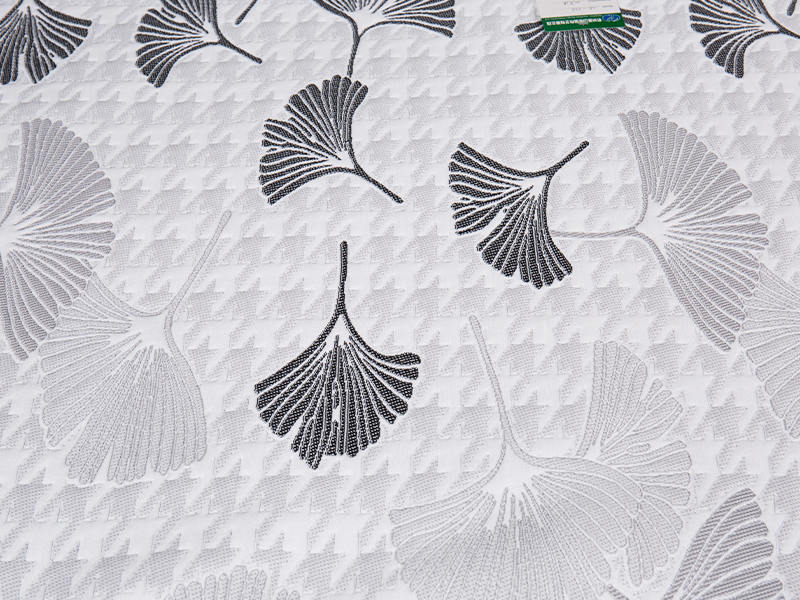
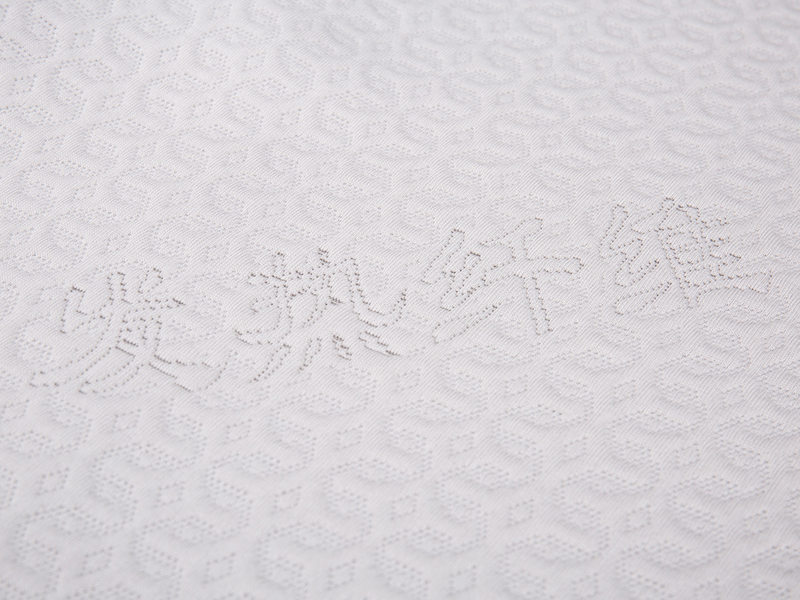
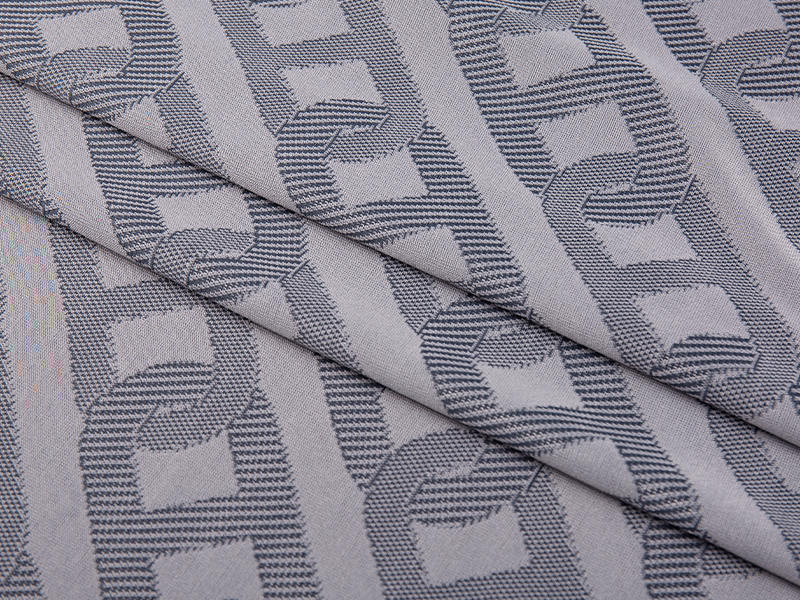
A primary concern for manufacturers is how recycled polyester affects fabric softness. The tactile sensation, or "hand-feel," is determined by the cross-sectional shape of the extruded filament and the Ra surface finish of the woven or knitted structure. By employing micro-denier rPET yarns for mattress ticking, we can produce a surface that is indistinguishable from premium virgin blends. The pilling resistance of recycled polyester fabric is another essential metric; utilizing low-pill fiber technology ensures that the fabric maintains a Grade 4 or higher rating after 50,000 Martindale cycles. For luxury applications, jacquard recycled polyester mattress fabric allows for intricate patterns where the luster and sheen of sustainable fibers can be precisely controlled through specific yarn-dyeing and finishing processes.
Thermal Regulation and Moisture Management Profiles
The moisture wicking capability of polyester mattress fabric is not inherently reduced by the use of recycled content. Capillary action is a function of the yarn's mechanical structure rather than the polymer's origin. Advanced breathable recycled polyester knits are engineered with channeled fiber profiles (such as "X" or "W" shapes) to increase the surface area for evaporation. This thermal conductivity of sustainable bedding ensures a stable microclimate, preventing heat accumulation at the interface between the sleeper and the mattress. Furthermore, REACH compliant polyester mattress fabric ensures that no harmful chemical residues remain in the recycled polymer matrix, meeting the strict Oeko-Tex 100 standards for skin contact. The hydrophobic nature of rPET mattress fabric also provides inherent resistance to mildew and bacterial growth, a key advantage for long-term hygienic maintenance.
Manufacturing Efficiency and Global Environmental Impact
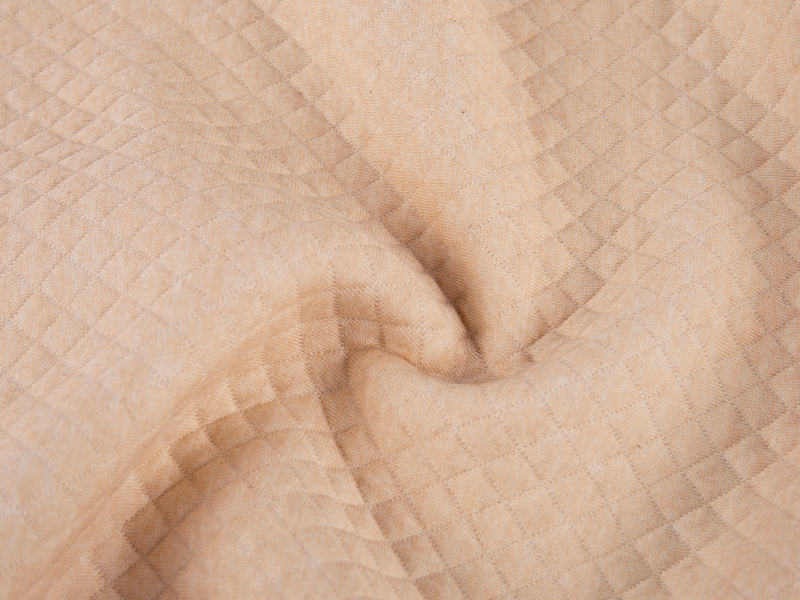
The lifecycle assessment of recycled polyester mattress fabric reveals a significant reduction in carbon emissions and energy consumption compared to petrochemical-based production. Utilizing rPET for sustainable home textiles helps divert plastic waste from landfills while maintaining the colorfastness to light and rubbing required for modern interior design. In our Hangzhou facility, the integration of German weaving technology for mattress fabric allows for high-density constructions that minimize fiber shedding. The following table summarizes the comparative technical specifications between standard and recycled polyester variants used in our current production lines.
| Technical Specification | Virgin Polyester Fabric | 100% Recycled rPET Fabric |
| Yarn Tensile Strength (cN/dtex) | 3.8 - 4.2 | 3.6 - 4.0 |
| Moisture Vapor Transmission (g/m2/24h) | 7200 | 7150 |
| Melting Point (Celsius) | 255 - 260 | 250 - 258 |
| Shrinkage Rate at 180C (%) | Less than 1.5 | Less than 2.0 |
| Colorfastness (Grades) | 4.5 | 4.5 |
Future Perspectives in Closed-Loop Textile Recycling
The industry is moving toward closed-loop recycling for mattress materials, where the polyester mattress fabric itself can be re-granulated and extruded into new fibers at the end of its service life. This transition depends on the purity of recycled polyester blends and the removal of flame-retardant additives during the chemical recycling stage. Hangzhou Xiaoshan RongLi Clothing Co., Ltd. continues to invest in innovative sustainable fabric design, ensuring that our "Rongli" trademark remains a symbol of technology and innovation. By refining the finishing processes for rPET knits, we can offer products that provide the perfect balance of economical durability and premium texture, fulfilling the diverse needs of customers in Europe, America, and the Middle East.
Industrial Hardcore FAQ
Q1: Does recycled polyester fabric have a chemical odor?
A1: No. The high-temperature washing and vacuum stripping processes during rPET pellet production remove volatile organic compounds (VOCs). Our fabrics pass all EU REACH inspections for chemical safety.
Q2: Can 100% rPET fabric be flame retardant?
A2: Yes. Flame retardant (FR) properties are achieved by adding specialized phosphorus-based compounds during the extrusion process or as a back-coating, independent of the recycled content.
Q3: Why is Oeko-Tex Standard 100 important for mattress fabric?
A3: This accreditation guarantees that the fabric has been tested for over 100 harmful substances, ensuring it is safe for prolonged skin contact and sensitive users.
Q4: How does the "jacquard" weave impact the durability of polyester?
A4: Jacquard weaving interlaces the yarns more complexly than basic knits, which can actually increase the dimensional stability and burst strength of the fabric.
Q5: What is the typical weight (GSM) for high-end mattress ticking?
A5: For premium mattresses, the weight usually ranges from 250 GSM to 450 GSM, depending on the required loft and the density of the knit or tatting material.
Technical References
- ISO 12947-2: Textiles — Determination of the abrasion resistance of fabrics by the Martindale method.
- ASTM D5034: Standard Test Method for Breaking Strength and Elongation of Textile Fabrics (Grab Test).
- AATCC 135: Dimensional Changes of Fabrics after Home Laundering.