 English
 русский
 Español
 中文简体

Article Directory
- 1 The Fiber Structure Behind Tencel Lyocell Comfort
- 2 Comfort Factors That Define the Sleep Surface
- 3 Moisture Management: The Core Advantage
- 4 Tencel Lyocell vs Cotton vs Polyester for Pillow Fabric
- 5 Specifying Tencel Lyocell Pillow Fabric for Production
- 6 Frequently Asked Questions About Tencel Lyocell Pillow Fabric
A pillow can feel dry at bedtime and turn damp by three in the morning. The cause is rarely perspiration volume; it is the fabric's capacity to move moisture away from the skin. Tencel lyocell pillow fabric has become central to bedding material decisions because its fiber chemistry and structure directly address this problem.
Hangzhou Xiaoshan RongLi Clothing Co., Ltd., a bedding fabric manufacturer founded in 1989 with a 100,000-square-meter facility in Xiaoshan, China, produces Tencel lyocell pillow fabric for bedding brands and mattress exporters across Europe, North America, the Middle East and Asia. The material's role goes beyond surface softness: it controls how much humidity stays at the skin-fabric interface and how quickly heat is removed during head contact.
Tencel lyocell is a regenerated cellulosic fiber produced from wood pulp through a closed-loop solvent spinning process. In pillow fabric applications, its defining properties are a smooth fiber surface, a moisture regain of about 11.5 percent, and a micro-fibrillar structure that accelerates moisture transport to the fabric surface.
The Fiber Structure Behind Tencel Lyocell Comfort
Comfort in Tencel lyocell pillow fabric starts at the fiber level, where a round, smooth cross-section and fine microfibrils reduce skin friction and allow the yarn to bend softly around the pillow form.
Lyocell fibers are extruded from dissolved wood pulp and regenerated in a water bath, producing a nearly circular cross-section. Cotton has a flattened, twisted ribbon shape with irregular edges that create more contact points against skin. The circular geometry of lyocell lowers the coefficient of friction against facial skin, which is why high-lyocell pillowcases feel smoother than cotton versions of similar thread count.
The fiber interior also contains aligned nano-fibrils that act as internal capillaries. When humidity builds up at the pillow surface, the fibrils pull vapor into the fiber, spread it along the filament, and expose a larger surface area for evaporation. This is the structural mechanism behind the term moisture management.
This fiber-level behavior is documented in our analysis of the impact of mattress fabric on sleep quality, where hygroscopic materials consistently reduce moisture-related sleep disturbances.
A pillow fabric with an 11.5 percent moisture regain does not simply absorb sweat; it holds water vapor inside the fiber and releases it over time, preventing the clammy surface sensation that interrupts sleep.
Comfort Factors That Define the Sleep Surface
Four measurable factors determine the comfort of a Tencel lyocell pillow fabric: surface smoothness, air permeability, drape, and thermal contact at first touch.
- Surface smoothness — a circular cross-section and fine filaments keep friction low against the skin, reducing irritation and pressure points during long contact.
- Air permeability — the yarn structure leaves interstices for airflow, so heat and moisture pockets do not accumulate under the head.
- Drape — lyocell fabrics flex and follow the pillow contour without stretching or losing shape, keeping the contact surface stable through the night.
- Cool touch — the dense, smooth fiber surface draws heat from the skin quickly at first contact, giving a perceived cooling effect before deeper moisture mechanisms start.
Use the same criteria when comparing suppliers: a quarter-yard sample, a 30-minute wet test, and a folded-fabric hand feel check will reveal more than any specification sheet.
Moisture Management: The Core Advantage
Tencel lyocell manages moisture better than cotton and polyester because it combines high fiber absorbency with a micro-fibrillar structure that moves moisture outward for rapid evaporation.
Moisture management in a pillow fabric operates in three stages. First, at the fiber level, water vapor from perspiration and ambient humidity is absorbed into the amorphous regions of the cellulosic polymer. Lyocell has a moisture regain of approximately 11.5 percent, about 50 percent higher than cotton. Second, the absorbed moisture travels along the micro-fibrils toward the yarn surface, spreading laterally instead of accumulating in one spot. Third, because the fabric surface area is large relative to the local moisture volume, evaporation happens faster than the body continues to produce perspiration.
The moisture vapor transmission rate of lyocell is fast enough that a lyocell pillowcase stays dry to the touch after several hours of sleep, while polyester shows visible condensation at the contact point.
Tencel Lyocell vs Cotton vs Polyester for Pillow Fabric
For pillow fabric, Tencel lyocell outperforms cotton on smoothness and drying speed and outperforms polyester on humidity absorption and breathability, making it the strongest all-round choice for skin-contact bedding.
| Property | Tencel Lyocell | Cotton | Polyester |
| Moisture regain | 11.5% | 7-8% | 0.4% |
| Absorbency relative to cotton | 50% higher | Baseline | Negligible |
| Surface profile | Round, smooth | Twisted, irregular | Round but hydrophobic |
| Drying speed | Fast | Medium | Slow to release trapped humidity |
| Initial touch | Cool | Neutral | Warm to synthetic |
| Pilling tendency | Low when finished | Medium | Medium to high |
| Compliance base | Oeko-Tex Standard 100, EU REACH | Oeko-Tex Standard 100 common | Oeko-Tex Standard 100 common |
Across the three fiber options, the practical takeaway is consistent: a moisture regain above 10 percent is the threshold where a pillow surface stops feeling sticky under humid sleeping conditions.
For a broader material-by-material breakdown, our bedding fabric selection guide compares how each fiber type performs in real bedroom conditions.
Specifying Tencel Lyocell Pillow Fabric for Production
When specifying Tencel lyocell pillow fabric, procurement teams need to fix three parameters before ordering: fabric weight, construction type, and blend ratio.
- GSM 130 to 180 — the standard range for pillow cover fabric. Lower weight improves drape and breathability; higher weight adds durability and a denser hand feel.
- Woven vs knitted construction — a satin weave maximizes the smooth surface of lyocell for premium pillowcases, while a knitted structure improves stretch for pillow protectors.
- Blend ratio — 100 percent lyocell gives the best moisture response; a 50/50 lyocell-cotton blend balances cost and comfort; lyocell-polyester blends add wrinkle resistance but lower moisture handling.
The company supplies Tencel lyocell pillow fabric with verified Oeko-Tex Standard 100 and EU REACH compliance, in woven and knitted constructions for pillow manufacturers and bedding brands.
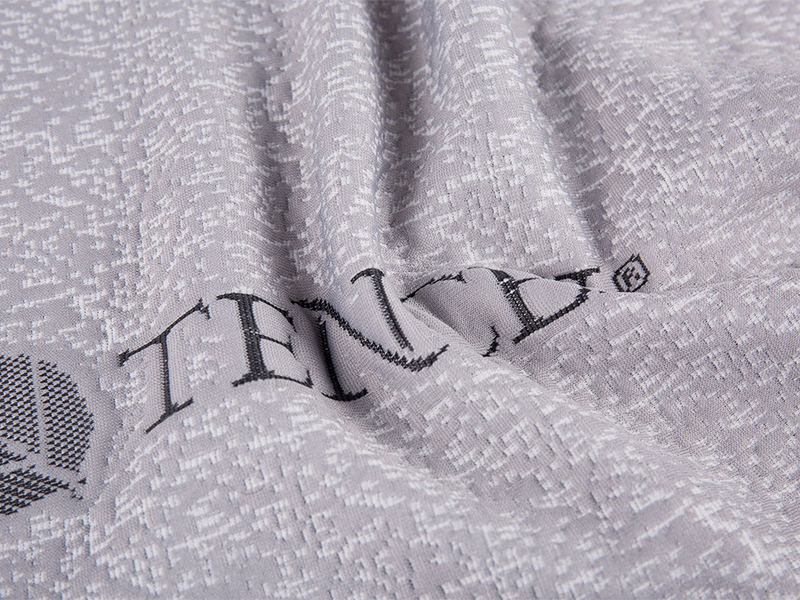
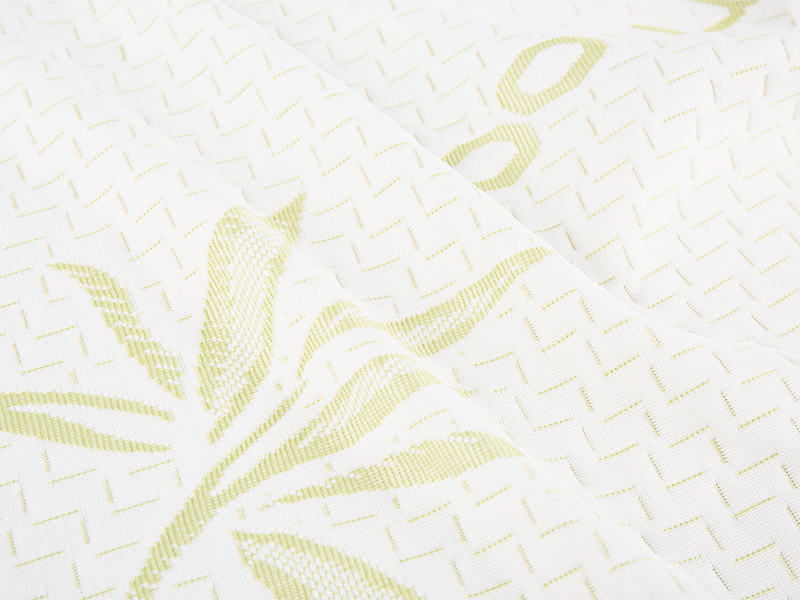
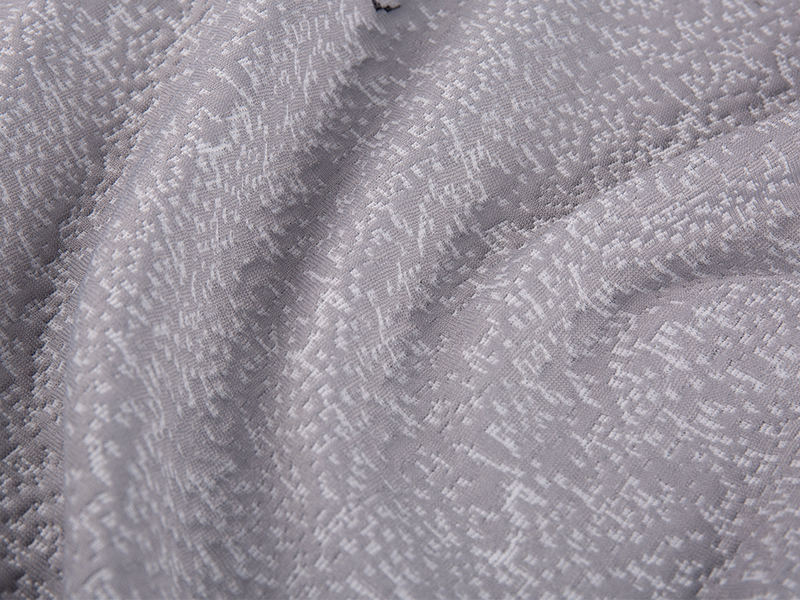 Tencel Lyocell Pillow Fabric for Moisture ManagementThis fabric uses a closed-loop process to deliver high moisture absorption and a smooth, hypoallergenic surface, making it a suitable cover for pillow manufacturers seeking verified Oeko-Tex and REACH compliance.View Product →
For mattress manufacturers specifying a matching cover across the complete sleep set, the same lyocell fiber base is available in a mattress fabric construction.
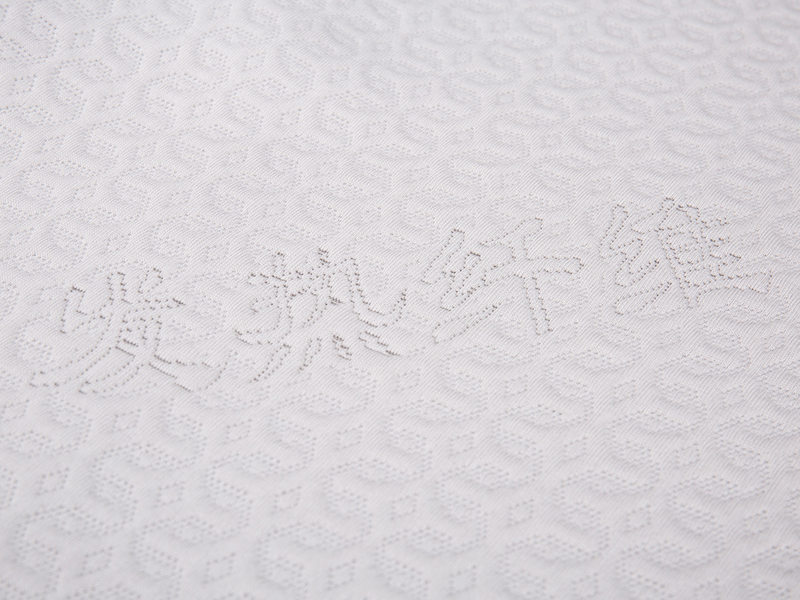
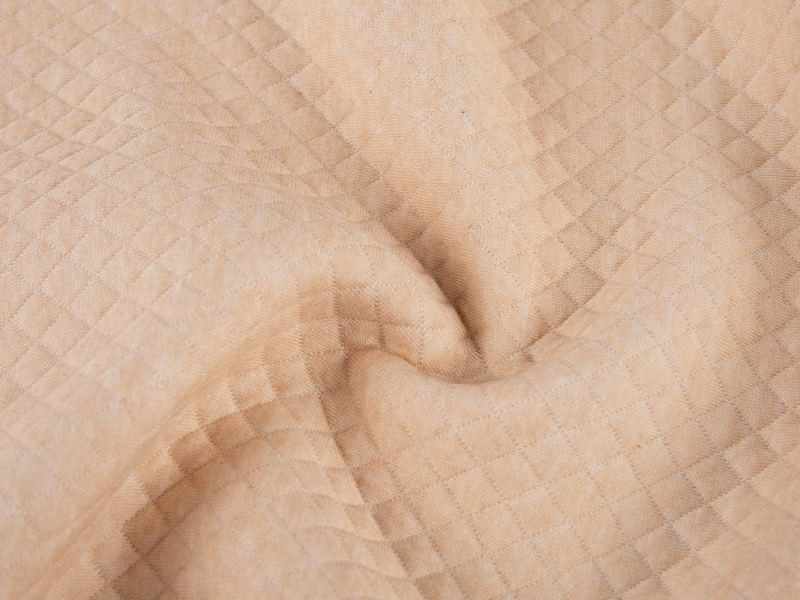
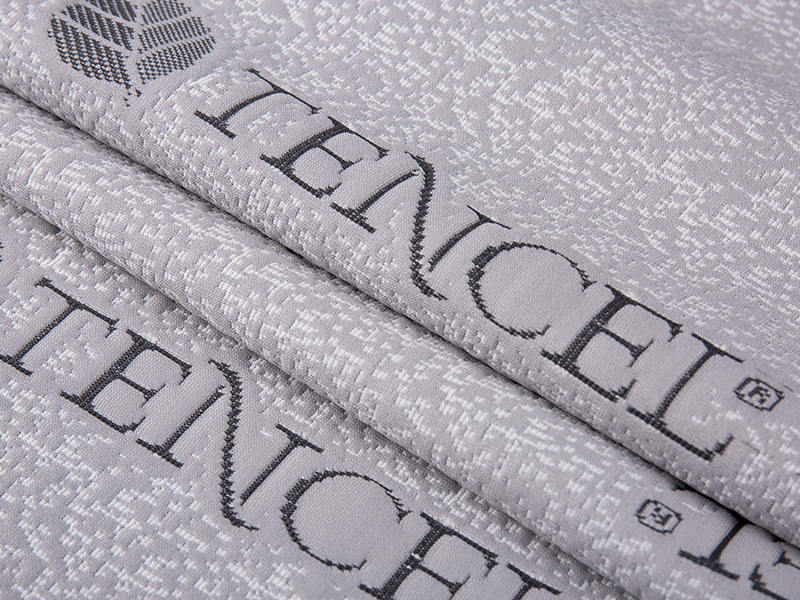 Tencel Lyocell Mattress Fabric with High DurabilityBuilt with hydrophilic fibrils, this mattress fabric promotes a dry sleep environment and resists repeated stress, offering a strong option for complete sleep sets with consistent moisture performance.View Product →
Run a pilot batch at 133 GSM with a 50/50 lyocell-cotton blend before committing to a large order. This weight and blend combine the moisture performance of lyocell with the cost advantages of cotton, and it performs well across summer and winter use cycles.
Frequently Asked Questions About Tencel Lyocell Pillow Fabric
Does Tencel lyocell pillow fabric feel cool to the touch?
Yes. The high density and smoothness of lyocell filaments draw heat away from the skin immediately on contact, and the subsequent moisture evaporation creates a sustained cooling effect. Compared with cotton at the same room temperature, a lyocell pillowcase feels noticeably cooler during the first minutes of contact.
Does Tencel lyocell pillow fabric pill after repeated washing?
Lyocell can fibrillate when wet, so surface fuzz may appear if the fabric is machine washed aggressively. Reputable mills apply an anti-fibrillation finish or blend lyocell with cotton to control pilling. Washing on a gentle cycle and using a mesh laundry bag extends the fabric's appearance.
Can Tencel lyocell pillow fabric be blended with other fibers?
Yes. Common blends are lyocell-cotton at roughly 50/50 for cost and softness, lyocell-polyester for wrinkle resistance, and lyocell-bamboo for an enhanced natural positioning. The blend ratio should match the pillow segment and the target price point.
What GSM is recommended for Tencel lyocell pillow fabric?
For a standard pillowcase, 130 to 160 GSM is the practical range. Lighter fabric at 120 GSM suits decorative pillow covers; heavier fabric above 180 GSM suits pillow protectors that need a more substantial structure.
If a pillow fabric sample does not dry back to its original weight within one hour after being saturated, it will not perform well during continuous sleep contact.