 English
 русский
 Español
 中文简体
中文简体
Article Directory
- 1 What Is a Mattress Ticking Cover and Why Is It Important?
- 2 What Functions Does a Mattress Ticking Cover Provide?
- 3 Why Are Manufacturers Paying More Attention to Mattress Ticking Covers?
- 4 What Materials Are Commonly Used for Mattress Ticking Covers?
- 5 How Do Functional Mattress Ticking Covers Improve Sleep Comfort?
- 6 How Does Fabric Structure Affect Mattress Ticking Cover Performance?
- 7 Why Is Design Customization Important for Mattress Ticking Covers?
- 8 How Do Mattress Ticking Covers Improve Mattress Product Value?
- 9 What Factors Should Manufacturers Consider When Selecting Mattress Ticking Covers?
- 10 How Are Mattress Ticking Fabrics Manufactured and Tested?
- 11 What Are the Future Trends of Mattress Ticking Covers?
- 12 FAQ
- 12.1 What is a mattress ticking cover?
- 12.2 What fabric is best for mattress ticking covers?
- 12.3 Why is polyester commonly used in mattress fabrics?
- 12.4 Are mattress ticking covers customizable?
- 12.5 What is the difference between knitted and woven mattress fabrics?
- 12.6 How do mattress covers affect sleeping comfort?
A mattress ticking cover is the outer fabric layer that wraps a mattress, and it does far more than close up the product. It is the surface every sleeper touches first, the layer that protects the foam or spring core underneath, and increasingly the feature that separates a mid-range mattress from a premium one on a retail floor. As bedding manufacturers compete on comfort claims and product appearance at the same time, the fabric they choose for this outer layer has become a genuine design decision rather than a routine sourcing line item.
What Is a Mattress Ticking Cover and Why Is It Important?
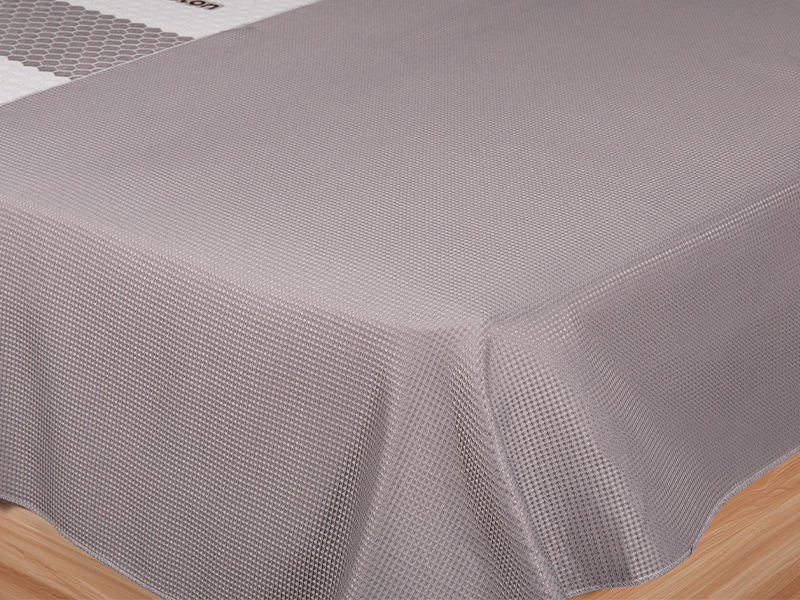
A mattress ticking cover is the finished textile shell that encases the mattress core, combining a protective function with a decorative one. It sits between the sleeper and the internal materials, so its weight, weave, and finish directly influence how the mattress feels before a customer ever lies on it. Because this fabric is the only part of the mattress a buyer can see and touch in a showroom, it carries a disproportionate share of the product's perceived quality.
Treating mattress cover fabric as a minor component is a common mistake among newer manufacturers. In practice, ticking fabric affects three things at once: how durable the mattress feels over years of use, how comfortable the surface is on the first night, and how the finished product photographs and displays in stores or online listings.
The connection between mattress structure and user comfort runs deeper than surface appearance. A mattress built on excellent foam or spring technology can still feel disappointing to a shopper if the ticking fabric is thin, stiff, or poorly finished, because that fabric is the only layer a hand or body actually contacts. For this reason, experienced mattress manufacturers now specify fabric requirements alongside core construction requirements at the earliest stage of product development, rather than treating fabric as a finishing decision made after the mattress design is locked.
What Functions Does a Mattress Ticking Cover Provide?
A well-specified ticking fabric performs three distinct jobs inside a single layer of textile.
- Protection — shields foam, fiber fill, and spring components from dust, abrasion, and everyday wear, extending the working life of the mattress
- Comfort — determines the first-touch hand feel and contributes to temperature regulation during sleep
- Appearance — carries the pattern, color, and branding that shoppers associate with a given mattress line
These three functions rarely trade off cleanly. A fabric optimized purely for softness may compromise abrasion resistance, which is why most commercial ticking fabrics are engineered as a balance of all three rather than a maximum on any single property. Manufacturers who prioritize only one function, such as chasing the lowest possible cost fabric for protection alone, often see the tradeoff show up later as customer complaints about surface feel or premature fabric wear near the mattress edges and seams.
Why Are Manufacturers Paying More Attention to Mattress Ticking Covers?
Consumer attention has shifted toward sleep quality as a wellness category rather than a furniture purchase, and that shift has raised expectations for every visible surface of the product. At the same time, mattress core technology — pocket springs, memory foam, hybrid layers — has become fairly standardized across brands, leaving fabric as one of the few remaining places manufacturers can visibly differentiate without redesigning the entire product.
Retail presentation adds further pressure. Mattresses are frequently displayed unwrapped in showrooms and photographed in close detail for e-commerce listings, so any inconsistency in fabric color, pattern alignment, or surface texture becomes immediately visible to a comparison-shopping customer. Manufacturers report that fabric-related returns and complaints are now tracked as closely as core-related ones, which has pushed fabric quality control further upstream into the sourcing process rather than being handled only at final inspection.
What Materials Are Commonly Used for Mattress Ticking Covers?
Three material families cover the large majority of commercial mattress ticking fabric production, each suited to a different cost and performance target.
| Material | Strengths | Typical Position |
| Polyester mattress ticking fabric | Durable, easy to maintain, stable dimensions | Mainstream and value tiers |
| Cotton mattress fabric | Natural hand feel, softness, breathability | Premium and natural-fiber lines |
| Blended textile materials | Balances comfort with durability and cost | Mid-range and hybrid product lines |
Polyester remains the default choice for high-volume production because it holds color well, resists shrinkage, and performs consistently across large dye lots. Cotton and cotton-blend fabrics are typically reserved for lines that market themselves specifically on natural materials, since raw cotton fabric costs more and requires tighter finishing control.
Blended textile materials, often a polyester-cotton or polyester-viscose mix, exist specifically to close the gap between these two positions. A well-formulated blend can deliver much of the softness associated with natural fiber while keeping the dimensional stability and cost profile closer to pure polyester, which is why blends have become the default recommendation for mid-range mattress programs that need both a comfortable claim and a manageable unit cost.
How Do Functional Mattress Ticking Covers Improve Sleep Comfort?
Beyond raw material choice, finishing treatments applied to the fabric add functional benefits that plain greige goods do not offer on their own.
- Moisture management — wicks perspiration away from the sleeping surface during the night
- Breathability — open knit or weave structures allow airflow through the fabric layer
- Antibacterial treatment — finishing agents that reduce odor-causing bacteria growth
- Temperature comfort — fiber blends and finishes that reduce heat buildup against the skin
These treatments are typically applied during the dyeing and finishing stage, after the base fabric has already been knitted or woven, which is why two mattresses using visually identical fabric can still perform very differently once functional finishing is factored in. A fabric that looks the same on a cutting table can carry very different moisture-wicking or antibacterial performance depending entirely on which finishing chemistry and process parameters the supplier applied.
How Does Fabric Structure Affect Mattress Ticking Cover Performance?
Knitted Mattress Fabric
Softer hand feel with natural stretch, giving the cover surface a cushioned, elastic quality that conforms closely to the mattress core.
Woven Mattress Fabric
Stronger, more rigid structure with better dimensional stability, holding its shape under repeated tension around the mattress edge.
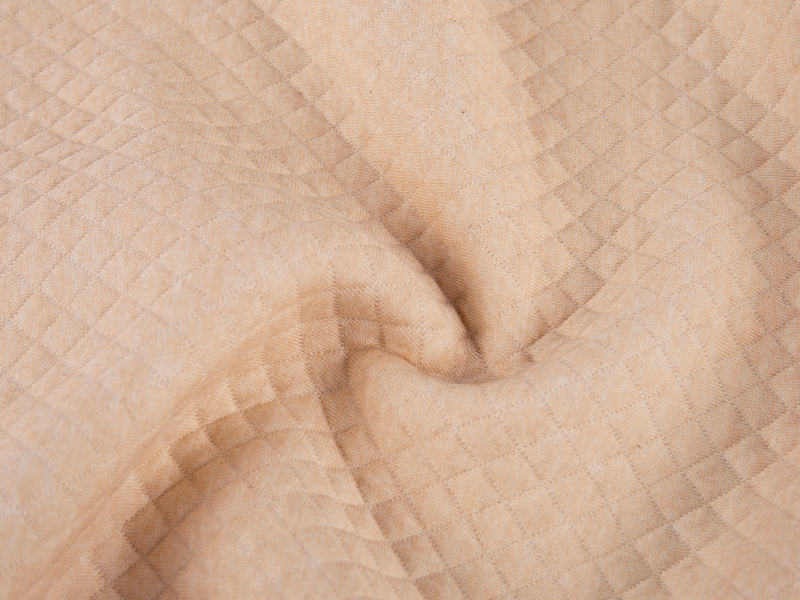
The choice between knit and woven structure usually follows the mattress type rather than personal preference. Memory foam and hybrid mattresses often pair with knitted fabric for its stretch and body-conforming feel, while firmer innerspring products frequently use woven ticking for its structural stability along seams and borders. Border tape and quilting also interact with this choice: knitted fabric quilts more easily into soft, rounded patterns, while woven fabric holds crisper, more geometric quilting lines, which is another reason product designers select fabric structure early rather than as an afterthought.
Why Is Design Customization Important for Mattress Ticking Covers?
Custom mattress fabric — through color matching, jacquard pattern development, and branded border tape — has become one of the fastest ways for a mattress brand to launch a visually distinct product line without changing anything inside the mattress core itself.
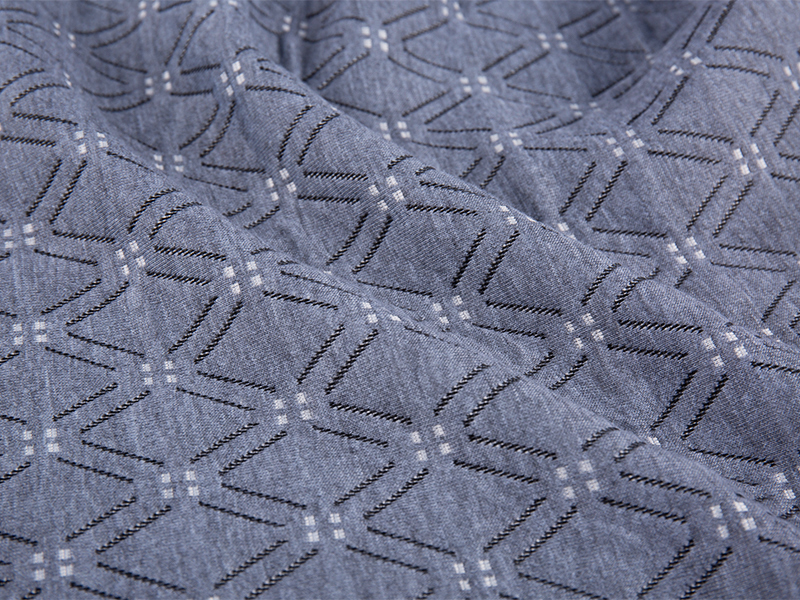
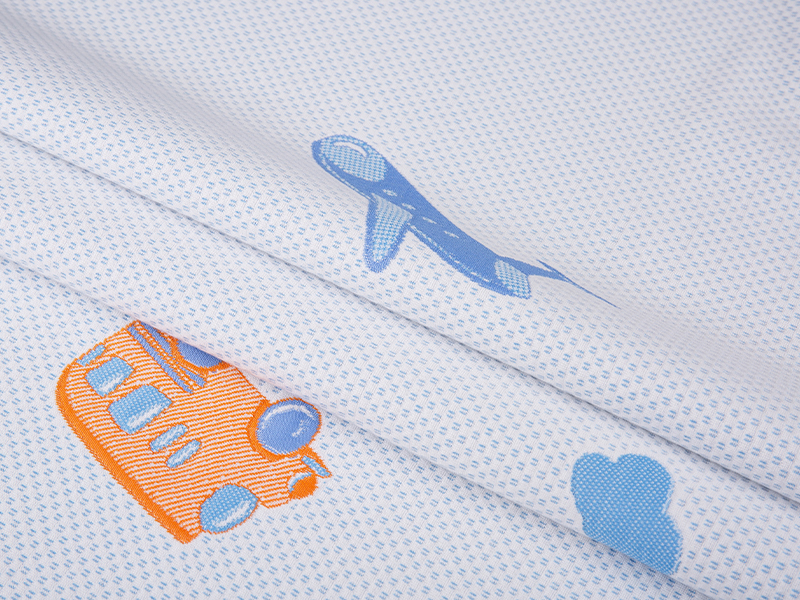
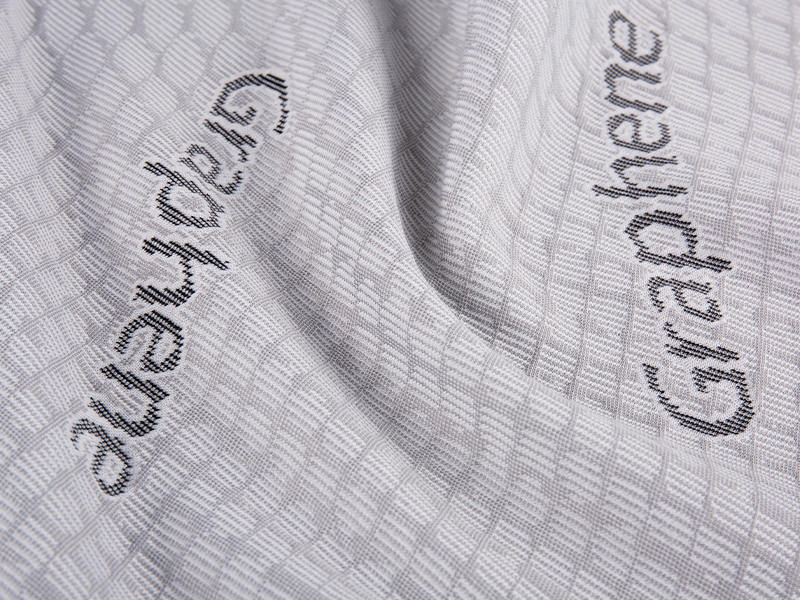
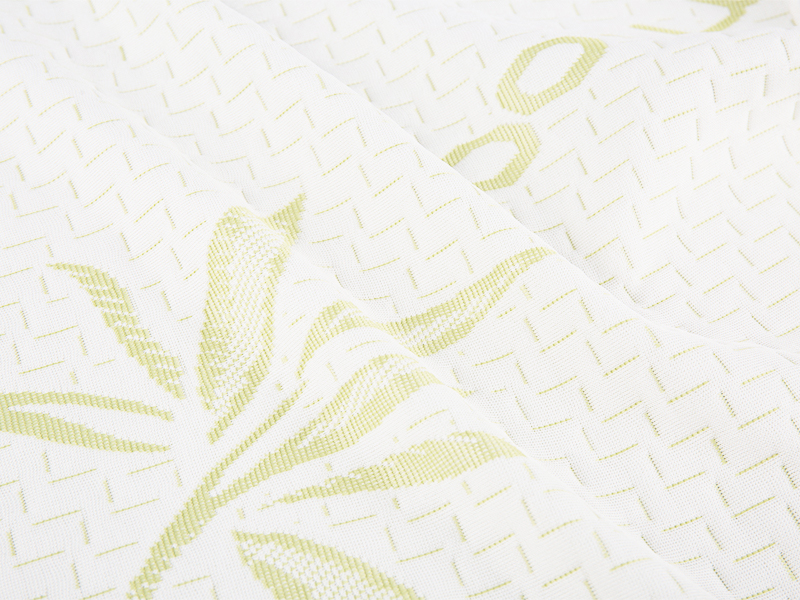
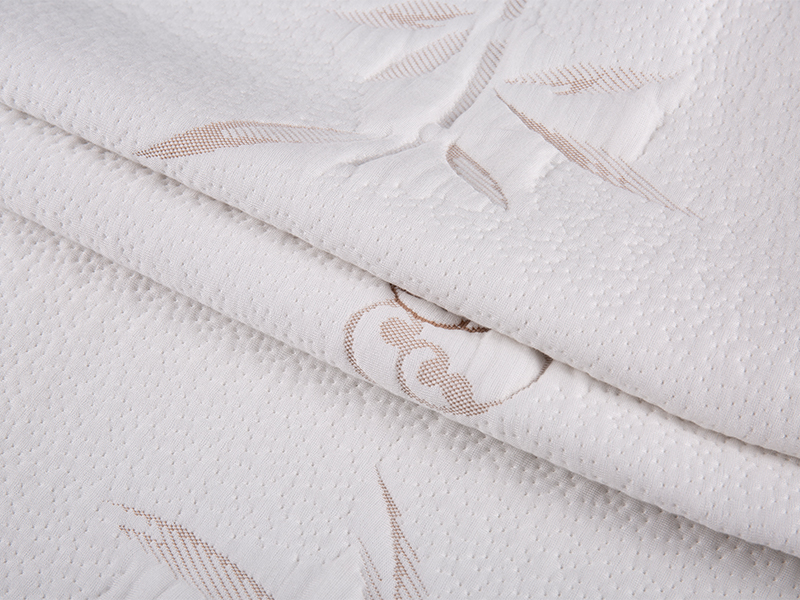
Jacquard-woven patterns remain the most common customization request because they create a raised, textured design directly in the fabric structure rather than through printing, giving the surface a more premium appearance under retail lighting. Color customization and private-label branding on the fabric border are the next most requested options, particularly for manufacturers supplying multiple retail chains from the same core production line. A single mattress core construction can support several distinct retail-facing products simply by varying the ticking fabric pattern, color, and border finish, which lowers development cost while still giving each retail partner a visually exclusive product.
How Do Mattress Ticking Covers Improve Mattress Product Value?
Fabric quality has a measurable effect on how a finished mattress is perceived and priced, independent of the materials inside it.
- Stronger shelf appeal through visible pattern and texture quality
- Improved first-touch impression during in-store evaluation
- Clearer market positioning between value, mid-range, and premium tiers
- Greater product differentiation across a manufacturer's own product range
Because mattress cores across competing products are often functionally similar, premium mattress textiles frequently justify a meaningful share of the retail price gap between a brand's entry-level and flagship models. Retailers evaluating new mattress lines for their floor space routinely cite fabric quality as a factor in which products get premium placement, since a mattress with a noticeably better cover fabric requires less sales-floor explanation to justify a higher price point.
What Factors Should Manufacturers Consider When Selecting Mattress Ticking Covers?
A structured sourcing checklist prevents costly rework once fabric has already been committed to a production run. The factors below cover both the measurable specification sheet items and the practical supplier-side capabilities that determine whether a fabric order will run smoothly at scale.
| Factor | Why It Matters |
| Fabric composition | Determines feel, durability, and cost tier |
| GSM (fabric weight) | Affects thickness, opacity, and perceived quality |
| Softness and hand feel | Directly shapes first-touch impression |
| Color fastness | Prevents fading from light or washing |
| Breathability | Supports temperature regulation claims |
| Customization capability | Enables jacquard, color, and branding requests |
How Are Mattress Ticking Fabrics Manufactured and Tested?
Mattress ticking fabric production follows a defined sequence, and skipping or rushing any stage tends to show up later as inconsistent hand feel or premature wear.
-
Yarn selection — choosing polyester, cotton, or blended yarn based on the target fabric properties
-
Knitting or weaving — forming the base fabric structure on knitting or weaving equipment
-
Dyeing and finishing — setting color and preparing the surface for functional treatment
-
Functional treatment — applying moisture-wicking, antibacterial, or other performance finishes
-
Quality inspection — checking the finished fabric against production specifications
Quality inspection at the end of this process typically includes strength testing, color fastness checks under light and washing, abrasion resistance testing to simulate years of use, and dimensional stability testing to confirm the fabric will not shrink or distort once sewn onto a mattress panel.
What Are the Future Trends of Mattress Ticking Covers?
Sustainable fiber sourcing is the clearest trend across the category, as recycled polyester and low-impact dyeing processes move from niche eco lines into standard product catalogs. Manufacturers standardizing on a small set of proven mattress ticking cover fabrics, then layering seasonal jacquard patterns and functional finishes on top, tend to balance innovation with predictable production costs more effectively than those redesigning the base fabric for every new launch.
Lightweight, breathable constructions are also displacing heavier legacy ticking weights as manufacturers respond to consumer demand for cooler-sleeping products, and early sensor-compatible fabrics are beginning to move from pilot programs into limited commercial production for smart mattress lines. Buyers who track these developments early tend to have an easier time updating their product range without a full re-tooling of their fabric supply chain.
FAQ
What is a mattress ticking cover?
It is the outer fabric shell that encases a mattress, protecting the internal foam or spring core while providing the surface texture and appearance customers see and feel.
What fabric is best for mattress ticking covers?
There is no single best fabric; polyester suits durability-focused mainstream products, cotton suits natural-feel premium lines, and blended fabrics balance both for mid-range products.
Why is polyester commonly used in mattress fabrics?
Polyester holds color consistently, resists shrinkage, and performs reliably across large production runs, making it the most cost-effective choice for high-volume mattress manufacturing.
Are mattress ticking covers customizable?
Yes, manufacturers commonly request custom color matching, jacquard pattern development, and branded border detailing to differentiate individual product lines.
What is the difference between knitted and woven mattress fabrics?
Knitted fabric offers a softer, more elastic hand feel suited to foam and hybrid mattresses, while woven fabric offers stronger dimensional stability suited to firmer innerspring products.
How do mattress covers affect sleeping comfort?
The cover fabric influences temperature regulation, moisture management, and surface softness, all of which directly affect how comfortable the mattress feels through the night.