 English
 русский
 Español
 中文简体

Article Directory
- 1 OEM vs. ODM: Two Ways to Structure a Fabric Program
- 2 Core Capabilities to Verify Before Selecting a Fabric Partner
- 3 Matching Fabric Families to Product Development Goals
- 4 Compliance as a Contractual Gate in OEM Fabric Sourcing
- 5 Scale, Lead Times, and Bulk Production Reality
- 6 Running an OEM or ODM Fabric Project: A Five-Step Sequence
- 7 Frequently Asked Questions About OEM and ODM Mattress Fabric Development
A bedding brand's product manager is holding a prototype swatch for a new cooling mattress line. The hand feel is right, the compliance label is on the back, and the factory has quoted a lead time that fits the launch calendar. None of that happens by chance. It is the result of a mattress fabric manufacturer running a structured OEM or ODM program from fiber selection to finished roll. For brands without their own looms, the fabric supplier is not a vendor: it is the engineering partner behind the product.
The mattress fabric manufacturer decides whether a bedding concept can be woven, knitted, certified, and delivered at scale. In OEM and ODM programs, that capability is the product.
OEM vs. ODM: Two Ways to Structure a Fabric Program
OEM fabric development keeps specification control with the buyer, while ODM fabric development transfers design ownership to the manufacturer, and the choice changes how timelines, risk, and intellectual property are shared between the two parties.
Under an OEM (Original Equipment Manufacturing) agreement, the brand defines fiber blend, weave construction, weight, color, and finishing requirements, and the supplier reproduces those specifications across production runs. An ODM (Original Design Manufacturing) agreement reverses the relationship: the manufacturer researches, designs, and prototypes the fabric, then presents it as a brandable product. Many bedding companies run a hybrid model: OEM for core lines, ODM for exploratory categories.
OEM programs suit
- Established lines with locked specifications
- Brands with internal technical teams
- Proprietary constructions that must stay confidential
- Buyers benchmarking multiple suppliers on price
ODM programs suit
- New entrants without fabric research capacity
- Rapid market entry with pre-tested constructions
- Categories where the supplier holds stronger expertise
- Brands testing a segment before committing to tooling
Definition: ODM mattress fabric development is not private labeling. Private labeling attaches a brand to an existing product; ODM assigns the manufacturer responsibility for designing the construction, selecting materials, and proving performance.
Core Capabilities to Verify Before Selecting a Fabric Partner
A mattress fabric manufacturer that genuinely supports OEM and ODM programs must show four capabilities in one organization: in-house design, multi-process production, a broad material library, and documented quality control.
Hangzhou Xiaoshan RongLi Clothing Co., Ltd. (RongLi) operates integrated design, weaving, knitting, dyeing, and finishing under one roof, with jacquard looms imported from West Germany and Italy. That mechanical base allows original jacquard patterns, knitted constructions, and printed effects to be produced without subcontractors, which shortens sampling cycles and protects design confidentiality.
Functional material programs matter for cooling-focused lines. Suppliers that have already developed and tested graphene or cool-touch constructions can hand a brand a pre-validated starting point instead of beginning from fiber research.
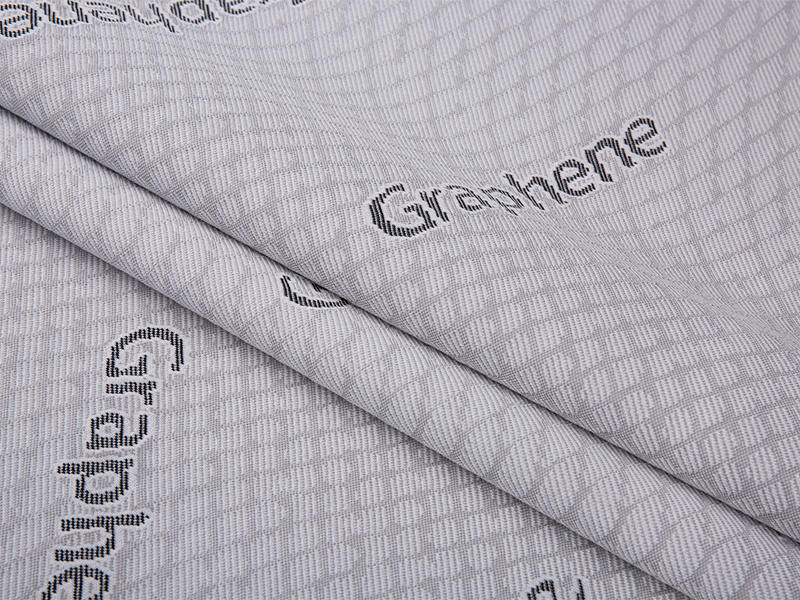 Graphene-Enhanced Mattress Fabric with Thermal and Antimicrobial PropertiesThis functional textile integrates graphene nanoplatelets for rapid heat dissipation and bacteriostatic effects, offering a validated starting point for cooling-focused mattress lines and reducing the need for fiber-level research.View Product →
Process breadth is equally decisive. A manufacturer that combines jacquard weaving, printing, dyeing, yarn-dyed weaving, knitting, lace edging, and hot-transfer printing can coordinate a complete product architecture, such as a mattress cover, matching pillow fabric, and border trim, in a single order.
- Jacquard looms imported from West Germany and Italy
- In-house design studio for original woven patterns
- Functional fibers: Coolmax, graphene, soy fiber, temperature-regulating yarns
- Export experience across Europe, North America, Southeast Asia, the Middle East, Japan, and South Korea
In an ODM program, the supplier's development archive is the asset. Fabrics already refined through previous export orders arrive with proven production parameters and fewer sample iterations.
Matching Fabric Families to Product Development Goals
Each of the four major mattress fabric families addresses a different end-user requirement, so aligning a product brief to the correct family reduces development iterations and stabilizes cost.
The table below maps representative materials, end-uses, and performance priorities across the four families.
| Fabric Family | Representative Materials | Typical End-Use | Performance Priorities |
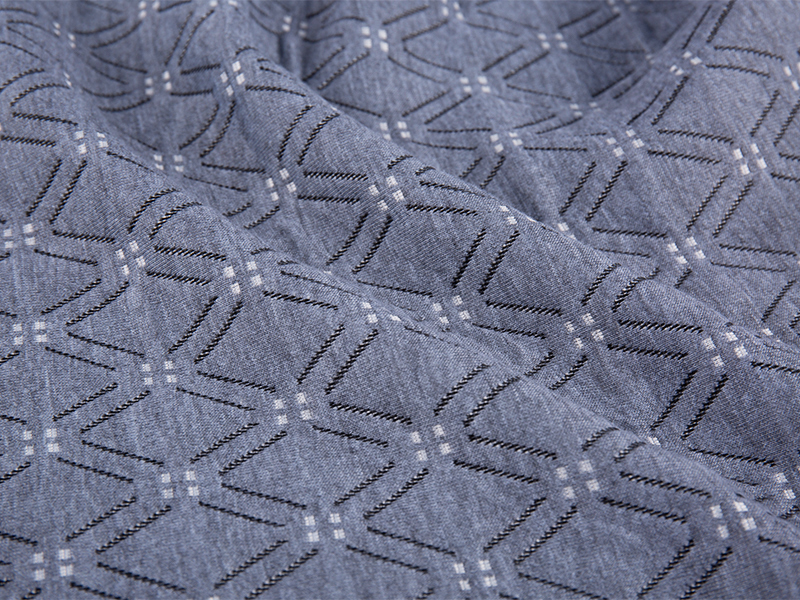
| Cooling Mattress Fabrics | Graphene, Coolmax, cool-touch yarns, soy fiber | Adult bedding aimed at hot sleepers | Heat dissipation, thermal regulation, Q-max |
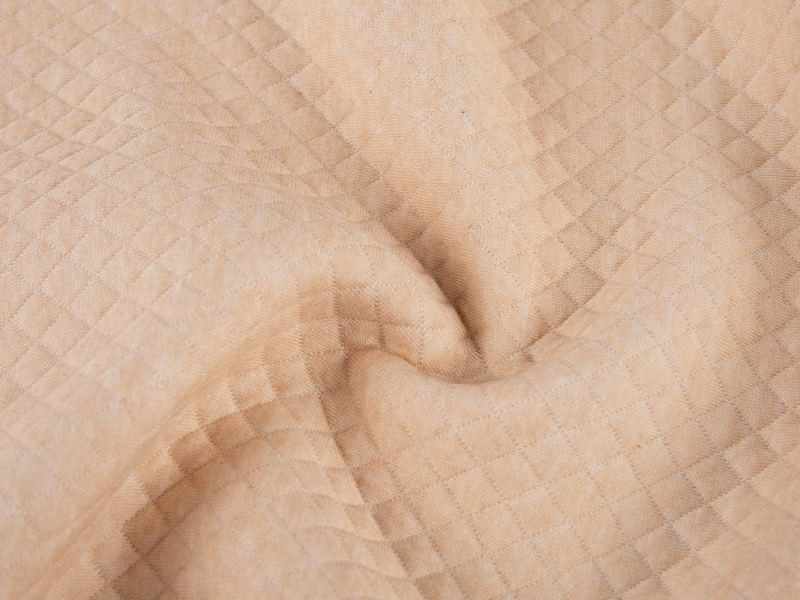
| Baby Mattress Fabrics | Organic cotton, waterproof membranes, mesh, machine-washable knits | Crib mattresses and nursery products | Breathability, wash durability, safety |
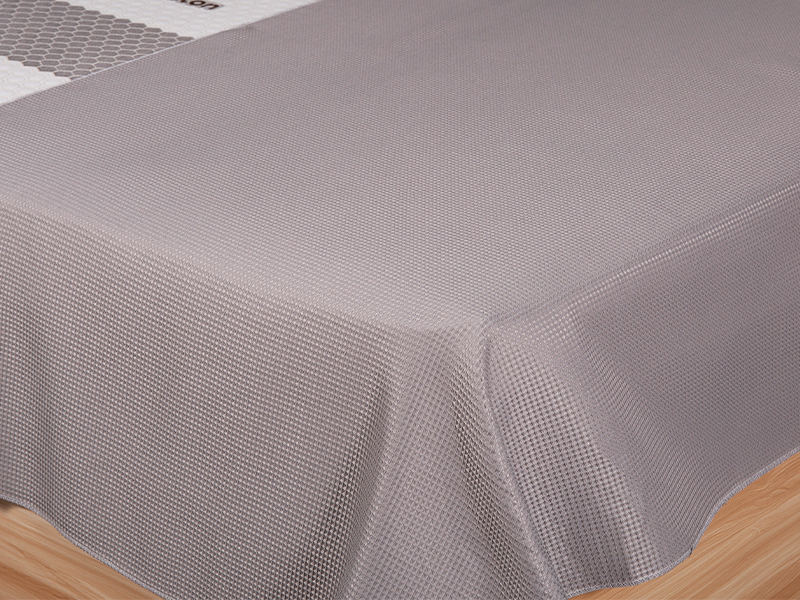
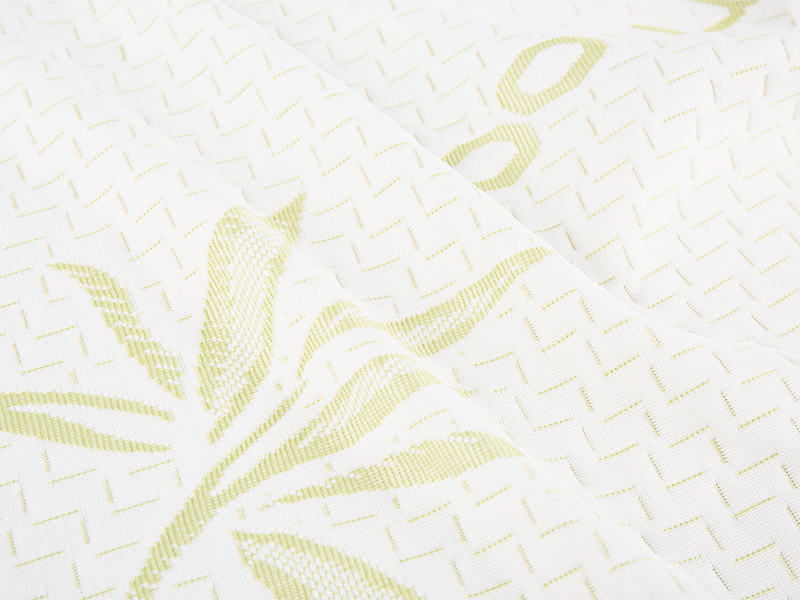
| Mattress Ticking | Bamboo fiber, Tencel/Lyocell, organic cotton | Outer mattress covers and pillow ticking | Abrasion resistance, hand feel, drape |
| Sustainable Mattress Fabrics | Cotton, polyester, jacquard, soft-knit, woven jacquard | Eco-positioned bedding ranges | Recyclability, natural origin, durability |
Product variant counts per fabric family. Cooling fabrics hold the largest developed portfolio at RongLi.
Ticking development benefits from suppliers already running certified natural-fiber programs. Bamboo, Tencel/Lyocell, and organic cotton constructions reduce the work needed to bring an eco-positioned launch to market.
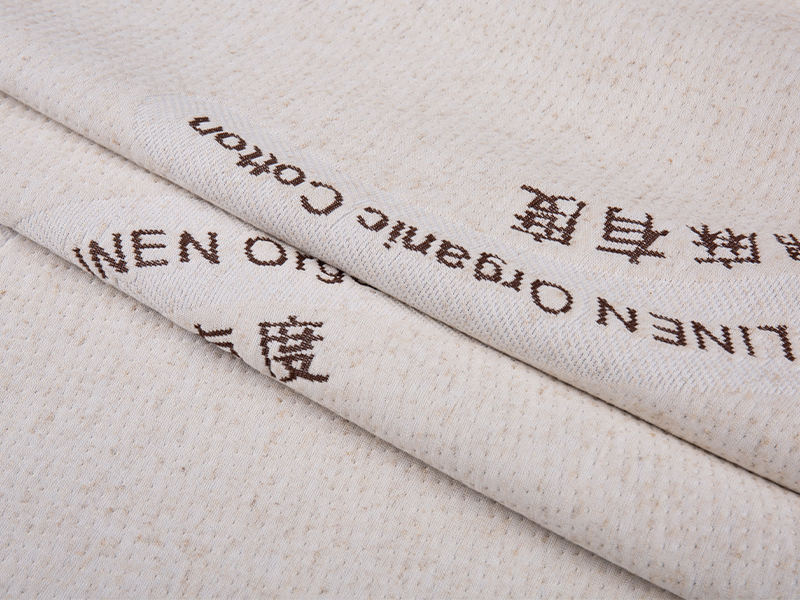 GOTS-Certified Organic Cotton Mattress Fabric for Eco-Friendly BeddingProduced through certified organic supply chains, this knitted or woven fabric supports air circulation and moisture management, easing development of eco-positioned ticking for memory foam, latex, or hybrid mattresses.View Product →
For nursery lines, hygiene dominates the brief. Waterproof, machine-washable baby mattress fabrics address the two concerns parents rank first: soaking accidents and weekly washing, without sacrificing breathability or softness.
 Breathable Waterproof Baby Mattress Fabric with TPU LaminationEngineered with a TPU membrane that blocks liquids while allowing vapor passage, this fabric addresses nursery priorities: hygiene, washability, and breathability, with antimicrobial treatment and Oeko-Tex compliance for sensitive skin.View Product →
Compliance as a Contractual Gate in OEM Fabric Sourcing
Certification is not a marketing badge in OEM and ODM fabric supply; it is a contractual gate, because a bedding product cannot enter European or North American retail channels without documented material compliance.
A supplier must present quality management credentials, EU REACH compliance evidence, and textile safety certification at the sampling stage. RongLi holds ISO 9001 quality system certification, passes EU REACH testing on all fabrics, and is certified under the German Oeko-Tex Standard 100. When those documents already exist at the fabric level, a brand does not need to re-test base materials for every new product model, which compresses the total certification timeline. For further detail, review the Oeko-Tex cotton mattress fabric 2026 guide.
A brand selling into Europe cannot substitute a supplier's verbal assurance for a REACH declaration or an Oeko-Tex Standard 100 certificate. These documents become part of the finished mattress's compliance file, and retail buyers will request them.
Scale, Lead Times, and Bulk Production Reality
Mattress fabric manufacturers with large integrated facilities and multi-market export records hold consistent quality across large OEM orders better than specialized mills with limited capacity.
The evaluation checklist starts with physical scale and reference markets. RongLi's 100,000 square meter facility, combined with continuous export to Europe, North America, Southeast Asia, the Middle East, Japan, and South Korea, is evidence of production depth and logistics experience. Weight and density control through the GSM range directly drives both cost and durability, so a supplier's ability to hold tight grammage tolerances is worth testing during the sample phase.
For OEM buyers, the true reliability test is not the first sample but the tenth production repeat. Consistent construction, color, and finish across repeated lots define a mature mattress fabric manufacturer.
Running an OEM or ODM Fabric Project: A Five-Step Sequence
A structured five-step sequence keeps a mattress fabric project on schedule: brief, sampling, approval, bulk production, and shipment.
- Brief and material selection. The brand states target segment, price point, performance requirements, and certifications. The supplier maps those constraints to existing constructions and material families.
- Development sampling. The supplier produces swatches and runs internal tests for weight, tensile strength, pilling, and wash fastness before sending physical samples.
- Pre-production approval. The buyer approves construction, color, and finishing. Bulk specifications are locked into the production record that governs every later order.
- Bulk production. Weaving or knitting, dyeing, and finishing run under the quality system, with line inspection at each process stage.
- Inspection, packing, and shipment. Final quality control, export packing, and logistics from the factory to the destination market conclude the program.
Frequently Asked Questions About OEM and ODM Mattress Fabric Development
These answers cover the decisions that brands raise most often when structuring a mattress fabric program with a supplier.
What is the difference between OEM and ODM in mattress fabric sourcing?
OEM means the buyer owns the specification and the manufacturer executes it. ODM means the manufacturer designs the fabric and the buyer brands and sells it. Both models run on the same looms; the difference is who approves the technical construction and who holds the design record. A mattress fabric manufacturer can support both in parallel.
What certifications should an OEM mattress fabric supplier hold?
At minimum, an ISO 9001 quality management certificate, EU REACH compliance test reports, and an Oeko-Tex Standard 100 certificate. Suppliers exporting to additional markets may also hold country-specific flammability and chemical test documentation.
Can one manufacturer supply mattress fabric and matching pillow or cover fabrics?
Yes. Vertically integrated manufacturers coordinate fiber, construction, color, and finish across mattress ticking, pillow fabric, mattress covers, and lace trim, which keeps the product architecture visually consistent and simplifies purchasing.
How long does a typical mattress fabric sampling cycle take?
Standard constructions usually require two to four weeks for development swatches. Functional programs with new fibers or coatings, such as graphene or waterproof membranes, take longer because the supplier validates performance before shipment.
A mature fabric partner turns compliance and production data into a repeatable development system. That is the capability an OEM or ODM bedding brand is really sourcing.