 English
 русский
 Español
 中文简体

Article Directory
When a bedding manufacturer evaluates graphene mattress fabric, the first question is rarely about the material itself. It is about whether claimed thermal and antimicrobial performance survives foam lamination, quilting, border stitching, and repeated roll packing. Graphene ticking answers that question differently from Coolmax, bamboo, or Tencel, and the difference appears in measurable parameters such as Qmax, surface resistivity, and wash durability.
This guide explains what graphene mattress fabric actually does, how it compares with other functional textiles for advanced bedding, and what to verify before ordering a first production batch.
What Graphene Mattress Fabric Actually Does
Graphene mattress fabric is a functional ticking material that embeds graphene particles, fibers, or coated layers into woven, knitted, or nonwoven structures to add heat conduction, antimicrobial activity, and antistatic behavior to the sleep surface.
Graphene is a single atomic layer of carbon atoms arranged in a hexagonal lattice. In pristine laboratory form it conducts heat at roughly 5,000 W/mK, far above copper. Textile-grade graphene never reaches that figure, but even a partial improvement changes how a mattress surface feels during the first minutes of contact and how quickly heat disperses across the ticking.
Three properties matter most for bedding:
- Heat conduction: graphene spreads localized body heat across a wider fabric area, reducing hot spots under shoulders and hips.
- Antimicrobial action: sharp graphene edges damage bacterial cell membranes on direct contact, lowering microbial buildup in humid conditions.
- Antistatic behavior: graphene dissipates static charge, reducing dust attraction and surface cling during cover removal and washing.
These effects are measurable. Third-party tests on commercial graphene mattress fabrics commonly report antibacterial activity above 95 percent and clear reductions in surface resistivity compared with standard polyester ticking. For a factory, the practical result is a fabric that supports premium claims without heavy metal or chemical antimicrobial finishes. For deeper detail, see our complete guide to graphene mattress fabric.
Graphene Versus Other Functional Textiles
No single material wins every bedding application. Graphene leads on heat spreading, functional durability, and antimicrobial performance; other textiles win on hand feel, price, or sustainability profile.
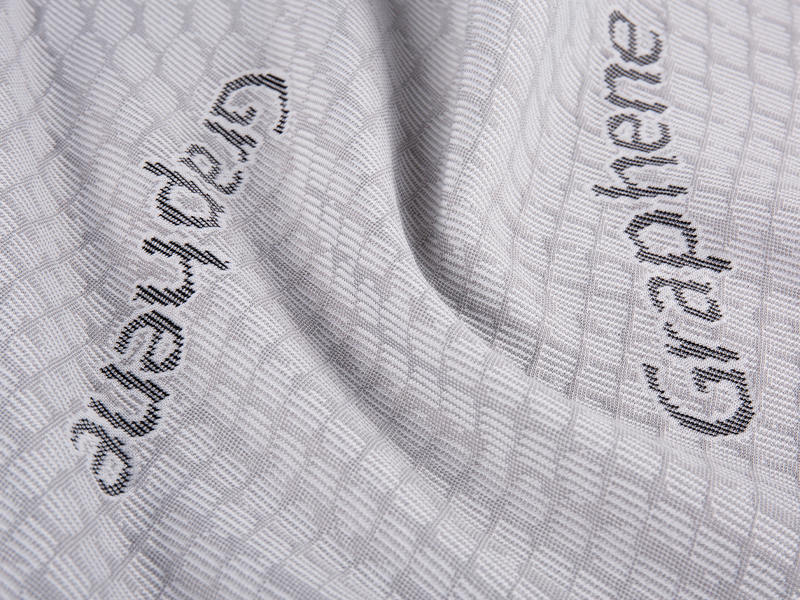
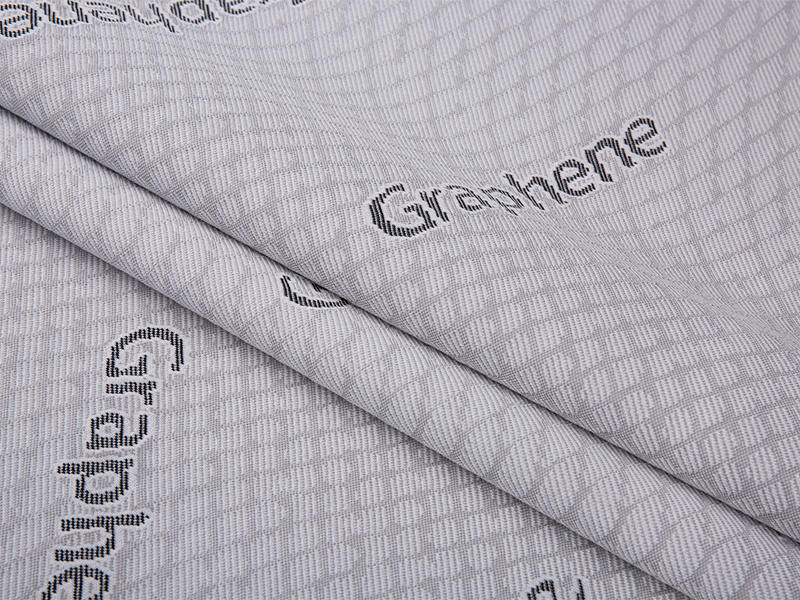 Graphene Mattress Fabric with Thermal and Antimicrobial PropertiesThis functional knitted ticking integrates graphene nanoplatelets for rapid heat spreading and bacteriostatic performance, making it suitable for mattresses needing both surface cooling and antimicrobial claims without chemical additives.View Product →
Our graphene mattress fabric is a knitted functional ticking designed for mattresses where surface cooling and antimicrobial claims are required at the same time.
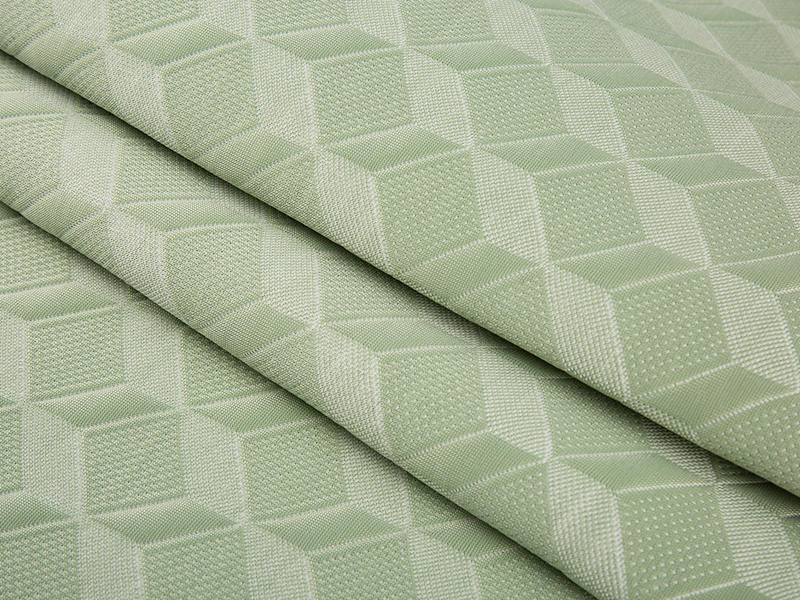 Cool Touch Fabric for Mattress with Instant Cooling EffectEngineered with high-conductivity materials for a Q-max value far above cotton, this fabric delivers immediate coolness on contact, with options like 3D textured or bean-like surfaces for enhanced breathability and comfort.View Product →
Cool-touch fabric works differently: it uses a high-conductivity contact surface to produce an immediate cool feeling, which suits products where first-touch coolness is the only goal. Bamboo and Tencel lyocell approach the sleep problem from the moisture side. They absorb and release humidity faster than polyester, keeping the microclimate drier. Coolmax uses engineered cross-section polyester fibers to wick sweat away from the skin.
| Material | Primary mechanism | Antimicrobial | Wash durability | Typical use |
| Graphene ticking | Heat spreading, contact cooling | High | Good with fiber integration | Cooling plus hygiene claims |
| Coolmax | Moisture wicking | Low | Excellent | Hot sleeper comfort lines |
| Bamboo viscose | Humidity absorption | Moderate | Good | Natural soft-touch covers |
| Tencel lyocell | Moisture management | Low | Good | Premium natural ticking |
| Standard polyester | None | Low | Excellent | Budget mattress layers |
Qmax is the standard index for contact coolness: it measures heat flux between skin and fabric at the moment of first contact. Higher Qmax means a colder initial touch.
Each material earns its place in a different product line, and combinations are common:
Choose graphene ticking when
- The label must carry both cooling and antimicrobial claims
- One fabric must simplify inventory across several mattress models
- Antistatic performance matters for medical or hospitality bedding
Choose conventional materials when
- First-touch coolness is the only performance requirement
- Cost per meter is the dominant constraint
- Moisture wicking, rather than temperature, is the core complaint
Integrating Graphene Ticking Into Mattress Production
Graphene ticking integrates into a normal mattress line, but four parameters decide whether the finished mattress keeps its functional claims.
- GSM and structure: 200-240 gsm knitted or woven graphene ticking covers most foam and spring models; lower GSM suits baby lines.
- Lamination method: flame lamination can degrade some graphene coatings; prefer hot-melt or water-based adhesive for functional layers.
- Quilting pattern: dense quilting shortens the heat path between skin and foam; keep stitch depth consistent across the production run.
- Wash test protocol: run at least 10 wash cycles on a sample before approving the production batch.
This is where supplier capability changes the outcome. Hangzhou Xiaoshan RongLi Clothing Co., Ltd., established in 1989 and operating a 100,000 square meter facility, produces graphene mattress fabric on weaving machines imported from Germany and Italy. The company focuses exclusively on mattress fabrics, with lines covering baby mattress fabrics, cooling fabrics, mattress ticking, and sustainable materials.
 PCM Temperature Regulating Fabric for BeddingThis fabric embeds phase-change microcapsules that absorb and release heat to stabilize the sleep surface temperature, reducing fluctuations by 3–5°C and making it an ideal complement to graphene ticking in hybrid mattress constructions.View Product →
Temperature-regulating phase-change fabrics pair well with graphene ticking in hybrid constructions. A phase-change layer below a graphene cover combines fast initial heat spreading with sustained temperature buffering across the night.
For brands adding functional covers to existing lines, structural behavior matters as much as chemistry. Our article on how functional mattress ticking covers improve sleep comfort and product performance explains cover design parameters such as stretch, recovery, and seam construction.
Certification and Compliance for Advanced Bedding Textiles
Functional claims fail at the border if the fabric lacks compliance documentation. European and North American buyers expect three types of evidence: chemical safety, restricted substance compliance, and quality system certification.
All fabrics supplied by Hangzhou Xiaoshan RongLi Clothing Co., Ltd. pass EU REACH restricted substance testing and hold German Oeko-Tex Standard 100 certification. The factory operates under ISO9001:2000 quality management and holds the Hangzhou AAA corporate credit rating, a recognition of financial and operational reliability.
Oeko-Tex Standard 100 is a product certification for textiles tested for harmful substances. A mattress fabric carrying this mark has been checked for regulated chemicals, phthalates, and other substances relevant to prolonged skin contact.
When auditing a graphene fabric supplier, request the Oeko-Tex certificate number and verify the scope: graphene formulations vary, and the certificate must cover the specific coating or fiber masterbatch used in your fabric. Confirm that REACH documentation matches the batch number, and check that the declared Qmax or antimicrobial test method corresponds to the standard required by your retail market.
Frequently Asked Questions
Is graphene mattress fabric safe for direct skin contact?
Yes, when the graphene is firmly embedded in a textile matrix and the finished fabric passes Oeko-Tex Standard 100. Coated and fiber-blended constructions minimize particle release, and the certification covers skin-contact exposure of the final product.
How is graphene applied to mattress fabric?
The three main routes are masterbatch spinning, where graphene powder is blended into synthetic fibers before extrusion; coating, where a graphene dispersion is applied to one face of the fabric; and lamination, where a graphene film or foam layer is bonded to the ticking. Masterbatch spinning offers the best wash durability; coating gives the highest surface concentration for cooling claims.
Does graphene fabric lose performance after washing?
Coated graphene fabrics can lose 20 to 30 percent of thermal conductivity after repeated washing if the binder system is weak. Fiber-integrated graphene loses almost nothing because the graphene is physically trapped inside the polymer. Request a 10-cycle wash test report before scaling an order.
What GSM should a graphene mattress cover use?
For standard adult mattresses, 200-240 gsm knitted graphene ticking balances cooling performance, dimensional stability, and quilting behavior. Baby mattress fabrics can go lower, around 160-190 gsm, to preserve softness and breathability.