 English
 русский
 Español
 中文简体

Article Directory
An adult sleeping body releases 40 to 60 watts of heat, most of it from the chest, back, and legs. When the mattress surface traps that heat next to the skin, core temperature drifts upward and sleep fragments. Cooling mattress fabrics solve the problem at its source: the textile itself moves heat away from the body.
Hangzhou Xiaoshan RongLi Clothing Co., Ltd. has produced mattress fabrics since 1989 and organizes its cooling category around this thermal logic. Its temperature-regulating textiles meet EU REACH screening and carry Oeko-Tex Standard 100 certification, a combination export buyers rely on when a fabric must feel cold to the touch and still pass compliance review.
What Makes a Fabric Cooling?
A cooling mattress fabric is any textile engineered to accelerate heat transfer away from the sleeper's skin, and its real value is measured by how fast and how consistently it does that over a full night.
The body loses heat through conduction into a colder surface, convection into moving air, and evaporation of sweat. A fabric earns a cooling label when it improves at least one of these routes. In mattress ticking, conduction and evaporation dominate because they act at the skin-to-surface contact area.
Temperature-regulating textile: a fabric engineered to manage heat at the skin-contact surface through conductive yarns, phase-change additives, moisture transport, or a combination of these mechanisms, with performance verified by objective thermal tests rather than hand feel alone.
A mattress surface cannot drop below room temperature by itself. Cooling ticking pulls heat from the skin, spreads it across a wider fabric area, and releases it through air movement or evaporation before it accumulates.
Four Technical Mechanisms in Cooling Fabrics
Four mechanisms dominate temperature-regulating mattress textiles: contact cooling, phase-change absorption, conductive thermal spreading, and evaporative moisture transport; most high-performance ticking combines at least two.
Contact Cooling with High Q-max Values
Cool-touch fabrics embed or coat thermally conductive materials that draw heat fast on first contact. Q-max values above 0.18 J/m2.s produce a perceptibly colder surface, which is why this mechanism wins showroom comparisons almost instantly.
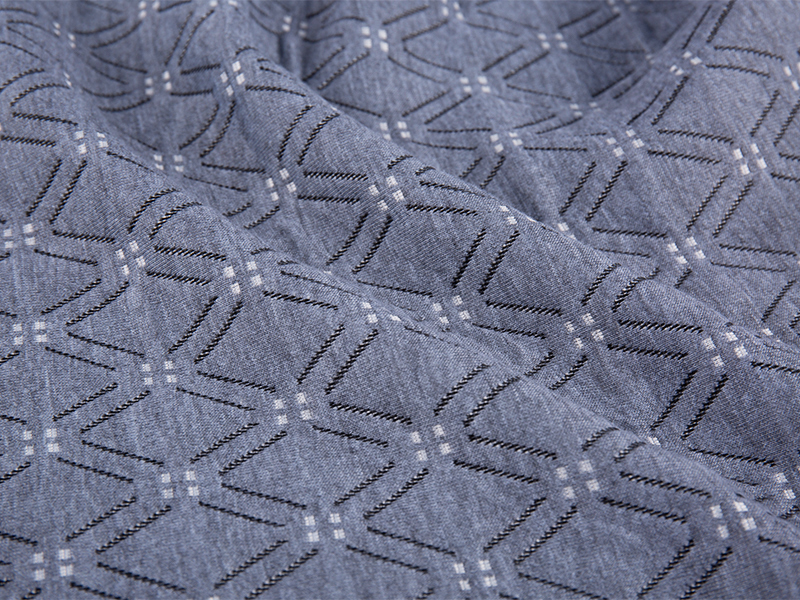
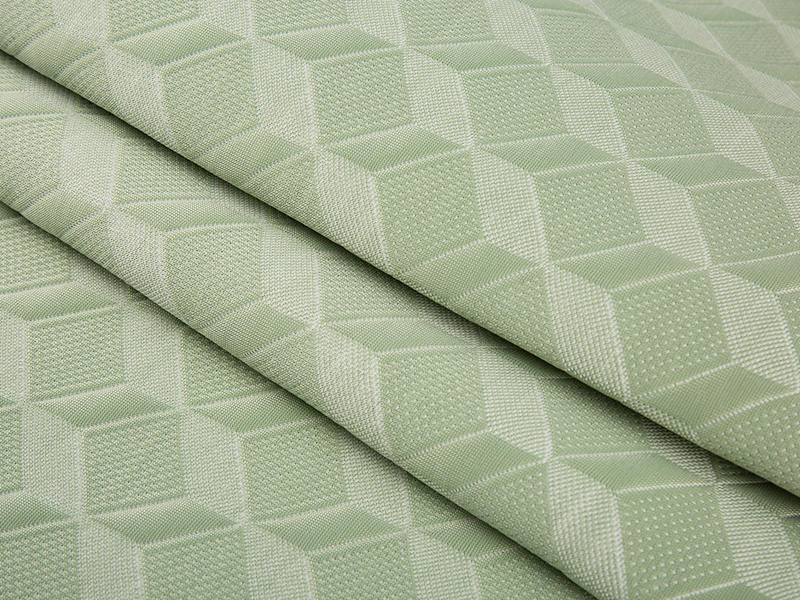 High Thermal Conductivity Cool Touch Fabric for MattressesThis cool touch fabric achieves Q-max values of 0.25–0.45, offering an instantly cold surface that outperforms standard cotton, making it a top choice for immediate contact cooling in mattress covers.View Product →
Phase-Change Absorption
Phase-change materials are microcapsules that absorb heat when skin temperature rises and release it when the body cools. This buffering narrows the temperature swing across the night, but its capacity is finite, so phase-change material works best inside the ticking rather than as the only cooling element.
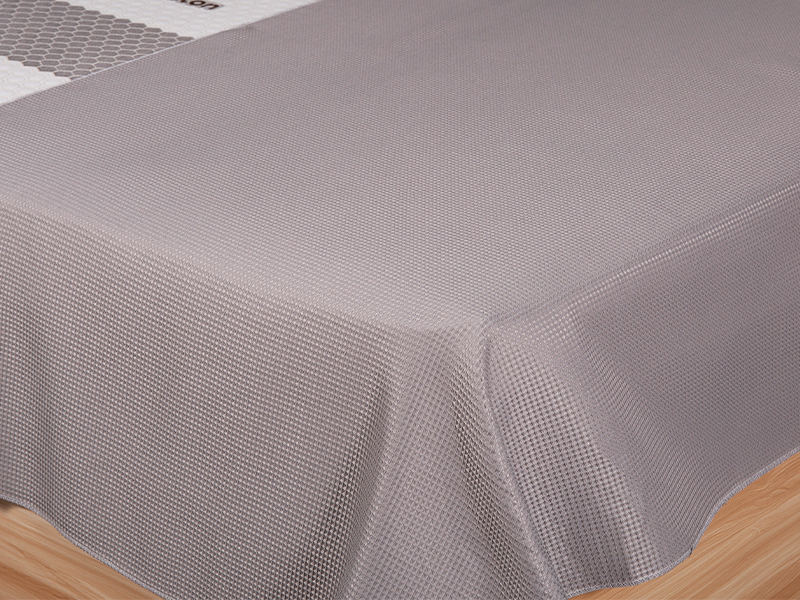
 Phase Change Material Temperature Regulating FabricThis PCM-integrated fabric absorbs and releases heat to stabilize skin temperature, reducing fluctuations by 3–5°C, ideal for sustained thermal buffering through the night.View Product →
Conductive and Thermal-Spreading Fibers
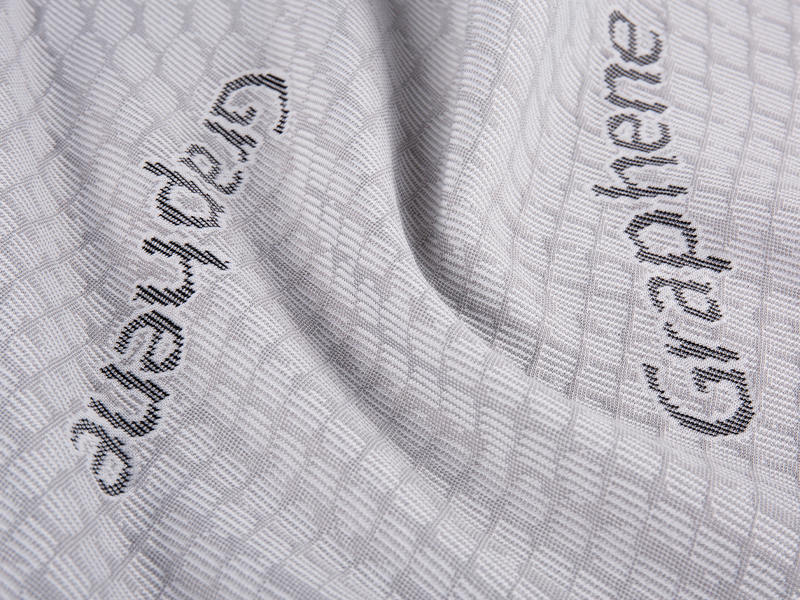
Graphene, Coolmax, carbon, and other conductive fibers spread heat laterally across the fabric, enlarging the effective dissipation area. These materials also pair well with antimicrobial features, which is why they appear frequently in premium mattress programs.
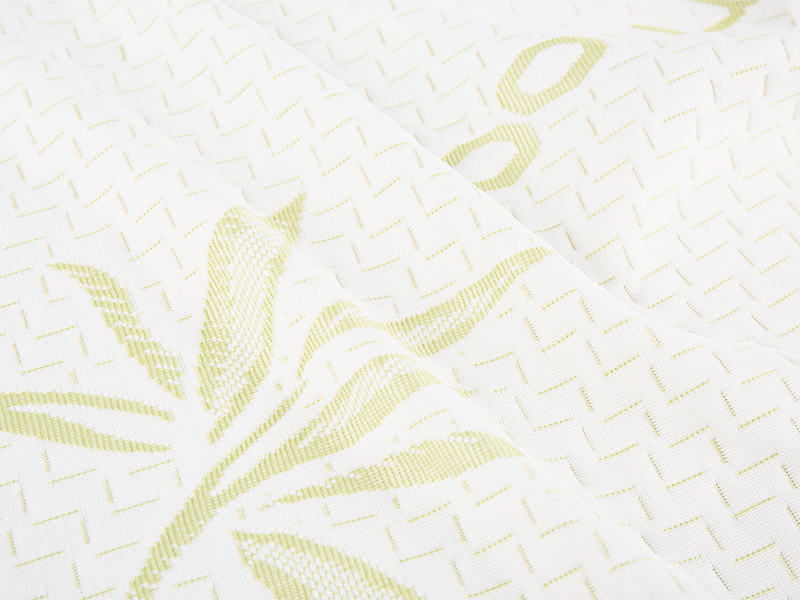
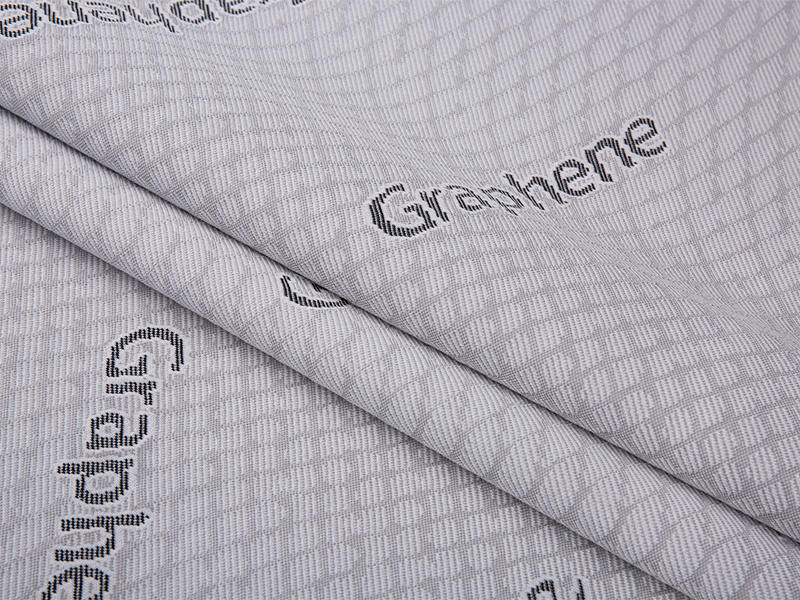 Graphene-Enhanced Mattress Fabric with Antimicrobial PropertiesThis fabric leverages graphene's high thermal conductivity to spread heat laterally, reducing surface temperature by 2–4°C, while its physical membrane mechanism achieves 99% bacterial reduction without chemicals.View Product →
Evaporative Moisture Transport
Knit constructions with wicking channels pull sweat away from the skin and expose a large surface for evaporation. This mechanism does not make the fabric cold to the touch, but it prevents the wet-heat buildup that wakes sleepers in the second half of the night.
| Mechanism | How it works | Primary measurement | Best application |
| Contact cooling | Conductive surfaces pull heat on first touch | Q-max (J/m2.s) | Top-layer ticking for hot sleepers |
| Phase-change absorption | Microcapsules store and release latent heat | Enthalpy (J/g) | All-night temperature stability |
| Conductive spreading | Graphene or carbon paths widen heat flow | Thermal conductivity (W/m.K) | Premium and health-oriented lines |
| Moisture transport | Knit loops wick sweat for evaporation | MVTR (g/m2.24h) | Night-sweat and warm-climate markets |
How Cooling Fabrics Change Sleep Product Design
Temperature-regulating textiles let mattress manufacturers move thermal performance from the foam core to the fabric layer, which is easier to source, replace, and warranty than hardware-based cooling.
The most direct application is the quilted top layer, where contact-cool ticking lowers surface temperature in the first minutes of lying down. Design teams also build zoned panels, placing high-Q-max fabric under the torso and moisture-moving knit under the legs, and edge-to-edge coverage removes the hot border created when a cooling zone is smaller than the sleeper's body. Because the cover is replaceable, cooling becomes a product-tier differentiator without changing the core mattress construction.
Product teams can compare the main variants side by side in the cooling mattress fabric portfolio before shortlisting materials.
Passive Fabric Cooling
- Zero energy draw
- No moving parts or noise
- Low incremental unit cost
- Easy to verify with Q-max and permeability tests
- Limited by room temperature near the bed
Active Climate Hardware
- Precise surface temperature control
- Works even in warm bedrooms
- Higher unit cost and assembly complexity
- Power draw, noise, and more failure points
- Longer certification timelines
Metrics That Matter in Cooling Fabric Performance
Four metrics determine whether a cooling fabric performs in a finished mattress: Q-max, thermal conductivity, air permeability, and the stability of the cooling effect after repeated washing.
Q-max captures the first-contact event, thermal conductivity describes sustained heat flow, and air permeability stops humidity from accumulating under the sleeper. Wash retention, measured by re-testing Q-max after 30 and 60 wash cycles, protects the warranty terms purchasing teams have to honor.
| Metric | What it measures | Typical cooling target | Why it matters |
| Q-max | Cool feel at first contact | 0.18 J/m2.s or higher | Confirms the cool-touch claim |
| Thermal conductivity | Heat flow through the fabric | 0.04 W/m.K or higher | Sustains cooling beyond first contact |
| Air permeability | Air exchange through ticking | 150 mm/s or higher | Reduces trapped humidity |
| MVTR | Moisture vapor transmission | 5,000 g/m2.24h or higher | Keeps the surface dry |
| Wash retention | Cooling effect after laundering | Q-max drop under 20 percent after 60 cycles | Protects warranty terms |
A Practical Framework for Selecting Cooling Fabric
The right cooling fabric depends on the target user's heat profile, the mattress construction, and the compliance documentation your customer requires.
- Hot sleeper without night sweats: specify high-Q-max contact-cool fabric on the quilted top layer.
- Night sweats or humid climates: choose a knit with MVTR above 5,000 g/m2.24h and air permeability above 150 mm/s.
- Baby and wash-intensive segments: select machine-washable constructions certified under Oeko-Tex Standard 100.
- Premium mattress lines: add a graphene or phase-change layer for sustained regulation and a stronger product story.
- Export programs: verify REACH compliance documents before every shipment.
Validate the choice with a sample build, measure the four metrics on the actual construction, and re-test after the wash cycles your warranty promises.
For a closer look at surface-performance trade-offs on common ticking constructions, this cool-touch mattress fabric analysis covers test behavior and build recommendations in more detail.
Frequently Asked Questions
Q1. What does Q-max mean in mattress fabric specifications?
Q-max measures the transient heat flow when skin first contacts a fabric, expressed in joules per square meter per second (J/m2.s). A reading of 0.18 or higher is widely used as the threshold for a noticeable cool touch in mattress ticking. Q-max describes the first-contact sensation, not how cool the fabric stays after prolonged contact.
Q2. Does the cooling effect survive repeated washing?
It depends on the mechanism. Conductive additives embedded in the fiber survive laundering better than surface-applied coatings. Before approving a construction, request Q-max re-test data after 30 and 60 wash cycles and compare the decline against your warranty commitments.
Q3. Which cooling fabric is best for mattress ticking?
There is no universal best material. Use a high-Q-max contact-cool fabric for immediate cool touch, a moisture-moving knit for night sweat, and a graphene or phase-change layer when the product story calls for sustained regulation. Match the mechanism to the dominant complaint of the target user.
Q4. Is graphene in mattress fabric functional or just a label?
Graphene works when it is dispersed into the fiber or coating to form a conductive network that spreads heat laterally. The effect is measurable through thermal conductivity and Q-max tests, so the difference between a genuine graphene construction and a printed label is visible in the test report.
Cooling mattress fabrics are a measurable design variable, not a luxury tag. Specified, tested, and documented correctly, they give sleep product teams a direct line between thermal science and the surface experience a customer feels on the first night.