 English
 русский
 Español
 中文简体

Article Directory
A bedding manufacturer sourcing mattress ticking in late 2026 is receiving the same request from buyer after buyer: document the fiber origin, list the chemistry in the fabric, and state what happens to the product at end of life. Tencel Lyocell mattress fabric answers all three, which is why it has moved out of the premium niche and into standard specifications for sustainable bedding development.
Regulatory pressure reinforces that shift. Contracts tied to the EU Deforestation Regulation, the Ecodesign for Sustainable Products Regulation, and stricter material disclosure rules in North America now treat fiber provenance as a procurement condition rather than a marketing extra. For bedding factories, replacing the surface layer of conventional cotton or virgin polyester with lyocell is one of the few material changes that improves the environmental profile and the sleep-performance story at the same time.
What Tencel Lyocell Mattress Fabric Is
Tencel Lyocell mattress fabric is a woven or knitted mattress ticking constructed from lyocell yarns, where lyocell is a regenerated cellulosic fiber derived from sustainably sourced eucalyptus wood pulp. The pulp is dissolved in the non-toxic solvent NMMO, extruded through spinnerets into fine filaments, and regenerated, with the solvent captured and reused in circulation.
That process is what separates lyocell from conventional viscose, which typically emits more process chemicals and carries a heavier water footprint. In lyocell production the loop is closed and the solvent is recycled instead of discharged. Tencel Lyocell is the branded form of this fiber; generic lyocell can vary by wood source and mill discipline, so buyers should verify the fiber origin statement rather than rely on the name alone.
For bedding, the visible difference starts with hand feel and durability. Lyocell filaments have a smooth, round cross-section, which produces a soft, fluid drape against the skin and a clean surface for quilting. Dry and wet strength are both high, so the yarns survive weaving, knitting, and repeated wash cycles without the pilling and edge fraying that plague low-grade cotton ticking.
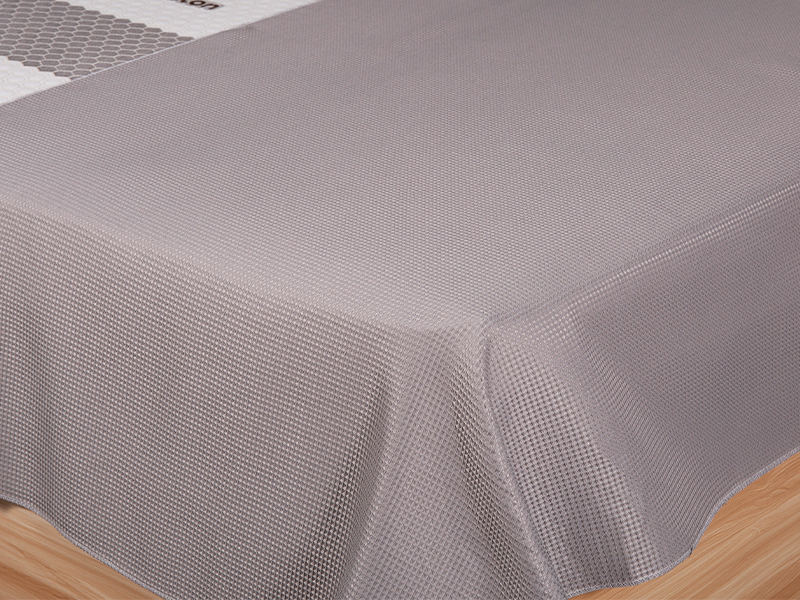
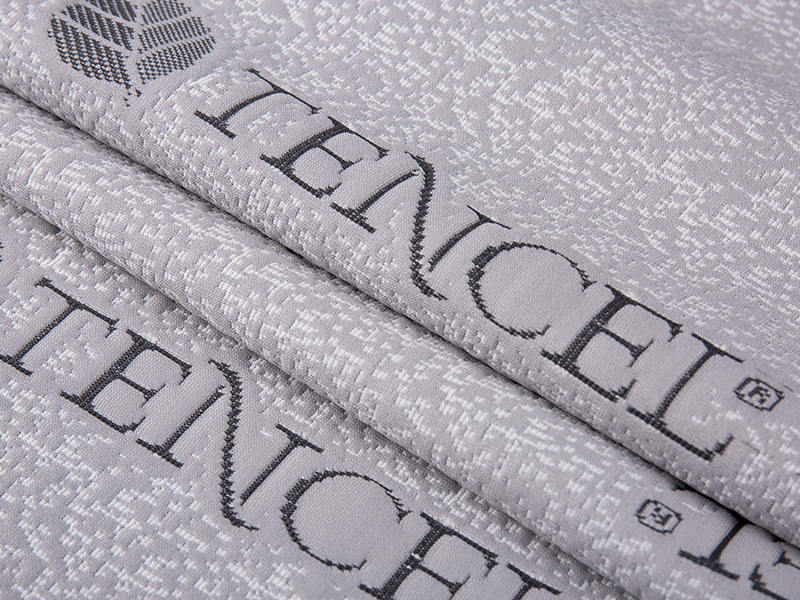 Tencel Lyocell Mattress Fabric with Closed-Loop NMMO ProcessThis lyocell mattress fabric offers high wet and dry strength plus soft drape, while its closed-loop solvent recovery reduces environmental impact, making it a durable and sustainable choice for bedding.View Product →
The Closed-Loop Process Behind Its Sustainability Claim
The closed-loop NMMO process is the reason lyocell carries a measurable environmental advantage over cotton and conventional viscose. More than 99 percent of the solvent is recovered and reused in continuous production, and the wood fiber comes from certified or controlled plantations rather than old-growth forest.
Fiber-level lifecycle data put the claim in perspective. Conventional cotton typically consumes close to 9,800 liters of water per kilogram of greige fiber before it reaches a fabric mill. Lyocell production uses roughly 95 percent less process water, and eucalyptus plantations yield more usable cellulose per hectare than cotton fields, which reduces the land area required for the same fiber output.
None of that translates into a finished fabric automatically. The environmental outcome depends on what happens after spinning: yarn quality, finishing chemistry, dyeing method, and whether the fabric is later blended with synthetic fibers. A fabric that blends lyocell with polyester loses the biodegradable end-of-life claim, so the specification sheet matters as much as the fiber name.
Hangzhou Xiaoshan RongLi Clothing Co., Ltd., the manufacturer behind ronglien.com, applies this logic at production scale. Its mattress ticking program pairs certified fiber inputs with Oeko-Tex Standard 100 certification and EU REACH compliance, so lyocell-based orders arrive with the documentation buyers need for their own sustainability reporting.
Performance Comparison: Lyocell vs Cotton vs Polyester
Tencel Lyocell matches cotton on moisture performance, beats it on surface softness, and leaves polyester behind on breathability and end-of-life behavior.
The properties that matter most for a mattress surface layer are summarized below.
| Property | Tencel Lyocell | Cotton | Polyester |
| Moisture regain at standard conditions | ~11.5% | ~8.5% | ~0.4% |
| Moisture vapor transport | High | High | Moderate |
| Surface softness | High | Medium-high | Medium |
| Pilling resistance | Good | Moderate | Good |
| Dimensional stability | Good | Moderate | Good |
| Industrial compostability | Yes | Yes | No |
The moisture regain number is the one to remember. Moisture regain describes how much water vapor the fiber absorbs from the surrounding air. A mattress ticking with higher moisture regain pulls humidity away from the sleeper's skin before it condenses into sweat, which is why a lyocell surface feels less clammy on warm nights and less cold when humidity is high.
Certifications and Verification Points for Buyers
The sustainability case for Tencel Lyocell mattress fabric depends on documentation, not on the fiber name in the product description.
Four documents cover most of what a procurement team needs. Oeko-Tex Standard 100 verifies chemical safety of the finished textile, EU REACH compliance covers the European regulatory baseline, chain-of-custody certificates trace the wood pulp, and ISO 9001 signals consistent production quality control. A buyer should ask for all four before approving a lyocell ticking supplier.
- Oeko-Tex Standard 100 certificate covering the finished mattress fabric
- EU REACH compliance declaration for all chemical substances
- FSC or PEFC chain-of-custody documentation if certified wood is claimed
- Fiber content declaration with the exact lyocell share and any blend components
- Mill traceability from pulp supplier to finished roll
Cotton-based bedding lines use exactly the same audit logic. The Oeko-Tex cotton mattress fabric guide for 2026 walks through the certificate levels and the scope of each one. For lyocell, the same certification standard applies, with fiber sourcing added to the audit scope.
Building a Sustainable Bedding Range Around Tencel Lyocell
A bedding range becomes defensibly sustainable when the lyocell face fiber is paired with certified processes and honest material declarations.
The practical starting point is a specification sheet, not a vague eco claim. Decide the lyocell share, the construction, the finishing chemistry, and the blend strategy before sampling, then use those decisions in the buyer documentation.
What to specify
- Declare lyocell as the face fiber with a blend share of 60 percent or higher
- Choose knitted structures for surface softness or woven structures for dimensional stability
- Select Oeko-Tex-certified finishing without unnecessary antimicrobial add-ons
- Blend with organic cotton when a lower price point requires it
What to avoid
- Marketing lyocell-polyester blends as compostable, because the polyester share blocks biodegradation
- Using heavy finishing to compensate for a weak base construction
- Claiming certified fiber origin without chain-of-custody documentation
Pillow programs can carry the same material story. A Tencel Lyocell pillow fabric uses the identical fiber logic for pillows, toppers, and side panels, and since the pillow is the second largest contact surface in a sleep set, the comfort benefit is measured in more than marketing terms.
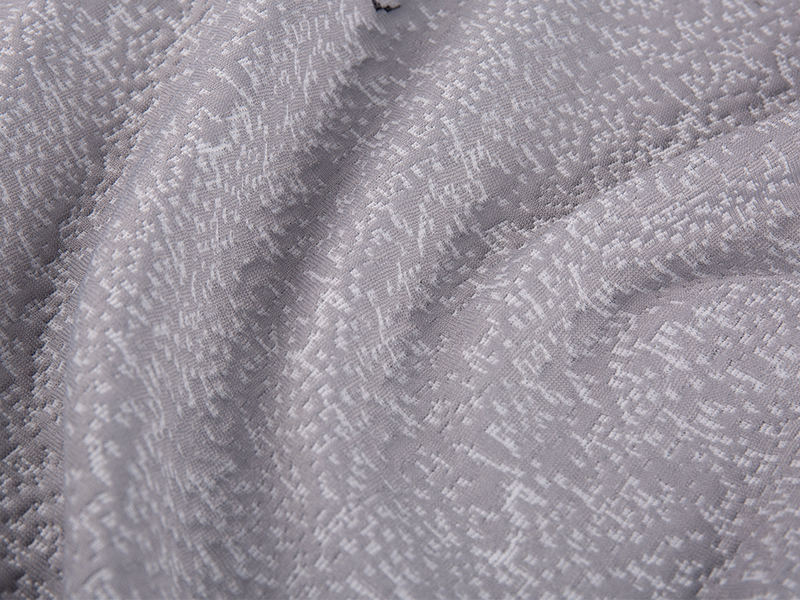 Tencel Lyocell Pillow Fabric for Moisture ManagementEngineered for pillows and toppers, this lyocell fabric absorbs moisture efficiently, stays naturally hypoallergenic, and maintains a smooth, cool surface for comfortable sleep.View Product →
When the target price pulls toward a cotton blend, an organic cotton mattress fabric keeps the certified sourcing chain intact. Together with bamboo options across the range, the complete mattress ticking collection gives a bedding manufacturer enough variants to build a defensible sustainable program without switching suppliers.
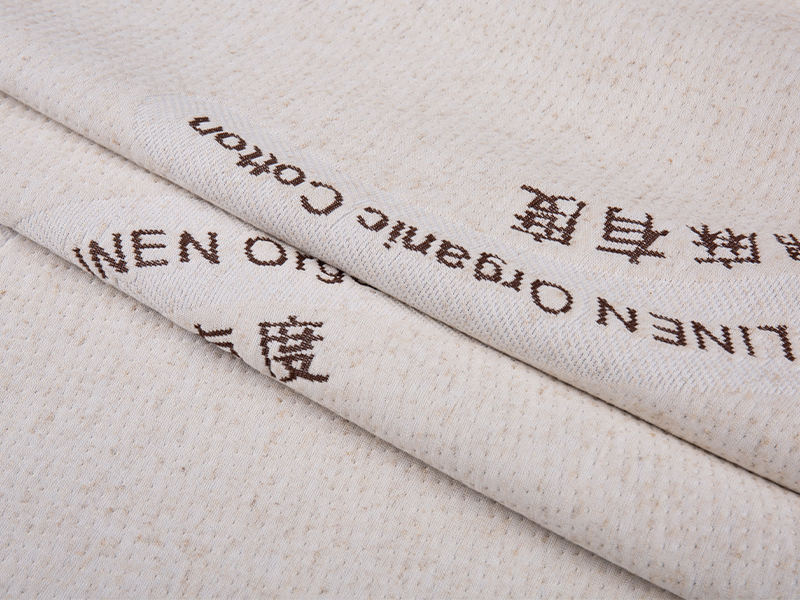 GOTS-Certified Organic Cotton Mattress FabricCultivated without synthetic pesticides, this organic cotton fabric provides breathable, moisture-wicking ticking for memory foam and hybrid mattresses, with a certified sustainable supply chain.View Product →
Frequently Asked Questions
Is Tencel Lyocell the same as bamboo or viscose?
No. Bamboo rayon and viscose are also cellulosic fibers, but they are usually made in open-loop processes or with different chemistries. Lyocell is defined by the closed-loop NMMO process, higher wet strength, and better dimensional stability, which makes it a more reliable ticking fiber for large-format bedding.
Does Tencel Lyocell mattress fabric help with sleep temperature?
Yes, through moisture management rather than active cooling. Because lyocell absorbs roughly 11.5 percent moisture at standard conditions, the fabric buffers humidity at the skin surface, which reduces the perception of overheating during sleep. This is a measurable fiber property, not a comfort claim.
Is Tencel Lyocell mattress fabric biodegradable?
Lyocell is a cellulosic fiber and biodegrades faster than polyester in soil, marine, and industrial composting conditions. Blending with polyester changes that outcome, which is why a 100 percent lyocell construction is the safest claim.
What certifications should a lyocell mattress fabric supplier hold?
At minimum, Oeko-Tex Standard 100 for chemical safety and EU REACH compliance for the European market. For credible fiber sourcing, request FSC or PEFC chain-of-custody documents. ISO 9001 adds confidence in production consistency and defect control.