 English
 русский
 Español
 中文简体
中文简体
Article Directory
Sleeping bodies lose between 200 and 500 ml of moisture overnight, and a mattress ticking that traps that sweat creates a warm, humid microclimate at the skin line. Coolmax mattress fabric was engineered to counter this directly: its multi-channel polyester fibers pull moisture away, spread it across the surface, and return the skin to a drier state. But the performance in a finished mattress depends on more than the fiber name. Moisture regain, wicking rate, drying time, Qmax value, knit structure, and GSM all interact to define how a Coolmax ticking behaves. This guide breaks down those factors and explains how to verify them when selecting mattress fabric.
What Is Coolmax Mattress Fabric?
Coolmax mattress fabric is a knitted textile made from engineered polyester fibers with longitudinal grooves that transport liquid sweat along the fiber and accelerate evaporation. The fiber profile, not a surface coating, drives the moisture behavior, which means the performance is permanent and does not wash out.
The fiber begins as polyester pellets extruded through a shaped spinneret to produce a filament with four channels along its length. Those channels act like capillaries: surface tension pulls sweat into the grooves, the liquid travels along the fiber, spreads over a wider area, and evaporates faster. Round polyester filaments lack this geometry, which is why standard polyester mattress fabric moves sweat poorly even with similar polymer chemistry.
In mattress production, Coolmax fiber is normally blended with cotton, bamboo viscose, or elastane. A 40/60 to 60/40 Coolmax to cotton ratio is practical for ticking: the cotton moderates hand feel while the Coolmax portion supplies the wicking channel volume. Blends below 40 percent Coolmax lose the drying advantage quickly.
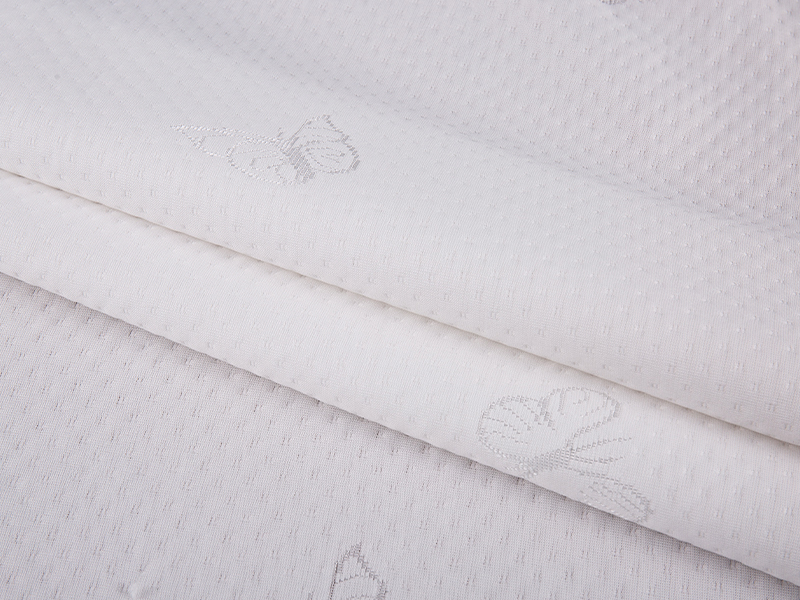 Coolmax Mattress Fabric with Rapid Moisture-Wicking TechnologyThis engineered polyester fabric with four-channel fibers moves sweat much faster than cotton, making it ideal for mattress ticking blends that need quick drying and durable wicking performance.View Product →
Moisture Management: What Coolmax Does With Sweat
When evaluated under standard textile moisture procedures, Coolmax fabric moves sweat at roughly twice the rate of standard polyester and dries noticeably faster than cotton. Two numbers define most of the behavior: moisture regain and drying time.
Coolmax polyester has a moisture regain below 1 percent, meaning the fiber core takes in almost no liquid. Cotton, by contrast, has a regain of 7 to 8 percent. Moisture absorbed inside a fiber cannot evaporate efficiently because it is trapped in the polymer structure; moisture on a Coolmax channel remains mobile and leaves the fabric easily. The practical result is that a Coolmax mattress ticking keeps the skin side drier, while cotton holds sweat in contact with the sleeper.
Drying time of knitted mattress fabrics in minutes
Representative values from controlled drying tests; actual results vary with GSM and knit density.
The drying difference is visible in daily use. A bed with Coolmax ticking returns to a dry condition within 15 to 20 minutes after the person gets up, while cotton ticking can stay damp in humid weather. For mattress brands, this affects perceived comfort and also the micro-environment inside the mattress core, where dust mites and bacteria depend on available moisture.
For a closer look at how knit geometry affects airflow and heat removal, read our analysis of breathability and heat dissipation in knit mattress fabrics.
Temperature Management: Surface Coolness and Evaporative Cooling
Coolmax mattress fabric regulates temperature through two distinct paths: first-contact coolness, measured by the Qmax value, and sustained evaporative cooling produced by moisture transport.
Qmax is expressed in W/cm2 and describes the peak heat flow when the skin first touches a fabric. Values above 0.20 are generally perceived as cool; values from 0.25 to 0.30 W/cm2 are rated as clearly cool. A Coolmax knit with a smooth face and a tight structure reaches Qmax values of roughly 0.22 to 0.30 W/cm2, comparable to mid-range cool-touch fabrics.
Sustained cooling is where Coolmax separates from most coated cool-touch materials. A mineral-coated fabric can feel cold at the first touch but has no moisture transport mechanism, so sweat stays on the skin and the perceived coolness decays within 20 to 30 minutes. Coolmax, by contrast, moves sweat away continuously, and the evaporation of that sweat consumes heat from the body. This evaporative cooling process is continuous as long as the sleeper is producing moisture.
| Material | Typical Qmax (W/cm2) | Moisture wicking | Drying speed | Sustained cooling |
| Coolmax polyester | 0.22-0.30 | High | Fast | High |
| Bamboo viscose | 0.18-0.24 | Moderate | Moderate | Moderate |
| Cotton | 0.12-0.18 | Low | Slow | Low |
| Standard polyester | 0.15-0.22 | Low | Moderate | Moderate |
| Cool-touch coated | 0.28-0.35 | Low | Fast | Low |
The key takeaway: if the product brief calls for immediate cold touch in a showroom, a coated cool-touch fabric will score higher in the first seconds of contact. If the brief calls for temperature stability through the night, Coolmax provides a combination of wicking and evaporation that coated fabrics do not match.
Brands comparing Coolmax with coated cool-touch materials should also review how Qmax values change with wash cycles before finalizing a construction.
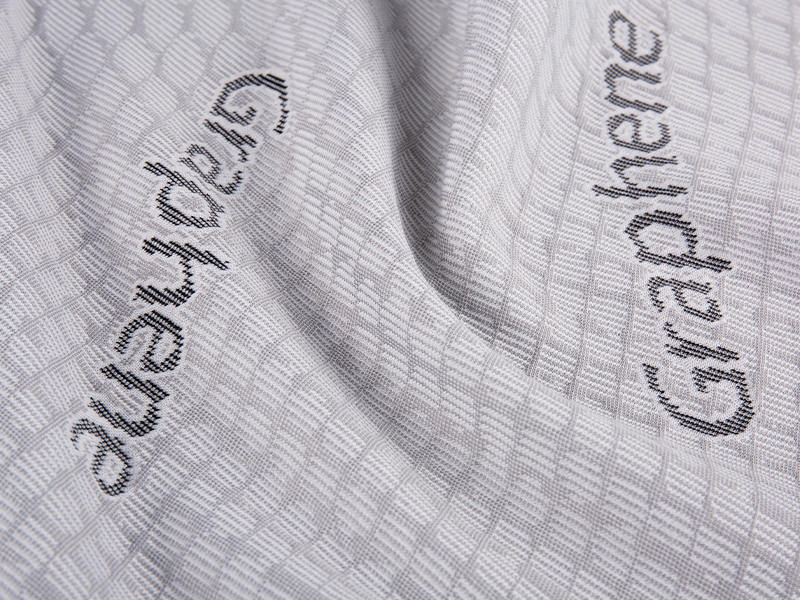 PCM Temperature Regulating Fabric for Stable Sleep MicroclimateIncorporating phase-change materials that absorb and release heat, this textile reduces skin temperature swings by 3-5°C, suitable for bedding systems where thermal buffering and wash durability matter.View Product →
Construction Factors That Change Real-World Performance
The fiber name alone does not guarantee performance. GSM, knit type, blend ratio, and finishing each modify how Coolmax behaves when it is stretched over foam, springs, or padding.
- GSM range: 180 to 260 GSM is the practical ticking range. Lower GSM dries faster and feels lighter; higher GSM resists abrasion. Above 280 GSM, breathability drops.
- Knit structure: single jersey is thin and dries fast; double knit adds plushness; spacer knit contains internal air channels. Most mattress ticking uses double knit or spacer knit.
- Blend ratio: keep Coolmax content at 50 percent or higher if moisture performance is the selling point. Lower ratios start to behave like the secondary fiber.
- Finishing: chemical moisture-management finishes add a small performance bump, but they wash out gradually. The fiber channel geometry does not wash out.
To verify a Coolmax mattress fabric before production, follow a sequence that covers material documentation, surface feel, transport behavior, and the assembled mattress.
- Request the fiber specification and the Oeko-Tex Standard 100 certificate before sampling.
- Measure Qmax on the actual sample with a documented method and stated ambient conditions.
- Run a moisture management transport test such as AATCC 195, not just a vertical wicking test.
- Assemble a full test mattress and monitor skin-surface temperature and humidity under 8 hours of simulated sleep.
A mill with documented certification, such as Hangzhou Xiaoshan RongLi Clothing Co., Ltd., will provide fiber origin, REACH, and Oeko-Tex documentation together with the sample. If the certification package arrives later than the sample, treat the fabric as unverified for export programs.
If the product brief prioritizes showroom first-touch coolness rather than overnight moisture stabilization, evaluate a cool-touch fabric instead of, or combined with, a Coolmax layer. A cool-touch surface delivers Qmax in the 0.28 to 0.35 range, but the top layer must still let moisture escape, which is why a Coolmax secondary layer is often used in commercial constructions.
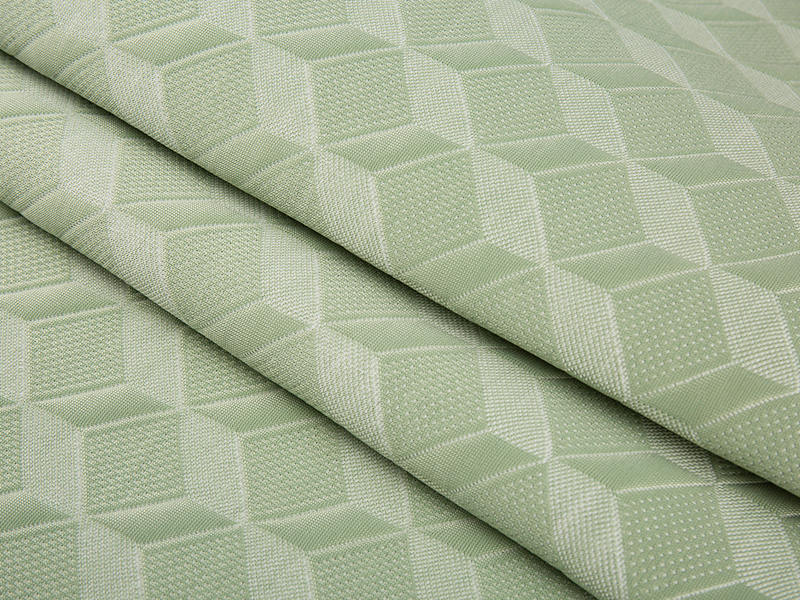 Cool Touch Mattress Fabric with High Q-max Contact CoolingFeaturing high thermal conductivity materials that achieve Q-max 0.25-0.45, this fabric provides an instantly cool surface, useful when showroom first-touch feel is prioritized alongside breathability.View Product →
Frequently Asked Questions
Does Coolmax fabric lose its cooling effect after washing?
No. The wicking effect is part of the fiber cross-section, not a surface finish, so washing does not remove it. Coolmax blends tolerate machine washing and moderate tumble drying; check the care limits of the secondary fiber, especially cotton shrink behavior.
What GSM should I choose for a Coolmax mattress fabric?
For spring mattresses, 200 to 220 GSM suits most designs. For foam constructions or high-compression designs, 240 to 260 GSM provides better durability. Avoid GSM above 280 if breathability is part of the product claim.
Is Coolmax mattress fabric compliant for export bedding?
When produced by an ISO-certified mill with Oeko-Tex Standard 100 and EU REACH documentation, Coolmax polyester is accepted for direct skin contact in most markets. Check final mattress flammability requirements such as CFR 1633 separately.
Can Coolmax be combined with other cooling technologies?
Yes. Common configurations pair Coolmax with cool-touch finishes, bamboo viscose layers, or phase-change materials. Coolmax moisture transport remains effective beneath those layers as long as the combined structure stays breathable.