 English
 русский
 Español
 中文简体
中文简体
Article Directory
Understanding how cotton yarn quality affects mattress fabric performance begins with a straightforward conclusion: yarn quality is the strongest predictor of long-term mattress fabric behavior. Two rolls of mattress fabric can be made from cotton of the same origin and still perform very differently after a year of use. The difference is rarely the weave. It is the yarn.
Why Yarn Quality Sets the Ceiling for Mattress Fabric Performance
Yarn is the basic structural unit of mattress ticking. A well-designed weave can improve tear strength or surface stability, and finishing can add softness or stain resistance, but neither can repair a yarn with short fibers, high variation, or uncontrolled twist. When a mattress manufacturer sees complaints about surface pilling, premature thinning, or color streaks in supposedly identical lots, the source is often a yarn specification chosen for price rather than performance.
From Cotton Fiber to Mattress Yarn
Mattress fabric performance starts at the cotton fiber. Long-staple cotton produces yarn with fewer fiber ends per unit length, and fewer fiber ends mean less fuzz, less pilling, and stronger inter-fiber bonding. Short fibers escape from the yarn surface and form pills during friction. Combed spinning removes many of the shortest fibers before twisting, which is why combed cotton yarn usually performs better in mattress ticking than carded yarn of the same nominal count. Compact spinning goes further by reducing yarn hairiness, giving a cleaner, smoother surface. For comfort-focused mattress covers, our soft knit mattress fabric is built around this type of performance-oriented yarn selection.
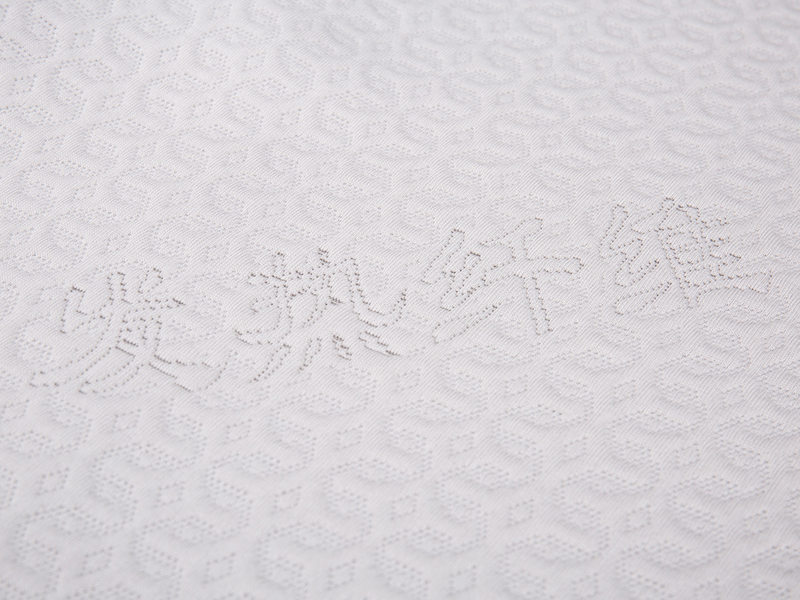 Custom ODM/OEM Soft Knit Mattress Fabric Manufacturers, FactoryHangzhou Xiaoshan RongLi Clothing Co., Ltd. Is A China ODM/OEM Soft Knit Mattress Fabric Manufacturers, Factory, We Offer Custom Soft Kni...View Product →
What Changes When Yarn Quality Drops
Problems from poor yarn often appear before the fabric reaches a mattress. Uneven yarn causes breaks on looms and knitting machines, slows production, and creates weak spots that show up later as thin areas. High CV% in the yarn can also produce visible shade variation after dyeing, even when the fiber grade is the same. A small swatch can hide these issues because it does not reveal lot-to-lot variation.
Key Cotton Yarn Parameters That Matter in Mattress Fabric
Thread count and GSM are important, but they do not describe yarn quality. The following parameters are more useful when comparing cotton mattress fabric options.
| Parameter | What it measures | Impact on mattress fabric | What to look for |
|---|---|---|---|
| Staple length | Average cotton fiber length | Longer staple produces stronger yarn with fewer protruding ends, reducing pilling and improving abrasion behavior. | Combed or long-staple cotton for top ticking. |
| Yarn count (Ne) | Fineness of the yarn | Finer yarn can create a denser, smoother surface, but only if fiber strength supports it. | Match the count to the weave and target GSM. |
| Twist level | Turns per meter in the yarn | Balanced twist supports strength and abrasion resistance without making the fabric stiff or boardy. | Specify balanced twist rather than maximum twist. |
| Evenness (CV%) | Variation in yarn thickness | Low CV% gives fewer weak points, better dye uniformity, and a more stable fabric structure. | Ask the mill for coefficient of variation data. |
| Hairiness (H) | Number of protruding fiber ends | Lower hairiness means a cleaner surface, less fuzz, and lower pilling risk. | Consider compact-spun yarn for the mattress surface. |
These parameters are interrelated. A low-twist yarn may feel soft but pill heavily. A fine high-twist yarn may be strong but feel hard against the skin. Yarn quality is not a single specification; it is the combination of fiber length, spinning method, and twist that fits the mattress application.
Where Yarn Quality Shows Up in Performance
Durability and Pilling Resistance
Pilling is one of the most common reasons customers complain about a mattress fabric. Pills form when short fibers work their way to the surface and tangle. Cotton yarn with long staple and low hairiness resists this process. Abrasion resistance follows the same logic. A fabric construction that reaches high abrasion cycles with a quality yarn can drop significantly if the same construction is made from uneven, short-fiber yarn. The weave cannot compensate. Thread count alone does not tell you whether pilling will be a problem; our article on cotton mattress fabric thread count and pilling explains why.
Breathability and Moisture Management
Cotton is selected for mattress ticking because it allows air to move and absorbs moisture. But the actual air permeability depends on yarn diameter, twist, and hairiness, not just the fiber content. A uniform yarn makes it possible to weave a stable but open construction. Too much twist closes the yarn structure and restricts air flow; too little twist leaves the fabric unstable. The right yarn quality creates the balance. If breathability is a priority, our cotton mattress fabric in the sustainable range is a practical starting point.
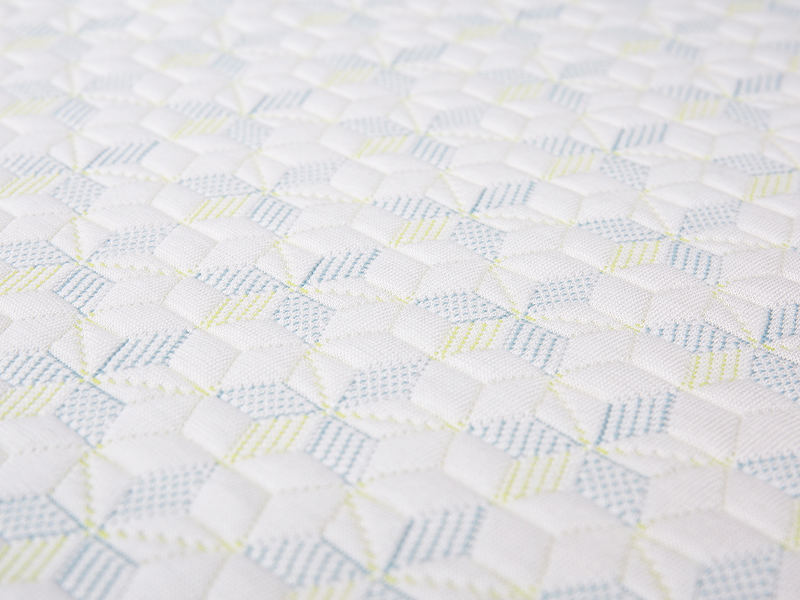 Custom ODM/OEM Cotton mattress fabric Manufacturers, FactoryHangzhou Xiaoshan RongLi Clothing Co., Ltd. Is China ODM/OEM Cotton mattress fabric Manufacturers and Factory, We Offer Custom Cotton mat...View Product →
Dimensional Stability and Appearance
Uneven yarn also affects how the fabric lies and behaves after washing. Inconsistent twist can lead to bowing, skewing, or uneven shrinkage. These structural problems make mattress covers harder to align and can distort jacquard patterns. A consistent yarn produces a flatter fabric, sharper patterns, and more uniform color. This is why the same construction and GSM can look different depending on yarn quality. Practical inspection can catch some of these problems before production; our guide to identifying the quality of cotton mattress fabric from fabric details walks through those checks.
Using Yarn Quality in Your Sourcing Decisions
Questions to Ask a Mattress Fabric Supplier
Instead of accepting "100% cotton" as a sufficient specification, ask for:
- Exact yarn count and twist level
- Staple length and whether the yarn is carded, combed, or compact spun
- CV% or evenness data for production lots
- Pilling, abrasion, and wash test results after 20, 50, and 100 cycles
- Batch-to-batch shade and shrinkage data
Tie the Yarn Specification to the End Use
An infant mattress, a hotel mattress, and a budget retail mattress all have different performance targets. For infant applications, softness, low lint, and chemical safety are critical. For hotel-grade ticking, durability and pattern accuracy may matter more. A yarn that is fine enough for one application may be too fragile for another. Where certification is part of your program, an organic cotton mattress fabric gives your compliance team a clearly documented starting point.
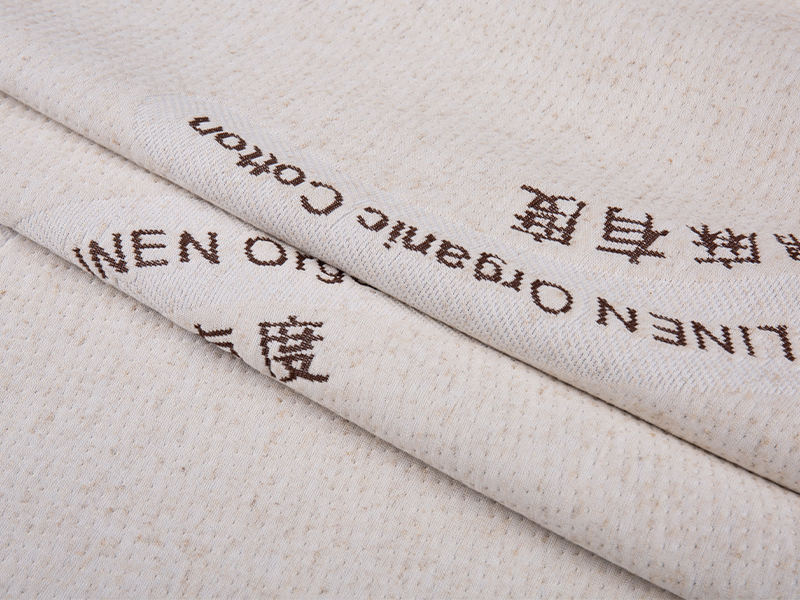 Custom ODM/OEM Organic cotton mattress fabric Manufacturers, FactoryHangzhou Xiaoshan RongLi Clothing Co., Ltd. Is China ODM/OEM Organic cotton mattress fabric Manufacturers and Factory, We Offer Custom Or...View Product →
Verify Production, Not Just the Sample
Sample fabrics often receive more attention than production runs. Confirm that the production yarn matches the approved sample, not only the design and color. Ask for a pre-production roll and run the same wash and abrasion tests you plan to use on the finished mattress. GSM is a useful starting point, but it does not show structural quality; our mattress fabric GSM and durability guide explains how weight and yarn interact.
Bottom Line for Sourcing Teams
Yarn quality is the foundation of mattress fabric performance. If the yarn is made from short fibers, spun unevenly, or twisted for cost rather than function, the fabric will eventually show it in pilling, thinning, or distortion. A well-chosen cotton yarn makes the fabric easier to cut, sew, and finish, and helps the mattress hold up in real use. When you evaluate cotton mattress fabric, start with the yarn specification, then verify it with test data. That is the fastest way to remove a major source of variation from your supply chain.