 English
 русский
 Español
 中文简体
中文简体
Article Directory
A mattress brand's sourcing meeting usually follows the same pattern. Marketing asks for a cotton story that supports a premium price. Production asks whether the fabric will still look acceptable after a year of use. Compliance asks for OEKO-TEX and REACH paperwork. Purchasing asks how quickly the mill can turn a small strike-off into a full production run.
After manufacturing mattress fabrics for buyers in Europe, North America, and Asia since 1989, we have watched the brands that resolve these competing demands fastest. They treat custom cotton mattress fabric solutions as a specification exercise, not a material pick. Fiber, construction, finish, certification, and supplier capability all need to be agreed before the first roll is woven.
Custom cotton mattress fabric solutions are a specification exercise, not a material pick. The right solution balances what the consumer feels at retail with what the production line and the customs inspector will demand later. Everything below explains how to define each element.
What "custom cotton" means in a mattress fabric order
Cotton is seldom a single material in a mattress order. A 100% cotton label says nothing about yarn quality, weave structure, weight, or chemical compliance. A custom cotton program succeeds when the brand specifies four layers of detail: the fiber, the construction, the finish, and the certification package.
Fiber quality sets the ceiling for comfort
Cotton's natural breathability and moisture absorption explain why it keeps appearing in premium ticking and baby mattress ranges. The fiber itself, however, varies. Combed cotton removes short fibers and impurities, producing a smoother, stronger yarn that resists pilling and takes printing more cleanly. Carded cotton is less expensive and acceptable in many mid-range constructions, but it will not give the same clean surface over years of wear.
For brands with a sustainability story, organic cotton changes the decision again. Organic cotton is grown without synthetic pesticides or fertilizers, and it is the material most often requested by EU and North American retailers that track their own supply-chain targets. A dedicated cotton mattress fabric range can cover both conventional and organic options, giving the brand one qualified source instead of several.
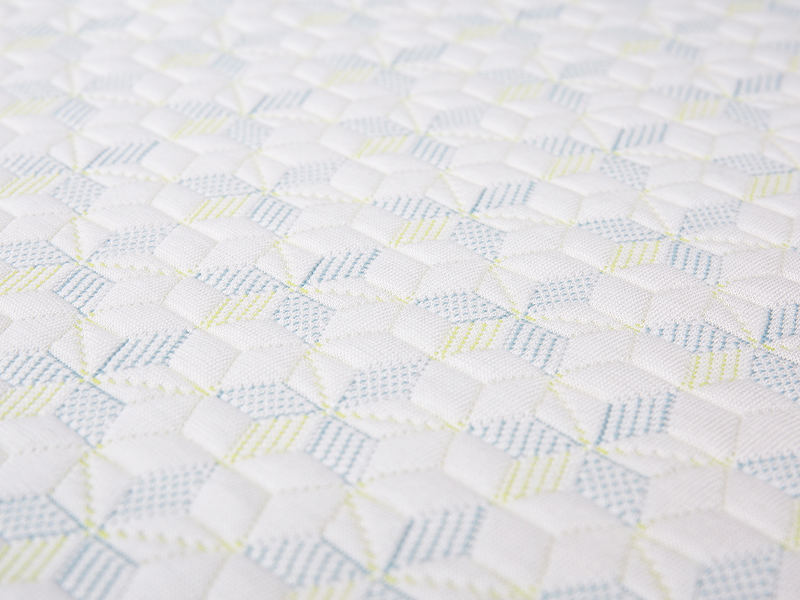 Custom ODM/OEM Cotton mattress fabric Manufacturers, FactoryHangzhou Xiaoshan RongLi Clothing Co., Ltd. Is China ODM/OEM Cotton mattress fabric Manufacturers and Factory, We Offer Custom Cotton mat...View Product →
Construction determines what the label cannot say
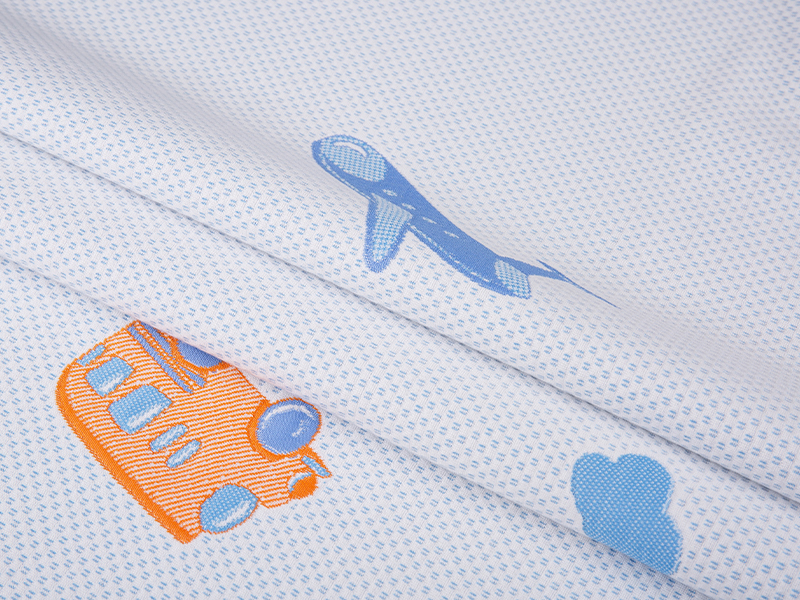
The practical difference between a mattress fabric that wears well and one that disappoints is usually the construction, not the fiber. Woven cotton ticking is dimensionally stable and abrasion-resistant, which is why it remains the conventional choice for mattress side and top panels. Knitted cotton stretches and conforms, which makes it the natural fit for fitted covers and soft knitted ticking with a t-shirt-like hand feel. Cotton jacquard weaves the pattern into the fabric structure, so logos and decorative motifs do not fade or peel the way printed surfaces can.
Thread count and GSM complete the specification. Higher thread counts produce a denser, smoother surface, and they dominate the premium segment. GSM controls the fabric's weight and perceived substance; knitted mattress fabrics commonly range from 130 to 700 GSM at widths of 200 to 240 cm. That range gives a brand room to tune the product for economy, mid-range, or luxury positioning. A deeper look at thread count, durability, and pilling behavior helps translate those numbers into consumer-visible performance.
| Application | Typical construction | GSM range | Critical properties |
|---|---|---|---|
| Baby mattress covers | Knitted or woven cotton | 150-220 | Softness, washability, breathability |
| Adult mattress ticking | Woven cotton or jacquard | 200-300 | Abrasion resistance, pattern definition |
| Luxury mattress covers | Cotton jacquard | 250-350 | Hand feel, aesthetic depth |
| Protector and fitted covers | Knitted cotton blend | 180-260 | Stretch, fit retention, moisture management |
Blends extend cotton into new product roles
Pure cotton gives comfort but struggles with stretch, rapid drying, and cost. Cotton-polyester blends keep the natural hand feel while improving dimensional stability and reducing price. Cotton blended with bamboo or lyocell shifts the fabric toward cooling and moisture management, which matters for brands that sell to warm sleepers. The blend ratio is a strategic decision: it defines the retail story, the price point, and the washing behavior.
Certifications belong in the fabric specification
For an exporting mattress brand, fabric compliance can stop an order at customs or trigger a retail delisting if the paperwork is incomplete. Three certifications matter most in custom cotton mattress fabric programs.
- OEKO-TEX Standard 100 limits harmful substances across the entire fabric, from the yarn to the finish.
- EU REACH compliance covers chemical registration and restriction obligations for the European market.
- ISO 9001 quality management certification indicates that the mill can keep production consistent.
The practical rule is to request certificates at the sample stage, not after bulk production. A mill that regularly exports to Europe and the US should supply REACH test reports and OEKO-TEX certificates in days, not weeks. The current OEKO-TEX cotton mattress fabric requirements include the full supply-chain documentation that brands need for retail submissions.
Flammability is the other checkbox. Cotton is naturally more flammable than some synthetic fibers, so the final mattress must meet the standard of the destination market, such as CFR 1633 in the US or BS 7177 in the UK. The fabric selection influences the approach, but the mattress assembler usually owns the final compliance responsibility. For brands that want a certified base material without managing multiple suppliers, an organic cotton mattress fabric with OEKO-TEX and REACH documentation is the cleanest starting point.
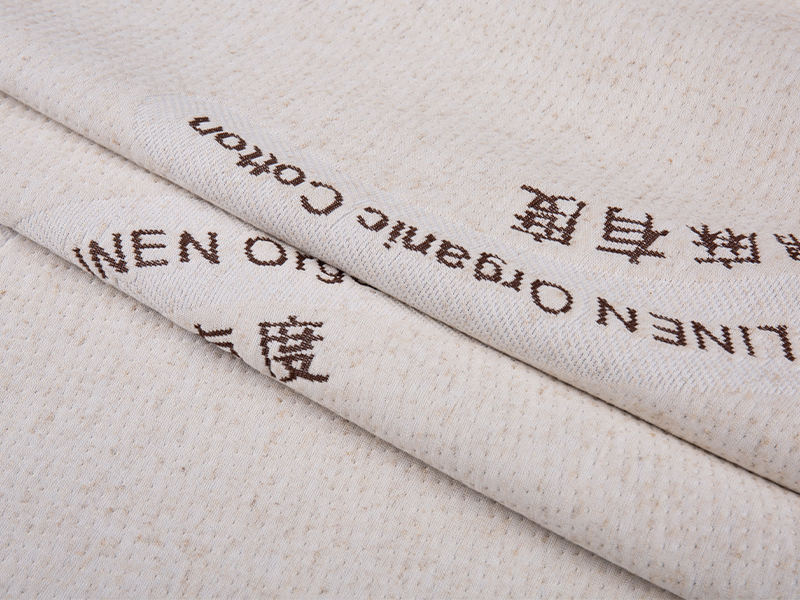 Custom ODM/OEM Organic cotton mattress fabric Manufacturers, FactoryHangzhou Xiaoshan RongLi Clothing Co., Ltd. Is China ODM/OEM Organic cotton mattress fabric Manufacturers and Factory, We Offer Custom Or...View Product →
Customization options that build brand value
Jacquard weaving turns the fabric into brand identity
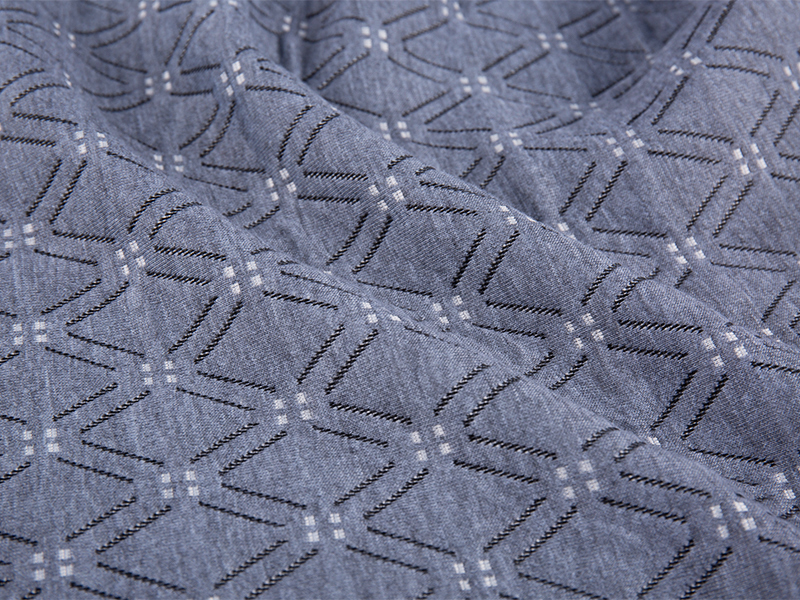
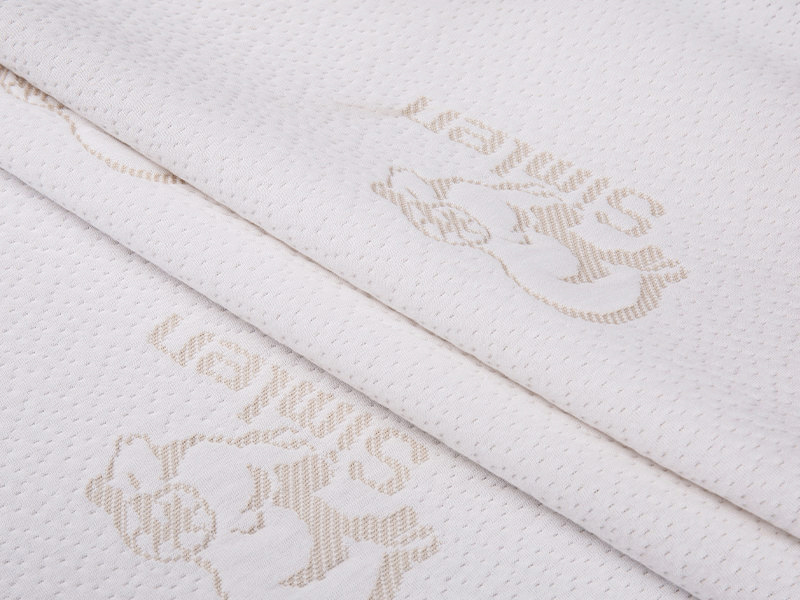
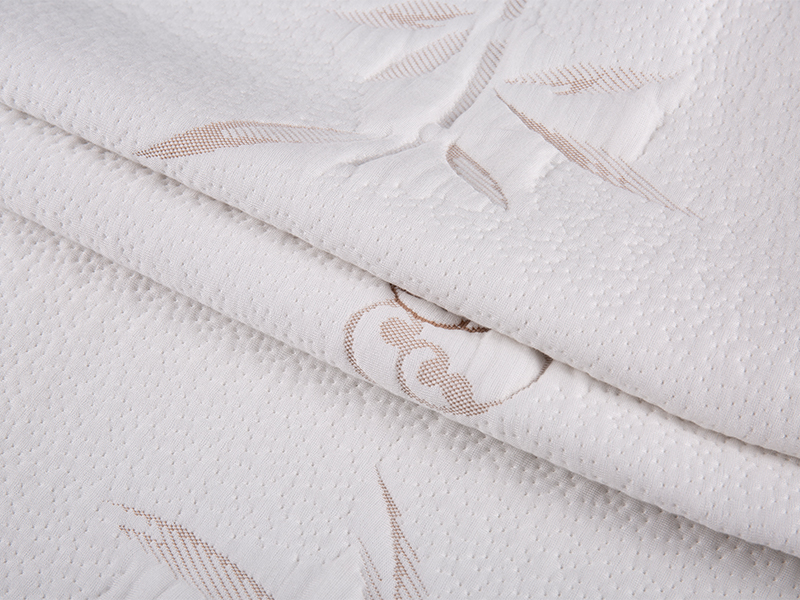
A proprietary jacquard pattern is one of the few ways a mattress brand can own its surface design. Because the pattern is woven into the fabric, it survives laundering and resists abrasion far better than printed decoration. Brands typically use jacquard for logo placement, heritage damask motifs, or collection-specific patterns that visually separate retail tiers. Choosing a jacquard mattress fabric gives the design team control over scale, contrast, and repeat, all of which affect how the mattress reads on a retail floor.
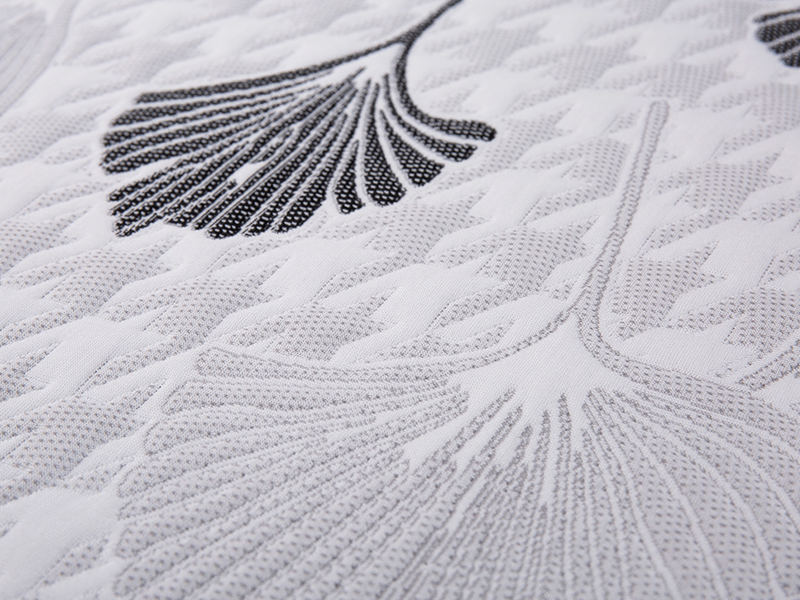 Custom ODM/OEM Jacquard mattress fabric Manufacturers, FactoryHangzhou Xiaoshan RongLi Clothing Co., Ltd. Is China ODM/OEM Jacquard mattress fabric Manufacturers and Factory, We Offer Custom Jacquard...View Product →
Finishes tune the fabric to a market segment
Most custom cotton programs combine the base cloth with a finish that targets a specific use. Baby mattress fabrics, for example, are frequently specified as machine-washable and waterproof, while adult ranges add anti-pilling or moisture-management finishes. Cooling products use coating or yarn-based technologies to raise the initial contact coolness, and hospitality orders often require flame-retardant or antimicrobial treatment. Every finish changes cost and lead time, so a brand that defines its target segment early avoids paying for functions it will never use.
This is also where the supplier's process range matters. A mill that offers jacquard, printing, dyeing, yarn-dyed weaving, knitting, and heat-transfer printing can move a product from concept to production without switching partners mid-development.
Qualifying a supplier for custom cotton mattress fabric
A specification sheet only works if the mill can execute it consistently. The following checklist is what we recommend every mattress brand verify before awarding a custom cotton fabric program.
- Production equipment: confirm the mill runs its own jacquard, dyeing, printing, and knitting lines rather than brokering them.
- Testing capability: in-house pilling, shrinkage, and colorfastness testing shortens development cycles and reduces surprises.
- Export documentation: REACH, OEKO-TEX, and ISO certificates, plus the ability to update them per shipment.
- Sample workflow: strike-off lead time and the process for approving color and pattern.
- Order flexibility: minimum order quantities and whether pilot runs are available for new constructions.
Company history is a useful signal. Hangzhou Xiaoshan RongLi Clothing Co., Ltd. was founded in 1989, operates a 100,000-square-meter facility with weaving machinery imported from West Germany and Italy, and exports to Europe, the US, Southeast Asia, the Middle East, Japan, and Korea. The company holds ISO 9001:2000 certification, verifies all fabrics against EU REACH requirements, and has earned OEKO-TEX Standard 100 certification. That combination of track record, equipment, and certification coverage is what a brand should look for when the cost of a failed production run is high.
Breadth of range also matters. A brand that needs cotton ticking for one line, cooling fabric for another, and baby-safe fabric for a third will save significant qualification time by working with a single mill that covers all three categories. Methods for verifying breathability and GSM in cotton mattress fabric are a practical part of that qualification process.
The practical path to a custom cotton fabric program
Custom cotton mattress fabric solutions work when the brand and the mill speak the same technical language. Start by writing the full specification: fiber and blend, construction, GSM, width, finish, and certification requirements. Send the specification to two or three qualified mills, compare the sample quality against the numbers, verify the certificates, and run a pilot order before committing to a large production volume.
For mattress brands, the payoff is predictable: shorter sampling cycles, fewer compliance surprises, and a fabric that supports both the retail story and the product's real-world durability. The brands that succeed over the long term do not buy cotton by name. They buy a specification, a certification package, and a partner who can deliver both consistently.