 English
 русский
 Español
 中文简体
中文简体
Article Directory
- 1 What Mesh Mattress Fabric Is, and What It Is Not
- 2 Why Ventilation Requirements Are Non-Negotiable
- 3 The Four Specifications That Define Real Breathability
- 4 Mesh vs Other Breathable Ticking Structures
- 5 How to Verify Breathability Before Committing to an Order
- 6 Where Mesh Earns Its Place in a Sourcing Program
- 7 Frequently Asked Questions
A mattress that feels cool during a two-minute showroom test can still fail in a humid bedroom eight hours later. When the complaint comes back, the foam usually takes the blame, but the ticking is where heat and vapor actually collect. That gap is exactly what mesh mattress fabric was engineered to close, and it explains why ventilation data has become a core purchasing criterion for bedding brands rather than a line in a marketing brochure.
A mesh cover earns its specification only when air and water vapor keep moving through it, and that performance must be measured on the finished mattress, not assumed from how open the fabric looks.
What Mesh Mattress Fabric Is, and What It Is Not
Mesh mattress fabric is an open-structure ticking in which deliberate apertures move air and water vapor through the cover instead of letting them pool against the sleeper. The openness is engineered, not accidental: aperture size, yarn type, and layer count are all chosen to hit a ventilation target while keeping the surface stable enough for daily use.
Mesh mattress fabric: an open-structure mattress ticking, knitted or woven, whose intentional apertures and spacer geometry allow air and vapor to pass through the cover, limiting heat and humidity build-up at the sleep surface.
Three constructions dominate the market:
- Single-layer knitted mesh, a fine open knit used for full covers or ventilation panels on baby and cooling mattresses.
- 3D spacer fabric, where two fabric layers are joined by monofilament spacer yarns to form an air channel roughly 2 to 10 mm deep that also adds cushioning.
- Laminated mesh, which bonds mesh to a cooling or waterproof functional layer; here the adhesive choice decides whether breathability survives lamination.
Hangzhou Xiaoshan RongLi Clothing Co., Ltd. develops these approaches within its baby and functional mattress fabric programs, combining imported weaving and knitting machinery with in-house jacquard, printing, and dyeing capability.
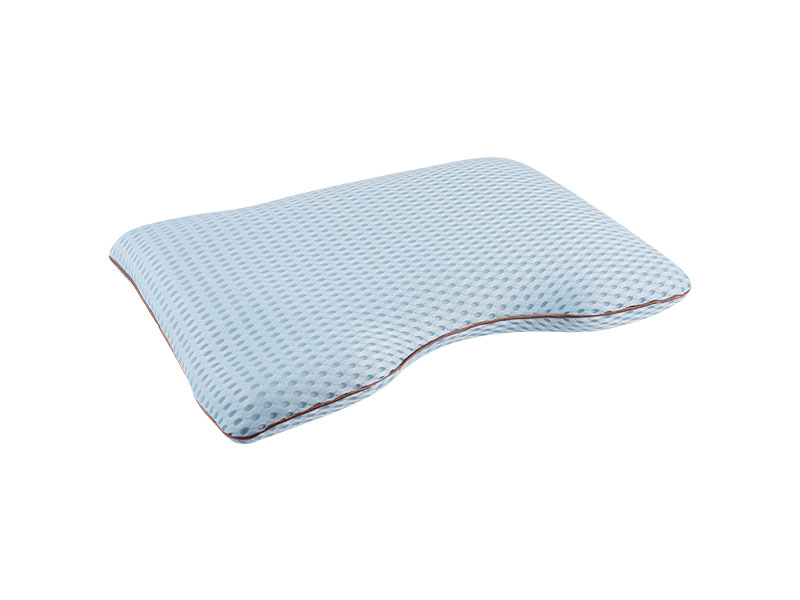 Breathable 3D Mesh Mattress FabricA three-dimensional spacer fabric with open-cell polyester construction that enables continuous airflow and moisture management. Worth reviewing here because cover-level breathability determines whether any underlying mattress layers stay dry and comfortable.View Product →
Why Ventilation Requirements Are Non-Negotiable
A cover that cannot vent vapor will hold body moisture against the skin no matter how advanced the core underneath is. Breathability failures at the cover level cannot be compensated downstream, which is why serious buyers test the ticking first.
The amount of moisture an adult commonly releases during a night of sleep through perspiration and breath. A dense, non-breathable ticking traps a significant share of it inside the sleep microclimate.
Comfort research generally places the pleasant microclimate at roughly 40 to 60 percent relative humidity. Trapped vapor pushes that figure upward, sleepers shift more often, and perceived sleep quality drops. In humid export markets, complaints about sleeping hot are traced to covers more often than to cores.
Why baby programs lead the requirement
Infants regulate body temperature poorly, so nursery specifications treat ventilation as a safety-adjacent feature rather than a comfort extra. That is why mesh borders and covers appeared on cribs long before they reached mainstream adult mattresses.
The Four Specifications That Define Real Breathability
Breathability is not a single number. It is a bundle of four specifications that must be read together before any mesh ticking is approved.
- Air permeability, tested to ASTM D737, measures how much air passes through the fabric under a fixed pressure. Compare candidates tested under identical conditions, on the same instrument, in the same finish state.
- Aperture size sets the balance between airflow and surface stability. Openings that are too large snag and distort; openings that are too small quietly give back the ventilation you paid for.
- GSM signals density and durability. Extremely light mesh can wash out of shape within a few domestic cycles.
- Fiber composition decides how the fabric handles the vapor it passes: polyester monofilament holds structure, while functional yarns add moisture-wicking and cool-touch behavior.
Illustrative relative comparison. Actual ASTM D737 values depend on yarn, density, and finishing.
Mesh vs Other Breathable Ticking Structures
Mesh wins on airflow, but the right structure depends on how your product balances ventilation, surface feel, and cost across the line.
| Structure | Airflow | Surface feel | Best fit | Watch-outs |
| 3D spacer mesh | Highest | Bouncy, textured | Ventilation borders, baby and pet bedding | Higher cost; check compression recovery |
| Knitted mesh ticking | High | Soft with visible openness | Baby covers, cooling mattress lines | Apertures must stay stable after washing |
| Soft knit ticking | Moderate | Smooth and stretchy | Mainstream comfort covers | Warmer; pair with mesh borders for airflow |
| Woven jacquard ticking | Lower | Dense, decorative | Premium visual programs | Add vent panels or a 3D border |
For a deeper mechanistic look at heat movement in knitted covers, this guide to breathability and heat dissipation of knit mattress fabric is a useful companion read. You can also browse the complete mattress fabric range to see where mesh sits alongside jacquard and cooling programs.
How to Verify Breathability Before Committing to an Order
The only reliable confirmation is to test the fabric, then test it again after washing, lamination, and assembly. Ventilation claims that survive that sequence are the ones that hold up in the market.
- Request ASTM D737 reports per colorway and finish, not one certificate per style, since coating and dyeing change airflow.
- Wash-test five cycles, then re-measure airflow and inspect apertures for distortion, closure, or pilling.
- Audit every lamination: specify breathable hot-melt dot adhesives and reject continuous film backings in vent zones.
- Collect compliance documents early: EU REACH test reports and Oeko-Tex Standard 100 certification are baseline requirements for export and nursery programs.
- Run a pilot build on the real mattress core, because airflow is measured by the assembled bed, not by the fabric roll.
Airflow is a system property: the ticking, the adhesive, the comfort layer, and the core either work together or the ventilation specification fails on the finished bed.
Where Mesh Earns Its Place in a Sourcing Program
Mesh delivers the clearest return where hygiene and temperature control dominate: nursery lines, cooling collections, and high-use institutional bedding.
- Mesh borders and covers paired with waterproof laminates for washable, hygienic crib mattresses
- Aperture and certification specs set at nursery grade from the start
- Mesh panels placed over foam cut-outs to move warm air out of the core
- Cool-touch yarns combined with open structures for a two-stage cooling effect
A waterproof layer only belongs in a vented build when it is engineered for vapor permeability, which is why mesh and waterproof fabric should be specified together rather than assumed to cooperate.
 Waterproof Baby Mattress Fabric with Breathable TPU MembraneA TPU-laminated composite that blocks liquids while allowing water vapor to escape, made without phthalates, lead, or PVC. In a vented build it must be specified alongside mesh so waterproofing and vapor permeability work together rather than conflict.View Product →
On cooling programs, mesh works best as the escape route for heat that cool-touch yarns draw away from the skin.
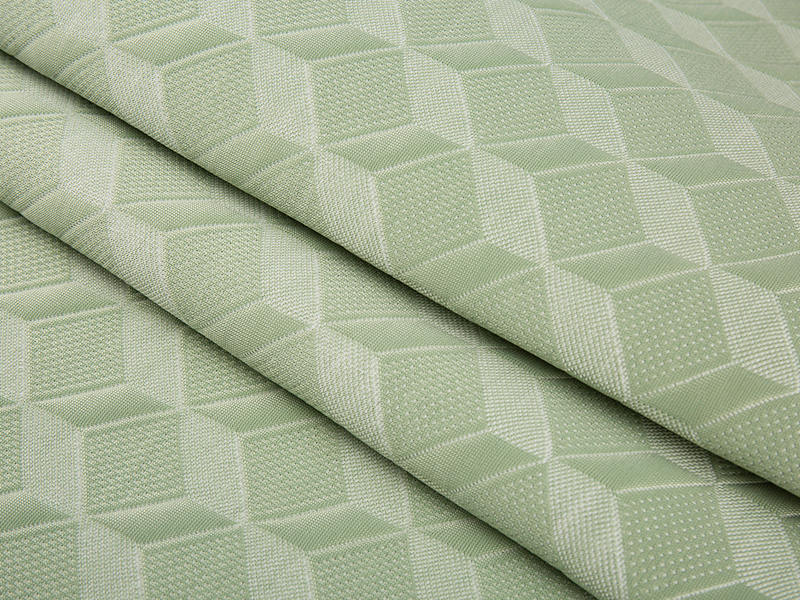 Cool Touch Mattress Fabric with High Heat Transfer YarnsKnitted fabrics using HDPE or mica-infused yarns to achieve strong Q-max cooling values, with 3D and embossed options for added airflow. Pairs naturally with mesh covers, which vent the heat these cool-touch yarns draw away from the skin.View Product →
Suppliers that integrate these steps shorten development cycles. Hangzhou Xiaoshan RongLi Clothing Co., Ltd. backs its mesh and functional ticking with ISO 9001 quality management, EU REACH testing on all fabrics, and Oeko-Tex Standard 100 certification, which simplifies compliance reviews for buyers across Europe, the Americas, and Asia.
Frequently Asked Questions
What air permeability should mesh mattress fabric achieve?
There is no universal pass mark, so require every candidate to be tested under identical ASTM D737 conditions and compare relative results. Quality mesh constructions typically test several times higher than dense woven ticking, with 3D spacer fabrics at the top of the range.
Is mesh mattress fabric safe for baby mattresses?
Yes, provided the apertures are sized for nursery use, the fabric carries REACH and Oeko-Tex Standard 100 documentation, and the mesh serves as ticking or side panels over a firm core that meets applicable crib safety standards.
Does an open structure reduce durability?
Not automatically. Monofilament spacer yarns and stable knit constructions recover well from compression. Confirm durability with a five-cycle wash test plus abrasion and pilling checks before mass production.
Can a waterproof mattress still breathe?
Yes. Breathable membranes and hot-melt dot laminations let vapor escape while blocking liquids, whereas continuous film backings cancel the ventilation benefit of the mesh layer entirely.