 English
 русский
 Español
 中文简体
中文简体
Article Directory
A mattress factory in Zhejiang receives two cotton ticking swatches from different suppliers. Both are woven. Both are labeled 100 percent cotton. Both weigh close to 150 gsm. One fabric survives three accelerated wash cycles without visible pilling; the other develops a fuzzy surface after the first. At the quotation stage, the two fabrics looked interchangeable. In production, they were not. For procurement teams, product developers, and quality managers specifying cotton mattress fabric, the buying decision needs to go beyond a hand-feel test. These are the factors that separate fabric that performs from fabric that only looks right on a swatch card.
Fiber Quality Sets the Performance Ceiling
No finishing process can compensate for weak fiber. The raw cotton used in mattress fabric determines how the fabric behaves at every later stage: spinning, weaving or knitting, dyeing, finishing, and finally years of use under a sleeper. Starting with fiber specifications eliminates most downstream surprises.
Staple Length Drives Strength and Pilling Resistance
Cotton fibers range from about 25 mm to more than 40 mm in length. Longer-staple fibers twist into finer, stronger yarns, which produce a smoother fabric surface. Short-staple fibers create yarns with more protruding ends; these ends break and tangle during washing and friction, and that is the primary mechanism of pilling. When a supplier quotes a price significantly below the market rate, check the staple-length specification first. It is one of the fastest ways to predict durability problems in the finished mattress.
Grade, Trash Content, and Combed vs. Carded Yarn
Cotton grade reflects whiteness, contamination level, and the presence of neps. For mattress fabric, a mid-to-high grade with low trash content reduces dyeing defects and improves surface uniformity. Combed cotton removes short fibers before spinning, producing a cleaner yarn and a more pill-resistant fabric. If the buyer's target is a smooth and durable mattress cover, combed cotton should be the default specification, not an upgrade.
Organic and Conventional Cotton: More Than a Label
Organic cotton is grown without synthetic pesticides and genetically modified seed, and it is processed under stricter residue limits. For a mattress buyer, the practical difference appears in certification: organic cotton fabric can carry textile-specific attestations that conventional cotton cannot. If the final mattress targets markets with strict chemical regulations, or if the product line includes baby furniture, specifying organic reduces compliance risk and gives marketing a defensible claim.
Weave Type, Thread Count, and GSM Need to Be Evaluated Together
Buyers often treat weave type, thread count, and GSM as separate line items on a specification sheet. In practice, they interact. A high thread count spun from short-staple yarn can look dense on paper and still pill quickly. A heavy GSM in a tight weave can reduce breathability until the mattress sleeps hot. The correct approach is to define the application first, then lock the three parameters together.
Woven vs. Knitted Cotton
Woven cotton ticking offers dimensional stability, a crisper hand feel, and a tighter surface that takes printing and jacquard patterns well. Knitted cotton stretches, drapes more softly, and generally provides better air circulation. For a standard mattress cover that must hold its shape over years of use, woven cotton is the more common choice. For a stretch-to-fit cover or a soft pillow top, knitted cotton may suit the design better. The decision depends on the mattress construction and the comfort target, not on which structure is better in isolation.
Thread Count: Useful, but Not the Whole Story
A thread count of 200 to 400 is a reasonable range for cotton mattress ticking. Above that range, the incremental comfort benefit shrinks and the risk of inflated counting increases. A supplier can count a four-ply yarn as four threads and label a 200-construction fabric as 800 count without changing the actual density. Ask for the construction specification, warp count and weft count separately, rather than relying on a single number. Our detailed guide on cotton thread count and pilling explains how these values relate to real-world durability and what to verify before ordering.
GSM: Match the Weight to the Application
GSM, grams per square meter, is the most direct indicator of fabric substance. Cotton mattress ticking typically falls between 140 and 200 gsm. A lighter fabric in the 140 to 160 gsm range suits seasonal bedding and breathable mattress protectors. The 170 to 200 gsm range adds body and abrasion resistance, which suits a main mattress cover that will tolerate repeated handling during assembly and use. When comparing quotations, confirm that GSM is measured after finishing: processes such as compacting or calendering change the final weight. Our cotton mattress fabric range covers this span with documented specifications for bulk buyers.
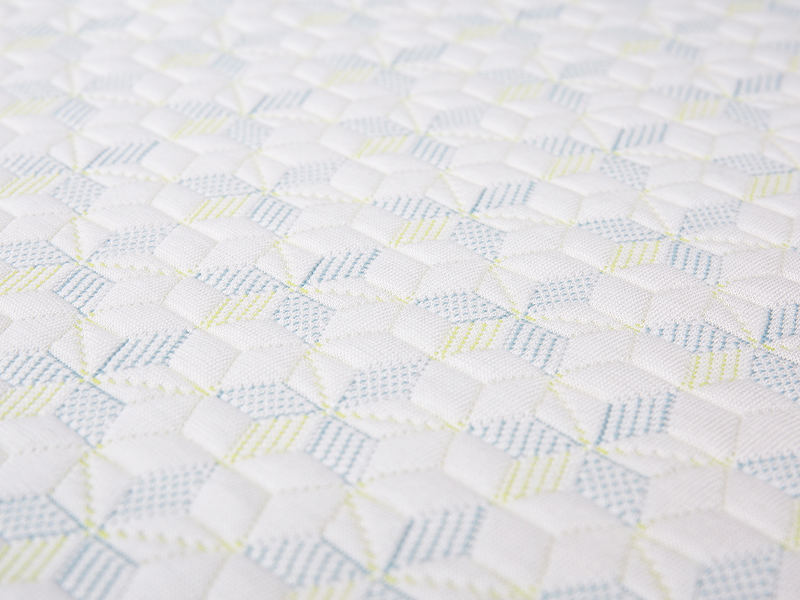 Custom ODM/OEM Cotton mattress fabric Manufacturers, FactoryHangzhou Xiaoshan RongLi Clothing Co., Ltd. Is China ODM/OEM Cotton mattress fabric Manufacturers and Factory, We Offer Custom Cotton mat...View Product →
Verify Performance Before You Commit to a Production Order
A swatch tells you color and hand feel. It does not tell you how the fabric behaves after the first wash, under a sleeping adult, or after a year in a warehouse. Four performance criteria matter most for cotton mattress fabric, and each should carry a written target value.
Dimensional Stability and Shrinkage
Cotton naturally shrinks when wet. Without pre-shrinkage finishing, a mattress cover can pull out of alignment and become difficult to fit after the first wash. Ask the supplier whether the fabric has been sanforized or compacted, and request shrinkage data. A maximum of 3 percent in both warp and weft directions is a practical threshold for mattress ticking.
Breathability and Heat Dissipation
Cotton fibers have a hollow structure that creates channels for moisture vapor to escape, which is why cotton feels cooler against the skin than polyester in humid conditions. Breathability also depends on yarn density and finish; a calendered surface can reduce air permeability even when the fiber itself is breathable. Our method for verifying breathability and GSM describes a simple check that buyers can run on sample swatches before placing an order.
Pilling and Abrasion Resistance
Pilling is the most common complaint in cotton mattress covers because the fabric surface rubs against sheets and sleepwear every night. In standardized testing, a pilling rating of 3.5 or higher on a five-grade scale is generally acceptable for a mattress cover. For heavy-use segments such as hospitality or children's beds, set the requirement at grade 4. Abrasion resistance, measured by Martindale cycles, provides a companion value; 20,000 cycles or more is a realistic target for a woven cotton cover.
Colorfastness to Washing and Light
Mattress covers are washed less often than sheets, but they are washed, and some consumers use stain removers or bleach. Specify colorfastness to washing at grade 4 or higher on the gray scale, and do not ignore lightfastness: a cover displayed near a window can fade within weeks if the dye system is weak. The following table summarizes the ranges that typically hold for production cotton mattress fabric.
| Factor | What to Verify | Typical Range for Mattress Ticking |
|---|---|---|
| Fiber staple | Staple length from yarn spec | 28-35 mm; above 35 mm for premium lines |
| Finished GSM | Weight after finishing | 140-200 gsm |
| Shrinkage | Wash test, warp and weft | 3 percent or less |
| Pilling rating | ISO 12945-2 or equivalent | Grade 3.5-4 or higher |
| Colorfastness | ISO 105-C06 wash, gray scale | Grade 4 or higher |
| Abrasion | Martindale test | 20,000 cycles or more |
Certifications Are a Buying Criterion, Not a Marketing Extra
For brands exporting mattresses to the European Union, the United States, or the Middle East, fabric compliance is part of the product's legal file. Two accreditations carry particular weight for cotton mattress fabric: Oeko-Tex Standard 100 and REACH. Ask for current certificates from an accredited test institute, not a self-declaration, and confirm that the certificate covers the specific batch offered. Our 2026 Oeko-Tex cotton mattress fabric guide details the current thresholds and testing scope.
Oeko-Tex Standard 100 limits harmful substances in textiles and classifies fabrics by contact level. Product Class I is reserved for baby products; mattress covers intended for a baby cot fall into this class. Product Class IV, the furnishing class, covers mattress ticking for adult beds, with correspondingly different limit values. REACH, the European chemicals regulation, governs substances placed on the EU market; mattress fabrics exported into Europe need to demonstrate compliance. A supplier that holds both accreditations can shorten the buyer's verification timeline considerably.
Flammability is a separate but equally critical requirement. The United States applies 16 CFR Part 1633 for mattress sets, while the United Kingdom and several other markets use BS 7177. Cotton is a cellulosic fiber that supports combustion, so flame-retardant finishing or a barrier layer is often required for the final mattress to pass the applicable standard. A fabric-level certificate alone is not enough; the finished mattress assembly must be tested.
For programs that need a certified natural-fiber option, our organic cotton mattress fabric is tested to Oeko-Tex Standard 100 and positioned for covers where environmental claims are part of the sales story.
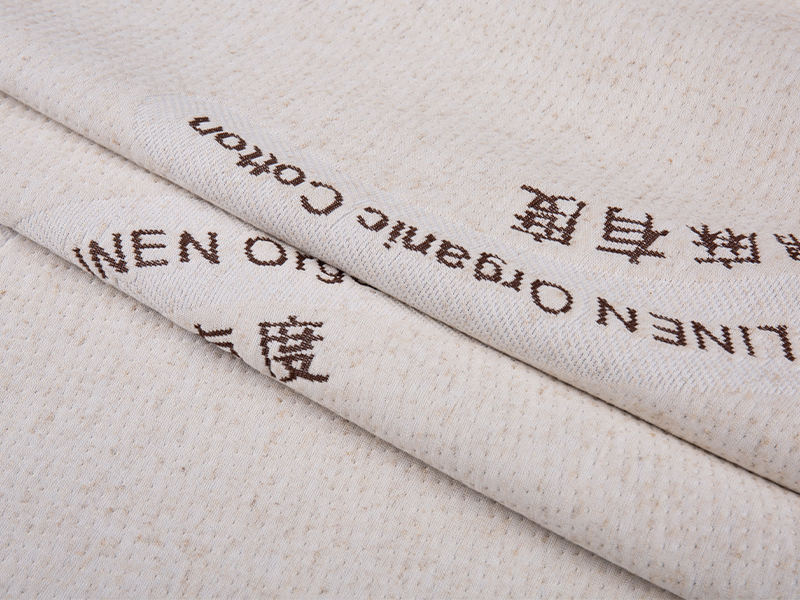 Custom ODM/OEM Organic cotton mattress fabric Manufacturers, FactoryHangzhou Xiaoshan RongLi Clothing Co., Ltd. Is China ODM/OEM Organic cotton mattress fabric Manufacturers and Factory, We Offer Custom Or...View Product →
Supplier Consistency Matters More Than the First Sample
The first bulk order is rarely the risk point; the fifth order is. Dye lots shift, finishing parameters creep, and a supplier under production pressure may quietly substitute a lower-cost yarn. For cotton mattress fabric, consistency between batches is what keeps a mattress model compliant and uniform across production runs. Three practices reduce that risk.
Demand Written Specifications and Test Reports
Every performance claim should be backed by a document: yarn count, weave or knit structure, finished GSM, shrinkage test, pilling rating, colorfastness, and the current Oeko-Tex or REACH certificate. Ask for reports from an independent laboratory and note the test date; certificates expire and batch chemistry changes. Quality-management certification, such as ISO 9001, indicates that the supplier documents its processes and handles non-conformances systematically.
Run a Pilot Lot Before Scaling
Moving from a one-meter swatch directly to a container order skips the stage where most problems appear. A pilot lot of 500 to 1,000 meters run through your own production line reveals how the fabric feeds into a quilting machine, how it accepts stitching, and how it behaves during cutting and seaming. The cost of a small pilot is trivial compared with reworking finished mattresses.
Evaluate the Factory, Not Just the Price List
A low-cost quotation without a visible production process is a sourcing risk. A factory with in-house weaving, dyeing, and finishing controls quality at each stage; a trader consolidating from multiple mills has less control over consistency. RongLi, for instance, runs all three processes on a single site, which shortens batch tracing and speeds up quality feedback. For applications with stricter requirements, such as baby mattresses, specialized materials like our organic cotton fabric for baby bedding give buyers a tested path that avoids guesswork.
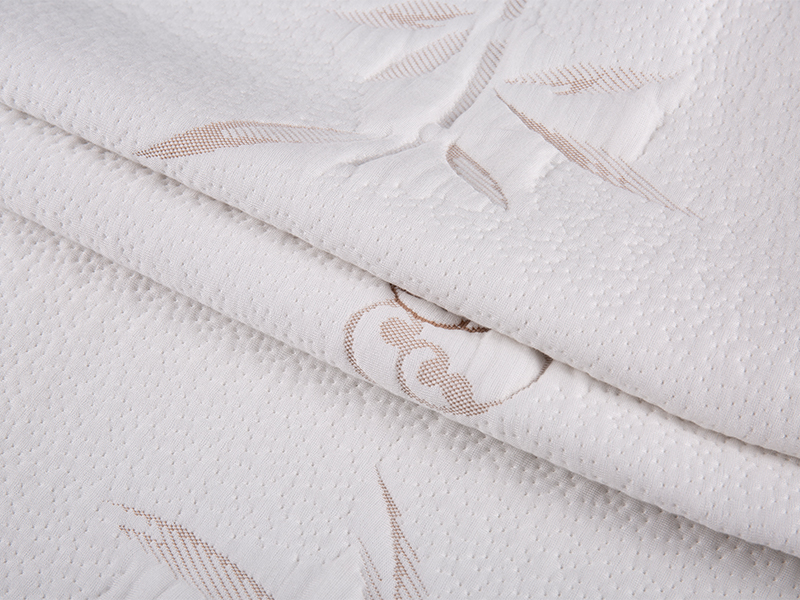 Custom ODM/OEM Orgainc cotton fabric Manufacturers, FactoryHangzhou Xiaoshan RongLi Clothing Co., Ltd. Is China ODM/OEM Orgainc cotton fabric Manufacturers and Factory, We Offer Custom Orgainc cot...View Product →
Choosing cotton mattress fabric is a specification exercise, not a taste test. Fiber quality, construction, performance testing, certification, and supplier consistency form a chain, and the weakest link determines how the fabric performs in a real mattress. Buyers who verify each link with documented evidence reduce the risk of rework, returns, and compliance failures much more reliably than those who choose the most attractive swatch.